
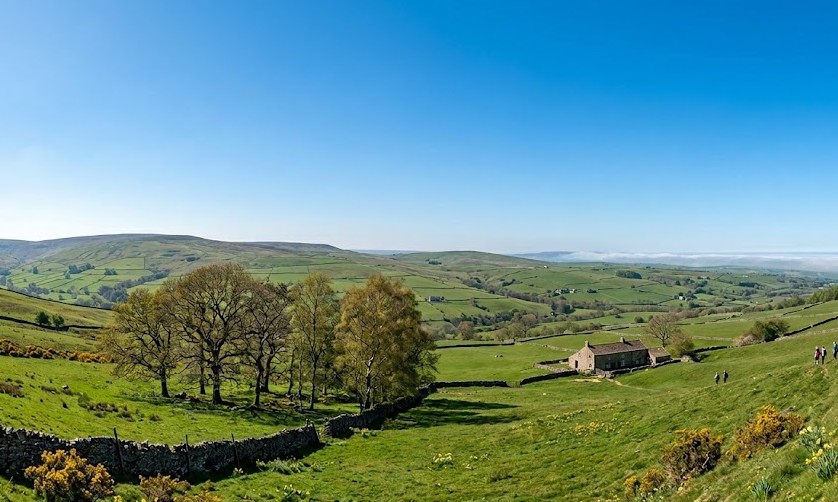
The United Kingdom is currently under the influence of a dominant high-pressure system, ushering in a period of “fine, dry, and sunny” weather across the four nations.
As of Thursday, 23 April 2026, the Met Office reports that a continental air mass is replacing the recent Atlantic dampness, sending temperatures climbing well above the seasonal average.
While much of the country will bask in clear skies and rising mercury, a distinct “east-west split” remains. Coastal regions along the North Sea are battling a persistent sea fret (Haar), keeping conditions “chilly” and damp, while inland areas, particularly in the West Midlands and Greater London, are bracing for a surge in temperatures that could peak at 21°C by the weekend.
Why is the UK experiencing this sudden surge in temperature?
The current weather blocking pattern is caused by high pressure centered directly over the UK. This atmospheric setup diverts the jet stream to the far north, preventing the usual rain-bearing depressions from the Atlantic from reaching the British Isles.
According to Met Office meteorologist Clare Nasir, the morning of 23 April saw low cloud lifting across central regions to reveal a “fine day with plenty of sunshine.”
A chilly start to Thursday morning for some
Low cloud will gradually lift and retreat to the east coast, with plenty of sunshine from then on ⛅
Another blustery day to come in the southwest 🎐 pic.twitter.com/LrDgtm3xj0
— Met Office (@metoffice) April 22, 2026
This stability is expected to intensify through Friday, 24 April, as the high-pressure core moves slightly, allowing even warmer air to be drawn in from the south-southwest.
Which UK regions are the “hottest spots” and which remain cold?
The geographical variation in this week’s forecast is stark, primarily driven by proximity to the cold North Sea:
- The “Heat Zones”: Greater London, Berkshire, Worcestershire, and the West Midlands are expected to see the highest temperatures. Forecasters predict highs of 17°C on Friday, rising further to 21°C by Saturday, 25 April.
- The “Chilly East”: From Northumberland to Kent, an onshore breeze is bringing in “Haar” (sea mist). Locations such as Scarborough and Cromer may see temperatures struggle to reach 11°C, nearly 10°C lower than their western counterparts.
- Scotland and Northern Ireland: These regions are enjoying “largely dry” conditions, though Western Isles and Shetland may see a freshening breeze and slightly more cloud cover.
What do the official authorities say about the risks?
While the sunshine is a welcome relief for many, several UK government agencies have issued specific warnings:
- Met Office & UKHSA: A Moderate to High UV Index (Level 5) has been recorded for Friday. Residents are advised to seek shade during the midday hours as the April sun is now strong enough to cause skin damage.
- Allergy UK & NHS: A Very High Pollen Alert has been issued. Birch and Ash trees are currently in peak release, and the dry, sunny conditions are trapping pollen at ground level. Health officials urge hay fever sufferers to start preventative treatments immediately.
- Environment Agency: Minor flood alerts remain active for the South Devon coast. Despite the lack of rain, “wave overtopping” is possible due to the combination of high spring tides and a brisk easterly wind.
How will this weather impact UK commuters and transport?
The settled weather generally aids transport reliability, but certain factors are causing localized disruption:
- London & South East: Higher passenger volumes are expected as tourists flock to the capital. Transport for London (TfL) has noted that while the weather is clear, planned maintenance on the Piccadilly Line remains a primary concern for travelers.
- Rail Infrastructure: National Rail has not reported heat-related “sun kinks” on tracks yet, as temperatures remain below the 27°C threshold where steel rails typically expand. However, dry conditions are increasing the risk of “trackside fires” caused by sparks in areas with dry vegetation.
What is the long-range outlook for the May Bank Holiday?
The current high-pressure dominance is unlikely to be a “one-day wonder.” Forecast models from WXCharts and MetDesk indicate that the settled weather will hold firm through the upcoming weekend.
However, looking ahead to the first week of May, there are signs of the high-pressure “shield” weakening. The Met Office suggests that while the South East may remain dry, the North West could see a return to “polar maritime air,” bringing a “classic spring setup” of sunny spells and heavy showers, some potentially falling as sleet or hail on Scottish mountains.