


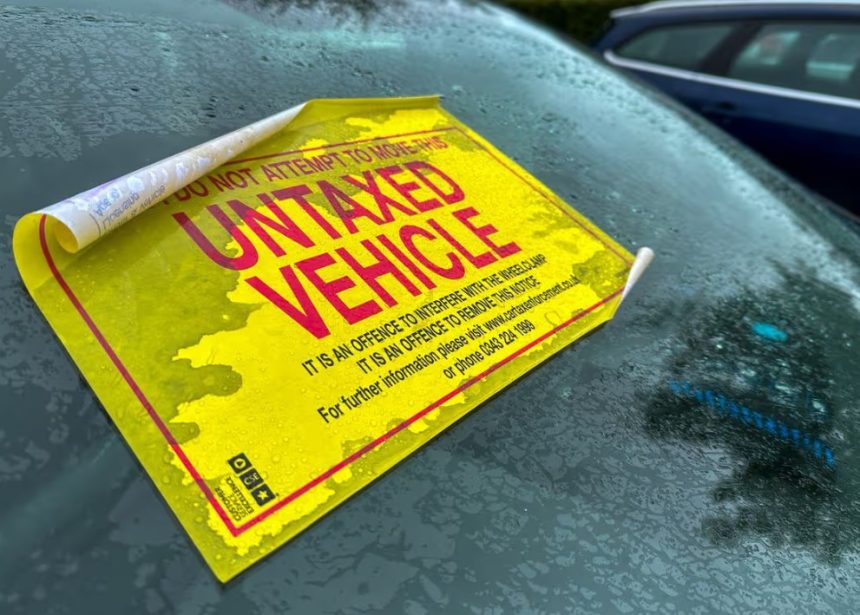
A 51-year-old widow from the Chesterfield area has been left with a criminal record following a “slip-up” regarding a £35.84 vehicle tax bill.
The prosecution, brought by the Driver and Vehicle Licensing Agency (DVLA), has ignited fresh outrage over the UK’s Single Justice Procedure (SJP), a fast-track legal system that critics say is “breaking” the lives of the vulnerable by processing cases behind closed doors.
The defendant, who does not drive and has never owned a car, became the registered keeper of her late husband’s Jaguar last July.
In a heartbreaking letter to the court, she explained that she was “overwhelmed” by grief and funeral arrangements, leading to confusion over tax and Statutory Off Road Notification (SORN) requirements.
Despite her plea for mercy, she was convicted in a private hearing, joining a growing list of bereaved and ill Britons caught in the “algorithmic” gears of the UK’s summary justice system.
Why Was a Grieving Widow Taken to Court Over a Minor Debt?
The core of the issue lies in the transition of vehicle ownership following a death. In the UK, vehicle tax is not transferable; it ends the moment a keeper is notified as deceased.
For the 51-year-old widow near Chesterfield, this meant the tax on her late husband’s Jaguar expired just as she was entering the most distressing period of her life.
She informed the court that she had no intention of avoiding payment. The vehicle remained stationary on her property and was never driven on public roads.
However, under the Vehicle Excise and Registration Act 1994, “keeping” an untaxed vehicle without a valid SORN is an absolute offence.
The DVLA pursued the case as a criminal prosecution rather than a civil matter. Because the widow struggled with English as a second language and was preoccupied with probate and funeral logistics, the administrative requirement to file a SORN was missed, leading directly to the court summons.
How Did the Single Justice Procedure (SJP) Fail This Defendant?
The case was processed through the Single Justice Procedure, a system introduced in 2015 to handle “low-level” crimes like speeding, TV license evasion, and car tax defaults.
Unlike traditional trials, SJP cases are decided by a single magistrate and a legal advisor based solely on written evidence.
The ‘Broken’ Filter
The primary criticism of the SJP, as seen in this case at Barrow-in-Furness Magistrates’ Court, is that prosecutors (in this case, the DVLA) often do not see the defendant’s mitigation letters.
- The Magistrate’s Decision: Magistrate Dawn Towart had the power to refer the case back to the DVLA to see if a prosecution was still in the “public interest.”
- The Outcome: Instead, the magistrate opted to convict. The widow was handed a six-month conditional discharge and ordered to pay the £35.84 tax plus £85 in costs.
- The Permanent Mark: While the financial penalty was relatively low, the widow now has a criminal conviction on her record, which can impact insurance premiums and future travel or employment.
Where Are These Cases Being Heard Across the UK?
While the widow lives in Derbyshire, her case was adjudicated in Cumbria. This “postal justice” means defendants are often prosecuted hundreds of miles from home by magistrates they will never meet.
| Region | Common SJP Prosecution Types |
| Derbyshire/Midlands | DVLA Tax, SORN failures, speeding |
| London/South East | Fare evasion (TfL), TV License, Truancy |
| North West | Unpaid utility fines, vehicle insurance breaches |
Recent reports have highlighted similar cases in York, Hull, and Liverpool, involving cancer patients and pensioners who missed small payments while in hospital or mourning. This suggests a systemic issue rather than an isolated geographical error.
What Do Official Sources Say About SJP Reform?
The fallout from this case has reached the highest levels of the UK legal system. “The judges are applying the law as it applies… but decisions on the way the system itself operates are for politicians to answer.” Lady Chief Justice Baroness Sue Carr, during her annual press conference.
The DVLA’s Stance
The DVLA has surprisingly supported the call for reform. They have stated that they would prefer to see mitigation letters before the case reaches the magistrate.
Currently, the “fast-track” design prevents this, meaning cases that clearly aren’t in the public interest—like that of a grieving widow—are pushed through regardless.
The Ministry of Justice (MoJ)
A government consultation on SJP reform concluded nearly a year ago. While the Labour government has acknowledged that the system “must be fair,” there has been no legislative action to date.
Ministers have expressed concern about the “consistency” of private prosecutors but have yet to implement a “public interest” check for SJP cases.
Is This Case Part of a Wider UK Trend?
This widow’s story is the latest in a “slew of scandals” involving the SJP. Investigative journalists have uncovered several harrowing examples from the past 12 months:
- The Hull Widow: A 51-year-old woman convicted over an Audi tax blunder after her husband died.
- The York Pensioner: A 66-year-old widow convicted for not insuring her late husband’s car two months after his cancer diagnosis.
- The Stroke Victim: A 64-year-old man from Streatham convicted of unpaid vehicle tax while lying in a hospital bed.
- The 82-Year-Old: An elderly man in sheltered housing was convicted over a £35 bill after his wife’s death.
These cases suggest that the SJP is being used as a high-volume “revenue generator” that lacks the human empathy required to distinguish between a criminal and a person in crisis.
What Happens Next for the Defendant and the Law?
For the widow in Derbyshire, the conviction remains. However, legal experts suggest that she could potentially file a Statutory Declaration if she can prove she didn’t understand the proceedings, though this is difficult once a guilty plea has been entered.
On a National Level:
- Judicial Review: The “nuts and bolts” audit conducted by a top judge is expected to be published later in 2026.
- Legislative Pressure: MPs are facing calls to introduce a mandatory “Public Interest Test” that must be signed off by a human prosecutor before any SJP notice is sent.
- DVLA Policy Shift: The DVLA may begin to include “bereavement grace periods” in their internal enforcement guidelines to prevent similar PR disasters.