
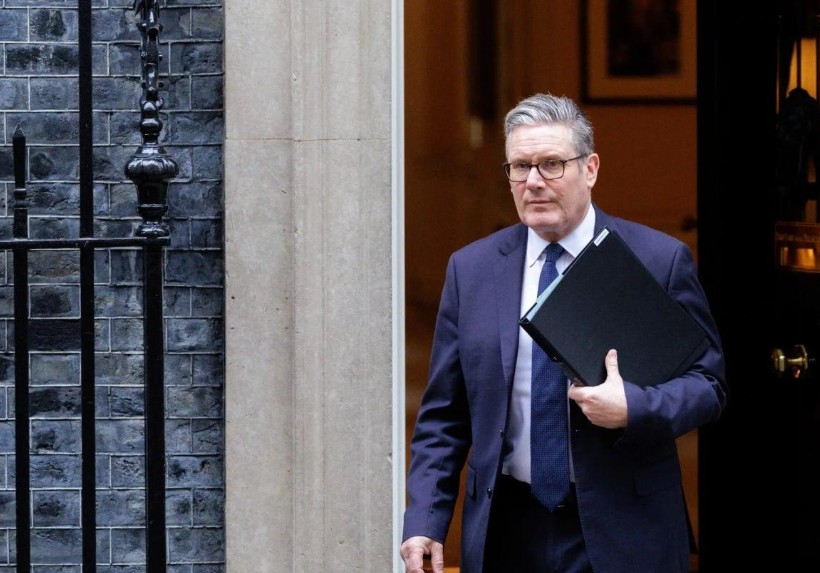
U.K. Prime Minister Keir Starmer stands on the precipice of a career-defining resignation after a coordinated mutiny by the Parliamentary Labour Party (PLP).
Following Andy Burnham’s landslide victory in the Makerfield by-election, senior cabinet figures have forced Starmer to prepare an immediate transition timetable to hand over power, aiming to stave off an electoral wipeout by a surging Reform UK.
- The Imminent Exit: Downstreet Street insiders confirm Prime Minister Keir Starmer is expected to announce a structured timetable for his departure, following intense pressure from senior colleagues at Chequers.
- The Burnham Momentum: Former Greater Manchester Mayor Andy Burnham is being sworn into the House of Commons today after capturing 54.8% of the vote in Makerfield, positioning him for a potential leadership coronation.
- The Cabinet Collapse: Over 95 backbench MPs have openly demanded Starmer’s resignation, compounded by high-profile exits from former Health Secretary Wes Streeting and Defence Secretary John Healey over critical policy disputes.
What Triggered the Collapse of the Starmer Premiership?
The speed of Keir Starmer’s political decline has stunned Westminster, occurring just two years after he delivered a historic 174-seat majority in the 2024 General Election.
While Starmer initially stabilised the Labour Party after the electoral devastation of the Jeremy Corbyn era, his administration rapidly lost momentum due to a prolonged U.K. cost-of-living crisis, repetitive policy U-turns, and a severe internal backlash over the controversial appointment of Peter Mandelson to a high-profile government role.
By mid-May 2026, internal dissent erupted into open revolt. The Prime Minister’s public standing plummeted to levels drawing historic comparisons to Liz Truss, with national opinion tracking placing Labour behind Reform UK for over 300 consecutive polls.
The crisis deepened in June 2026 due to severe disputes over the national defence spending trajectory, triggering immediate resignations from key figures within the Ministry of Defence, including Defence Secretary John Healey and junior minister Al Carns.
The final blow landed on June 18, 2026, when Josh Simons resigned his seat in Makerfield to trigger a rapid by-election.
Andy Burnham easily swept the constituency, capturing a majority of more than 9,000 votes. Burnham’s team now claims the backing of approximately 200 Labour lawmakers, nearly half of the PLP, leaving Starmer with no viable route to survive an executive challenge.
How Does the Westminster Instability Impact Regional Public Services?
While the immediate drama centres on individual political careers inside the Westminster bubble, the governance paralysis is causing severe structural distress across regional municipal budgets, U.K. transport networks, and localised public services.
Local Councils Locked Out of Funding Certainty
The ongoing leadership vacuum means the central government cannot pass comprehensive, multi-year spending reviews. Local authorities, already struggling under inflationary pressures, are unable to secure budgetary approvals from the Department for Levelling Up, Housing and Communities.
Consequently, critical regional projects, including upgrades along the M25 corridor and infrastructure development managed by Transport for London (TfL) and National Rail, are facing indefinite delays as ministerial authorisation freezes.
The Escalating Scottish Housing Emergency
The lack of a coherent domestic policy framework from Downing Street has exacerbated acute crises within the devolved administrations.
In Scotland, Scottish Labour leader Anas Sarwar took the unprecedented step of calling for Starmer’s resignation, labelling the Prime Minister a distraction that was actively sabotaging regional governance.
The public service strain is most critical across Glasgow, where a housing and homelessness emergency has completely overwhelmed local safety nets.
According to verified tracking metrics from Homeless Network Scotland and municipal housing authorities, the local infrastructure is failing to meet its legal obligations:
| Local Government & Housing Emergency Metrics | Previous Base | Current Level (June 2026) | Absolute Change |
| Verified Rough Sleepers (Glasgow City Council) | 203 individuals | 552 individuals | 171% Increase |
| Scottish Households in Unsuitable Temporary Accommodation | 16,264 households | 17,240 households | Record High |
| Statutory Housing Duty Failures by Scottish Councils | Stretched | 16,485 instances | 106% Annual Rise |
What Are Senior Cabinet Ministers Saying Privately?
While formal Downing Street communications initially maintained a defiant posture, cabinet-level unity fractured completely over the weekend. Starmer spent the days leading up to his anticipated announcement isolating at Chequers with his family, while his closest advisors held emergency discussions regarding an orderly autumn handover.
🚨JUST IN: UK PM Keir Starmer will “ADDRESS THE NATION” tomorrow morning ahead of his impending resignation
Even President Trump announced Keir’s FAILURE and RESIGNATION before him!
GOOD RIDDANCE 🔥👋🏻 pic.twitter.com/qFhAIen5X7
— Eric Daugherty (@EricLDaugh) June 21, 2026
“I don’t want to come on here and be delusional that there is no process, there are no forces at work which are challenging the prime minister as leader – that is clearly the case. We are facing a period of political uncertainty.” Peter Kyle, Business Secretary, speaking on the BBC’s Sunday with Laura Kuenssberg programme.
Peter Kyle Says Starmer Is Considering His Future as UK Prime Minister
Cabinet minister Peter Kyle reportedly confirmed that Keir Starmer is spending the weekend reflecting on his position, as pressure continues to mount over his leadership and the Labour government’s direction… pic.twitter.com/szc4TpGpsM
— Washington Eye (@washington_EY) June 21, 2026
“I have been very clear that our primary loyalty must be to the public. The current leadership is paralysing our ability to govern, and we cannot allow internal stagnation to clear a path for Nigel Farage to take Downing Street.” Anas Sarwar, Scottish Labour Leader, during a press conference addressing the Holyrood electoral risk.
Who Are the Main Contenders to Replace Keir Starmer?
If Starmer establishes an autumn departure timetable as expected, the Labour Party machinery will activate to select the United Kingdom’s seventh Prime Minister in ten years. Under party constitutional rules, any challenger requires the formal backing of at least 20% of the PLP (81 MPs).
The current field features distinct ideological factions:
- Andy Burnham (The Frontrunner): The newly elected MP for Makerfield is pushing for an uncontested coronation. His team is angling for a transition period extending into September, allowing him to construct a policy platform focused on regional devolution and a total reset of public service funding formulas.
- Wes Streeting (The Reformist Challenge): Despite resigning as Health Secretary in mid-May to protest Starmer’s management style, Streeting has confirmed his intention to stand. He commands significant support among modernising centrists who favour market-led public service reforms.
- Angela Rayner & David Lammy (The Continuity Elements): While Deputy Prime Minister Angela Rayner has publicly maintained party discipline, her allies have kept her leadership infrastructure intact to protect the interests of affiliated trade unions if a full, contested ballot occurs.