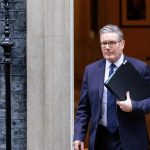
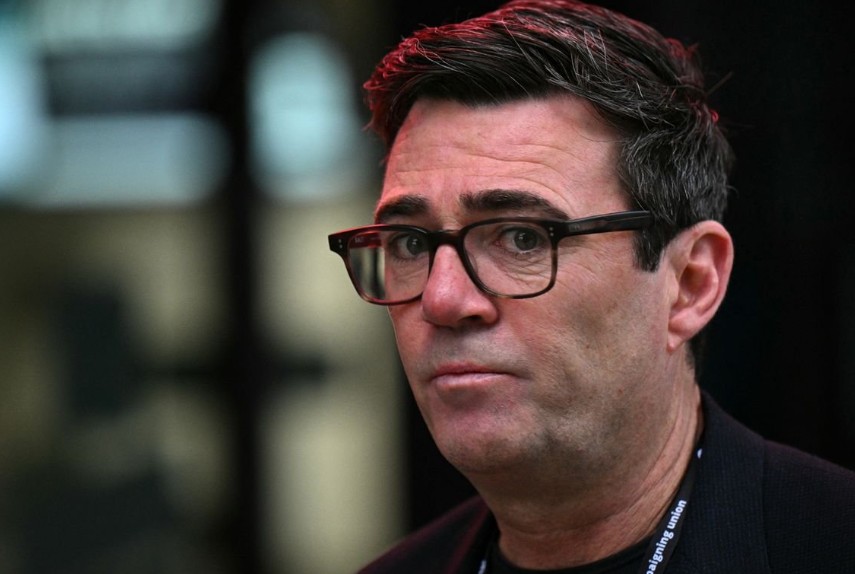
Sir Keir Starmer has resigned as Prime Minister following deep public discontent, positioning Greater Manchester Mayor Andy Burnham to take power at Westminster. Burnham’s landslide 55% victory in the Makerfield by-election secured his parliamentary seat, clearing his path to the Labour leadership unopposed after Wes Streeting withdrew.
- Starmer Resigns: Sir Keir Starmer stepped down after less than two years as Prime Minister following severe local election losses and an MP revolt.
- Burnham’s Return: Andy Burnham won the Makerfield by-election on 18 June 2026, defeating Reform UK by over 9,200 votes to rejoin the Parliamentary Labour Party (PLP).
- Unopposed Succession: Health Secretary Wes Streeting declined to trigger a divisive leadership contest, leaving Burnham as the presumptive next Prime Minister.
What Led to Sir Keir Starmer’s Sudden Resignation?
The rapid acceleration of the Andy Burnham Westminster trajectory follows a dramatic 24 hours in British politics. On Monday, 22 June 2026, Sir Keir Starmer stood outside 10 Downing Street to announce his departure.
Despite significant legislative landmarks, including extensive rail nationalisation under the Passenger Railway Services (Public Ownership) Act and major changes via the Employment Rights Bill, Starmer’s position became untenable after catastrophic May local council election results.
Canvassers reported severe personal blowback against Starmer from the electorate, largely driven by the early, controversial decision to scrap winter fuel payments for millions of pensioners.
Burnham’s return to the House of Commons was engineered via the strategic resignation of Josh Simons, the incumbent MP for Makerfield.
The Labour National Executive Committee (NEC) greenlit Burnham’s candidacy, allowing him to contest the 18 June 2026 by-election.
Burnham secured 24,927 votes (55%), soundly beating Reform UK’s Robert Kenyon, who finished second with 15,696 votes. With Wes Streeting backing Burnham to preserve party stability, Whitehall is preparing for an exceptionally swift transition of power.
How Will the Manchester Model Impact Devolved Budgets and National Infrastructure?
The shift from a Burnham-led Greater Manchester to a Burnham-led Westminster will fundamentally reshape UK regional governance, infrastructure development, and corporate employment landscapes.
Devolution Frameworks and Local Council Budgets
Burnham’s flagship achievement as Mayor was pioneering the Trailblazer devolution deal, giving Greater Manchester unprecedented control over housing and technical education. According to data from the Office for National Statistics (ONS), English local authorities face an aggregate funding gap exceeding £4 billion.
Political analysts expect a Burnham administration to rapidly accelerate fiscal devolution under a revised Local Government Finance Act, shifting funding distribution formulas to favour provincial town councils and northern municipal authorities.
The Integrated Transport Model (The Bee Network)
A Burnham premiership will directly impact national infrastructure hubs, specifically through the lens of Transport for London (TfL) and National Rail.
Burnham’s successful rollout of the Bee Network, which brought Manchester’s bus services back under public control, is highly likely to become the standard operational blueprint for the Department for Transport (DfT).
The economic implications for major UK transport networks are distinct:
| Infrastructure System | Current Status | Projected Burnham Policy Shift |
| National Rail Network | Mid-transition to public ownership. | New multi-modal fares. |
| Transport for London (TfL) | Reliant on complex capital grants. | Long-term funding tied to net-zero. |
| Strategic Road Network (M25 / M6) | High congestion. | Capital shift toward regional freight bypasses. |
Industrial Strategy and Employment
Industry bodies, including the Association of Professional Staffing Companies (APSCo), have emphasised that the economic priority must remain regulatory stability. Under Starmer, the transition toward banning zero-hours contracts presented execution issues for flexible, project-based agency sectors.
Burnham’s established regional commitment to a 2038 carbon-neutral target indicates that central funding will pivot heavily toward green energy infrastructure investments, aligning with structural calls from major trade unions like Unite.
What Are Political and Civic Leaders Saying About the Transition?
“Keir Starmer’s decision to resign was the honourable and right decision… Labour has one last shot to learn from the errors of the last two years. A failure to act will result in a doomsday scenario.” Sharon Graham, Unite General Secretary
“The people of Makerfield have chosen a candidate with a proven commitment to climate action… As the bookmakers’ favourite to be the next Prime Minister, he now has the chance to show national leadership.” Rosie Downes, Friends of the Earth Head of Campaigns
Andy Burnham being sworn in as Labour MP for Makerfield this afternoon
Huge cheers from Labour benches, heckles of “Rome is saved” and “He’s not the Messiah” to which Burnham replies: “Naughty boy” pic.twitter.com/frxsICnZs0
— Steven Swinford (@Steven_Swinford) June 22, 2026
What Is the Expected Timeline for Burnham Entering 10 Downing Street?
Because Wes Streeting and other top-tier cabinet figures have declined to mount a rival campaign, the Labour leadership selection process will bypass a prolonged, multi-month membership vote.
- Late June 2026: Andy Burnham officially resigns as Mayor of Greater Manchester, triggering a mayoral by-election window.
- Early July 2026: Parliament formally processes the transition; the Labour Party officially closes nominations for the leadership.
- Mid-July 2026: Burnham is expected to be formally invited by the King to form a government, entering Downing Street as Prime Minister before the summer parliamentary recess.