


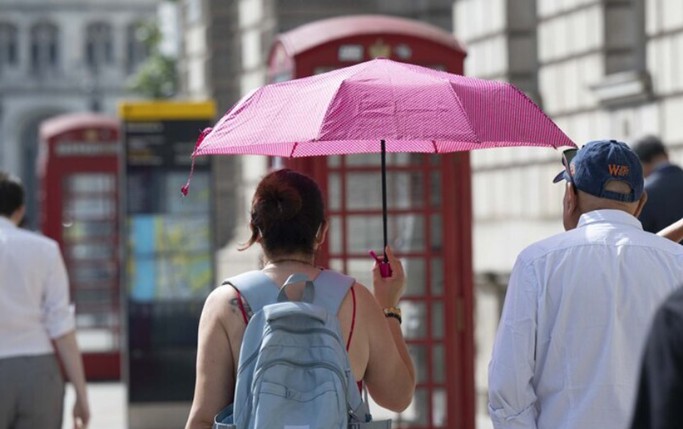
An unprecedented UK heatwave is gripping the nation as the Met Office confirms temperatures exceeding 35°C have been recorded across May, June, and July 2026 for the first time in British history. Emergency services and the UK Health Security Agency (UKHSA) have issued severe alerts as infrastructure faces significant strain.
- Record Longevity: This marks the first year the UK has seen six separate days top 35°C, surpassing the previous high-temperature benchmarks set in 1976 and 2020.
- Water & Fire Gridlock: Hosepipe bans now impact over eight million households across southern and eastern England, alongside an exceptional wildfire risk status.
- Infrastructure Slowdown: Transport systems are operating on emergency speed restrictions, while local councils face unprecedented social care budget allocations.
What is Causing the Historic Temperatures Across the UK?
An exceptional meteorological high-pressure system continues to dominate the British Isles, locking in a historic, prolonged spell of extreme heat. According to the latest data from the Met Office, the UK heatwave has completely shattered historical precedents: 2026 is officially the first year on record where temperatures have hit or exceeded 35°C across three separate calendar months.
Amber and Yellow heat-health alerts issued by the UK Health Security Agency (UKHSA) cover the majority of England and Wales. Daytime maximums are regularly hitting 32°C to 33°C in southern regions, while even typically cooler areas in Scotland and Northern Ireland are climbing well into the mid-to-high twenties.
The prolonged lack of precipitation has also caused severe environmental distress. Natural England has upgraded the wildfire risk status across central and southern zones to exceptional, with active blazes already stretching local fire services.
How is the Extreme Heat Damaging Regional Infrastructure and Economy?
The localized fallout of this intense weather window extends far beyond sun cream and crowded beaches. For commuters, Transport for London (TfL) and National Rail operators have enacted emergency speed restrictions to prevent steel tracks from buckling under thermal stress, causing rolling delays across the network.
Major motorways, including the M25, have seen asphalt temperatures soar, leading to a spike in vehicle breakdowns that has heavily congested key freight corridors.
Financially, local council budgets are bearing the brunt of the crisis. Local authorities are drawing from emergency contingency funds to scale up social care check-ins for vulnerable residents.
New data from the Met Office indicates that the May and June heatwaves alone have already contributed to an estimated 2,700 excess deaths across England and Wales, highlighting the immense pressure on the NHS and municipal services.
Simultaneously, the agricultural sector and domestic water grids are under immense pressure. The Department for Environment, Food and Rural Affairs (DEFRA) has been coordinating with major utility companies as statutory interventions mount.
Under the provisions of the Water Industry Act 1991, consecutive hosepipe bans have been rolled out across the country. Over eight million households are now restricted, with utility providers coordinating regional shutdowns to preserve rapidly depleting reservoirs.
| Utility Provider | Region Affected | Customer Base Impacted |
| Southern Water | Hampshire & Isle of Wight | ~1 Million Customers |
| Anglian Water | East of England | ~5 Million Customers |
| South East Water | Kent & Sussex Districts | Multiple Local Boroughs |
What are Officials Saying About the Ongoing Crisis?
Commenting on the operational strain, Met Office Deputy Chief Forecaster Steven Keates stated: “The overall pattern continues to remain settled with large amounts of sunshine through this week, and temperatures peaking around 30°C–32°C across parts of England and Wales.”
A cloudy start to Wednesday in places, but for most it will turn increasingly sunny as the morning progresses ☁️➡️☀️
The chance of a few showers towards the far southwest of England 🌦️ pic.twitter.com/FKEzlHwHSG
— Met Office (@metoffice) July 14, 2026
Politically, the situation has ignited legislative debates. Green Party MPs have formally raised inquiries with the Department for Transport (DfT) regarding infrastructure resilience, while backbenchers are preparing to introduce private member bills targeting maximum statutory workplace temperatures to safeguard industrial employees.
When Will the Heatwave End Across the Country?
Meteorological models indicate that high pressure will remain firmly entrenched through the coming days. A weak northerly airflow arriving late in the week may ease the absolute peaks by a degree or two, but meteorologists warn this will bring little respite, as baseline temperatures will remain stubbornly above the seasonal average.
Crucially, there is no meaningful rainfall forecast anywhere in the south of England for the next ten days, meaning drought conditions and water limitations are highly likely to persist well into next month.