
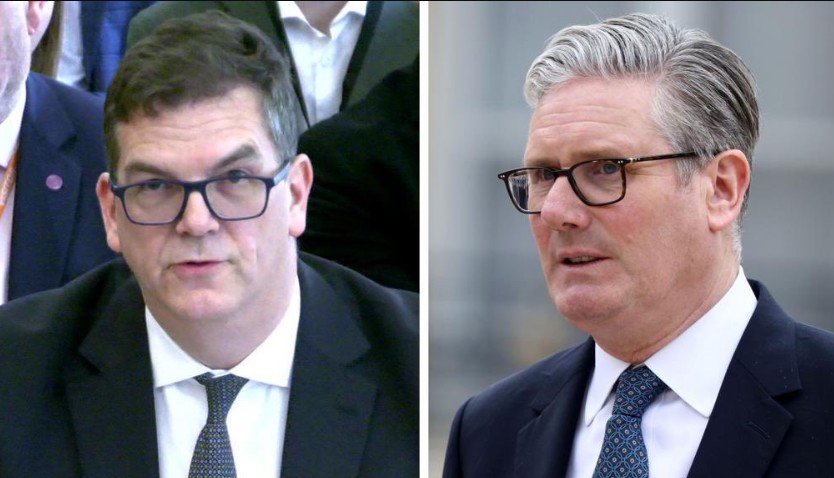
Sir Olly Robbins, the former Foreign Office permanent secretary, has filed a High Court judicial review against Prime Minister Sir Keir Starmer, contesting his unlawful and irrational dismissal. Robbins was sacked in April 2026 after Downing Street claimed he bypassed UK Security Vetting (UKSV) guidance to clear Lord Peter Mandelson as UK Ambassador to the United States.
- The Firing: Sir Olly Robbins was dismissed on 16 April 2026 via an abrupt phone call from Sir Keir Starmer, who claimed Robbins deliberately kept Downing Street in the dark about Mandelson’s vetting red flags.
- The Legal Challenge: Backed by the FDA union, Robbins is seeking a High Court judicial review because the Prime Minister has no statutory authority to dismiss the Head of the Diplomatic Service without due process.
- The Constitutional Fallout: The case threatens to rewrite the rules of civil service independence, examining whether a Prime Minister can unilaterally purge neutral top mandarins on political impulse.
Why is Sir Olly Robbins Taking the Prime Minister to Court?
The high-stakes legal battle traces back to the short-lived, controversial appointment of Lord Peter Mandelson as the UK’s Ambassador to the United States in early 2025.
Following investigative disclosures, it emerged that UKSV had recommended denying Mandelson the necessary Developed Vetting (DV) clearance due to major security flags regarding his relationships with foreign states, specifically China, Russia, and Israel.
Downing Street claimed Robbins, serving as the Permanent Under-Secretary of the Foreign, Commonwealth and Development Office (FCDO), bypassed these warnings and pushed the clearance through.
When the scandal broke, Starmer summarily dismissed Robbins, stating his failure to brief ministers on the red flags was “absolutely unforgivable”.
Robbins’ High Court submission directly counters this narrative. He asserts:
- There was no fair procedure and no process at all surrounding his dismissal.
- The reasons given by Starmer were irrational.
- Rather than failing to brief ministers, Robbins was under a strict, system-enforced legal obligation NOT to disclose ongoing vetting deliberations. The vetting process operates independently of political actors, who are legally only to be notified of the final green, amber, or red outcome.
What Does the Legal Submission Claim About PM Powers?
The crux of Robbins’ judicial review rests on an explosive constitutional claim: the Prime Minister does not possess the statutory authority to unilaterally sack the Head of the Diplomatic Service.
Unlike normal political aides, the Civil Service is protected by structural statutory codes designed to guarantee its political neutrality and professional permanence. The FDA union argues that allowing a Prime Minister to fire a permanent secretary “on a whim” destroys the bedrock of civil service impartiality.
🚨 BREAKING: SIR OLLY ROBBINS LAUNCHES LEGAL CHALLENGE AGAINST KEIR STARMER.
Former Foreign Office chief Sir Olly Robbins has begun judicial review proceedings over his dismissal during the Peter Mandelson security-vetting scandal.
Robbins claims:
• The Prime Minister had no…
— Jim Ferguson (@JimFergusonUK) July 13, 2026
The union also brought forward a critical piece of evidence: a letter dated 16 September 2025, signed by Foreign Secretary Yvette Cooper using text drafted and approved by No. 10 itself, which explicitly confirmed that ministers are kept entirely separate from the internal, independent running of the vetting apparatus.
What are the Public and Economic Costs of the Mandelson Scandal?
While the legal battle unfolds in Westminster’s courts, the financial and structural fallout is hitting the wider UK:
- The Taxpayer Legal Bill: Legal actions of this magnitude draw heavily from public funds. Conservative Shadow Chancellor of the Duchy of Lancaster, Alex Burghart, warned that the challenge will “likely cost taxpayers a fortune,” with legal experts projecting total costs, including potential damages, court fees, and defense expenditures—to easily exceed £500,000.
- FCDO Operational Paralysis: Robbins had recently returned to Whitehall with a mandate to execute major structural reforms, including a planned 25% staffing reduction at the FCDO. His sudden exit has frozen these reforms, leaving hundreds of administrative roles in a state of operational limbo, including at major regional hubs like East Kilbride, Scotland.
- UKSV Backlogs: The structural friction caused by the vetting dispute has severely slowed down national security processing times, delaying routine clearances required for local government personnel and civil contractors.
Key Testimonies and Critical Backlash
Sir Olly Robbins, Former Foreign Office Permanent Secretary: “I bring this action reluctantly. It would have been unnecessary if the Prime Minister had simply apologised for his mistake and made amends for the distress and cost it has caused me and my family. Instead, I now have to ask the courts to determine that the Prime Minister’s decisions were unlawful, unreasonable and to quash them.”
The FDA Union Statement: “Rather than being under a duty to tell ministers about the process leading up to the vetting decision, Olly was under an obligation not to. The process is independent of government ministers… [The dismissal] was based on a grievous misunderstanding of how the national security vetting system worked.”
The House of Commons Foreign Affairs Committee: In a report released last week, the cross-party committee concluded that Robbins’ dismissal “seems to have been taken without full due process and the establishment of the facts,” noting that Robbins believed he was “delivering the outcome that was wanted” by No. 10.
What Happens Next?
The legal collision between the UK executive and the Civil Service will play out across the judicial system over the coming months:
- Mandelson’s Vetting Completed: UK Security Vetting (UKSV) completes its file on Lord Mandelson, reportedly returning a red rating denying Developed Vetting (DV) clearance.
- Starmer Fires Robbins: Sir Keir Starmer dismisses Sir Olly Robbins on a late-night phone call after the negative vetting advice is leaked to the media.
- Select Committee Findings: The Foreign Affairs Committee slams the lack of due process in Robbins’ firing, while Cabinet Office Permanent Secretary Cat Little reveals Robbins had actively refused to hand over vetting summaries during the dispute.
- Judicial Review Launched: Sir Olly Robbins and the FDA formally apply to the High Court for a judicial review to quash the Prime Minister’s decision.