


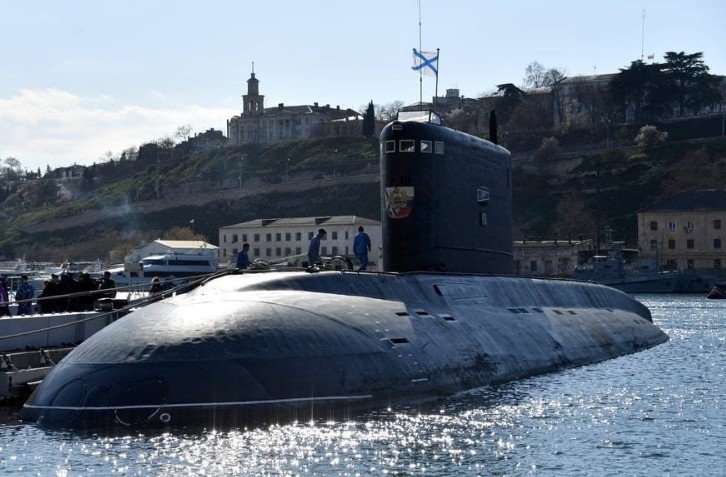
Ukraine has claimed a significant underwater strike against Russia’s Black Sea Fleet, saying it damaged a Russian submarine using a newly developed unmanned underwater drone known as “Sub Sea Baby”.
If independently confirmed, the attack would mark a notable shift in naval warfare and further expose vulnerabilities in Russia’s coastal defences.
The reported strike took place on 15 December at Novorossiysk, a strategically important Russian naval base on the Black Sea.
What does Ukraine say happened at the Novorossiysk naval base?
Ukraine’s Security Service (SBU) said the operation was carried out jointly with the Ukrainian Naval Forces and targeted an Improved Kilo-class submarine while it was moored inside the submarine pens at Novorossiysk.
The SBU released video footage showing a large explosion at the rear of a submarine. While independent verification is not yet available, visible damage appears to affect the vessel’s stern, an area critical for propulsion and manoeuvring.
Military analysts say even if the submarine did not sink, repairs could take months. Russia’s Ministry of Defence rejected Ukraine’s account, stating that the attack failed and that no vessels were damaged.
“The attempted strike on the naval base was repelled,” the ministry said in a brief statement.
What is the Sub Sea Baby drone?
The Sub Sea Baby is believed to be an unmanned underwater vehicle (UUV), representing a new phase in Ukraine’s maritime drone programme.
Unlike earlier Ukrainian drones that operated on the water’s surface, this system is designed to remain submerged throughout its attack run.
Defence specialists suggest the drone likely functions in a similar way to an autonomous torpedo, following pre-programmed routes before locking onto its target.
THREAD | Ukraine strikes Russian submarine in Novorossiysk.
1/ Ukraine’s Security Service (@ServiceSsu) has carried out a historic special operation in the port of #Novorossiysk. For the first time ever, underwater drones struck and disabled a #Russian Kilo-class (Project… pic.twitter.com/erN4nBVoH8— InformNapalm (@InformNapalm) December 15, 2025
This would explain how it navigated tight harbour spaces and reached a protected submarine pen.
The released footage appears to originate from a fixed harbour camera, raising questions about whether Ukrainian intelligence accessed Russian surveillance systems to monitor activity inside the base.
Ukrainian officials have not commented on whether real-time guidance was used.
Why are Russian submarines key targets?
Improved Kilo-class submarines play a central role in Russia’s Black Sea operations. These vessels are capable of launching Kalibr cruise missiles, which have been widely used to strike Ukrainian ports, power stations and energy infrastructure.
Each submarine typically carries between four and six Kalibr missiles, according to defence estimates. Disabling even one of these platforms significantly reduces Russia’s ability to launch surprise missile attacks from the sea.
If the Novorossiysk submarine has been put out of action, Russia may now have only two operational submarines left in the Black Sea, down from six at the start of the war.
Escalation of maritime warfare in the Black Sea
The attack comes during a renewed phase of maritime escalation. In recent weeks, Ukraine has stepped up operations against Russian-linked oil tankers travelling to Novorossiysk, disrupting what Kyiv describes as oil smuggling activities used to bypass sanctions.
Russia has responded with drone and missile strikes on Odesa, including an attack on 12 December that damaged foreign-linked commercial vessels carrying food supplies.
Ukraine’s use of underwater and surface drones mirrors its wider campaign of targeted strikes against Russian military and industrial infrastructure. Earlier this year, Ukrainian forces also carried out high-profile attacks using Storm Shadow missiles.
The targeting of civilian shipping has raised international concern, particularly among countries with trading interests in the region.
Why do harbour defences fail?
Russia has reinforced Novorossiysk with floating barriers and protective pontoons designed to stop surface-based drones. However, these defences offer limited protection against underwater threats.
Because the Sub Sea Baby operates below the surface, it can pass under physical barriers and avoid most conventional detection systems.
Until Russia deploys specialised anti-underwater drone technology, analysts believe the base remains exposed to similar attacks.
Could Ukraine use this technology against the Kerch Bridge?
The success of underwater drones has renewed speculation about further attacks on the Kerch Bridge, which links Crimea to mainland Russia.
The bridge has been damaged several times since 2022, including a major underwater explosion in June 2023 involving explosives equivalent to 1,100kg of TNT.
While a Sub Sea Baby drone could potentially evade existing defences, experts remain sceptical that it could cause enough structural damage on its own to collapse the bridge.
Strategic implications for Russia’s navy
If Novorossiysk can no longer guarantee safety for major warships, Russia may be forced to relocate parts of its Black Sea Fleet further from Ukraine.
Alternative ports such as Sochi or Poti in Abkhazia lack the infrastructure needed for sustained submarine operations, which could leave the fleet largely combat ineffective.
Longer term, the loss of Kilo-class submarines would also reduce Russia’s ability to project naval power in the Mediterranean, where these vessels have played a key strategic role.
What does this mean for the UK public?
For the UK, the incident underlines growing instability in the Black Sea, a region critical to global trade and energy flows. It also highlights how rapidly evolving drone technology could influence future conflicts involving NATO’s eastern neighbours.