


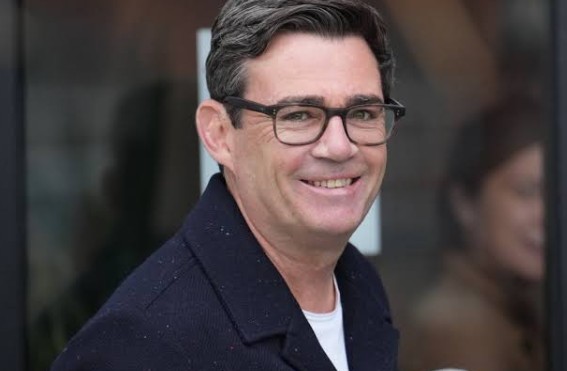
On Friday, 17 July 2026, former Greater Manchester Mayor Andy Burnham officially became the leader of the governing Labour Party. Having secured nominations from 379 of 403 Labour MPs to run unopposed, Burnham is poised to be appointed Prime Minister on Monday, 20 July, succeeding Sir Keir Starmer.
- Uncontested Victory: Burnham secured 94% of nominations from the Parliamentary Labour Party (PLP), leaving no mathematical path for any challenger.
- No. 10 Transition: Outgoing Prime Minister Sir Keir Starmer will formally resign to King Charles III on Monday morning, triggering the formal invitation for Burnham to form a government.
- Devolution Focus: Burnham plans to execute a sweeping rebalancing of power from Whitehall to local regions, including a symbolic No. 10 North office in Manchester.
Who is Andy Burnham, and How Did He Secure the Labour Leadership?
The speed of Andy Burnham’s ascent to the apex of British politics has caught Westminster off-guard, but it represents the culmination of a highly calculated strategy. After winning the Makerfield by-election on 18 June 2026 with a majority of over 9,000 votes, Burnham paved his way back to the House of Commons.
This by-election, triggered by the strategic resignation of Josh Simons MP, bypassed the blockade previously erected by Labour’s National Executive Committee (NEC).
Four days later, hit by catastrophic local election results and facing a surge from Nigel Farage’s Reform UK, Sir Keir Starmer announced his resignation. Following the close of nominations under party rules, Burnham emerged as the sole qualified candidate, backed by every eligible member of Starmer’s Cabinet.
He will inherit a parliamentary democracy that allows the governing party to transition leaders without triggering a snap general election, with the next national vote not required until 2029.
The image above highlights the polished, modern statesman persona Burnham has cultivated during his decade outside direct Westminster parliamentary politics. His transition from municipal regional power to national leadership marks a dramatic shift in Labour’s ideological centre of gravity.
What Are the Key Pillars of the New Economic Agenda?
Burnham’s authentically Labour economic programme aims to reverse decades of centralisation by moving away from what he terms the London-centric financial model. Rather than relying on top-down development, his administration is focusing on key structural reforms across transport, housing, and social care:
- National Rail & Bus Integration: Burnham plans to replicate Greater Manchester’s successful “Bee Network” public-control model nationwide. This strategy is backed by Department for Transport (DfT) data from 2025, which showed an 11.2% increase in passenger journeys once bus services were brought under municipal oversight.
- Devolution of Housing & Rent Controls: The incoming administration intends to grant local authorities the legal power to introduce private rent freezes in high-pressure regional hubs. This comes in response to Office for National Statistics (ONS) reports indicating that average private rents rose 8.7% annually across major regional cities.
- Publicly Funded Social Care: A cornerstone of his domestic policy is the launch of a National Care Service, integrated directly into the NHS. This addresses a critical public health crisis highlighted by Age UK and the Department of Health and Social Care (DHSC), which estimates that 1.6 million older adults currently live with unmet social care needs.
The incoming Prime Minister’s emphasis on municipal public ownership of transport hubs, such as TfL networks and TransPennine routes, aims to ease localized infrastructure deficits that cost the UK economy an estimated £20 billion annually in lost productivity.
Why Is the No. 10 North Strategy Such a Radical Shift for Whitehall?
Unlike previous administrations that operated strictly out of London, Burnham’s headline policy is the establishment of No. 10 North, a fully operational Cabinet office located in Manchester. Burnham argues that Whitehall is physically and culturally detached from the daily economic pressures felt by municipal England.
By basing key policymakers outside the capital, the incoming administration aims to accelerate regional devolution deals. Under his proposed framework, local mayors and county councils will receive direct, consolidated block grants rather than having to bid competitively for micro-budgets through central government departments.
Critics have raised concerns that this could lead to a fragmented approach to national infrastructure, but Burnham’s allies insist that local control is the only way to revitalise stagnant regional economies.
How Will This Reshape the UK’s Strategic Public Infrastructure?
Under Burnham’s leadership, the relationship between central government and major transport networks is set for a massive overhaul. Municipal leaders will be handed unprecedented powers to coordinate regional services, with a major focus on connecting underserved towns to primary city centres.
Infrastructure experts suggest this model could finally unlock the stalled northern legs of major rail projects, integrating them directly with local commuter lines. However, the Treasury will face intense pressure to fund these ambitious regional integrations while maintaining stable public spending limits.
“That is the circuit breaker I am offering: power out of Westminster, an economy rewired for ordinary people, and good growth in every postcode.” Andy Burnham, MP for Makerfield
Outgoing Chancellor Rachel Reeves warned the incoming leader to prepare for immediate shocks and challenges from the financial markets. Meanwhile, speculation points to former Health Secretary Shabana Mahmood taking over as Chancellor of the Exchequer to stabilize market expectations.
What Is the Timeline for the Transition of Power?
The transition of executive power in the United Kingdom follows strict constitutional protocols. Below is the scheduled itinerary for the coming days:
- Labour Leadership Declaration: Burnham is formally declared Leader of the Labour Party at a special party conference, delivering a speech outlining his vision to tackle the 1980s legacy of privatization.
- Audience with King Charles III: Sir Keir Starmer visits Buckingham Palace to tender his resignation. Shortly after, the King invites Andy Burnham to form a government.
- Cabinet Appointments: The new Prime Minister announces his “broad church” Cabinet, aiming to bridge the gap between the centrist and left-wing factions of the party.
- First Prime Minister’s Questions (PMQs): Burnham faces his first live parliamentary test in the House of Commons, setting up a direct ideological clash with opposition benches.