


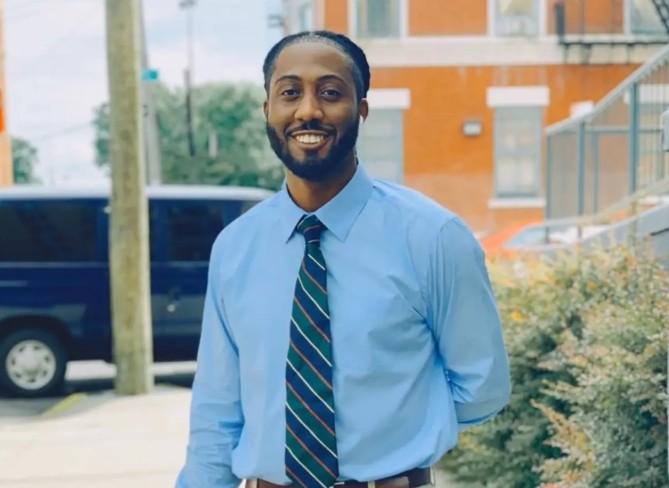
A former NYC basketball coach in the Bronx has been indicted after prosecutors alleged he took a 14-year-old student to a motel and raped her following a school basketball game.
The accused, Jayvone Johnson, 35, worked as a physical education specialist and girls’ basketball coach at a Bronx charter school, according to public records and prosecutor statements.
The alleged assault reportedly took place on 23 December 2024, in the Van Nest area of the Bronx, and has now led to formal charges including second-degree rape and sexual abuse.
Prosecutors say the case highlights a serious breach of trust, as the girl was allegedly a student connected to the sports programme Johnson coached.
Although the case happened in New York, it has drawn wider attention because it reflects safeguarding fears also shared in the UK, where parents and schools remain concerned about misconduct in youth sport.
What are prosecutors saying happened in the Bronx?
According to the Bronx District Attorney’s Office, Johnson allegedly approached the teenager after a basketball game and persuaded her to leave with him.
Prosecutors claim he brought her to the JetSet Motel, near Third Avenue and East 184th Street, where the alleged rape took place.
Authorities say the victim was 14 at the time and had previously played on the girls’ basketball team he coached.
The allegations form the basis of a grand jury indictment, which is a major step in the US legal process and signals prosecutors believe they have sufficient evidence to proceed to trial.
Johnson was reportedly arrested in December, and the court process is ongoing.
Who is Jayvone Johnson, and where did he work?
Jayvone Johnson, 35, was linked to Icahn Charter School 2, a school in the Bronx, where he reportedly worked as both a physical education specialist and a coach for the girls’ basketball programme.
The school has confirmed he is no longer employed there. The case has generated particular outrage because it involves a school-based sports environment, where young people and parents typically assume safeguarding rules and supervision will prevent such incidents.
Prosecutors also noted Johnson had been involved in youth development roles outside school, which further strengthened public concern about how much access he may have had to children through organised sport.
What charges is the former NYC basketball coach facing?
Prosecutors say Johnson has been indicted on several offences, including second-degree rape and sexual abuse. These charges are among the most serious sexual offences under New York law, especially when they involve a minor.
At this stage, an indictment is not a conviction. Johnson remains legally innocent until proven guilty in court.
However, the details outlined by prosecutors have already triggered a strong public reaction due to the age of the alleged victim and the coach’s position of authority. Johnson is due to return to court on 21 April.
Why does this NYC basketball coach’s Bronx case matter so much?
Cases like this often provoke a stronger public response than other criminal allegations because they involve a trusted adult accused of harming a child.
Parents do not simply expect coaches to teach sport. They expect them to act responsibly, protect young people, and follow safeguarding rules.
Prosecutors argue the allegations show the opposite: an adult in a mentoring role allegedly exploiting a child who was meant to be safe within a school-linked sports setting.
Bronx District Attorney Darcel Clark described the alleged incident as a clear betrayal of trust.
“As a basketball coach, this defendant had the trust of school leaders, parents and students. In this instance, instead of honouring that trust, he broke it.”Bronx District Attorney Darcel Clark
That statement reflects the central issue behind the outrage: the alleged crime did not involve a stranger, but someone with direct access to a teenager through school sports.
How is this relevant to UK parents and schools?
Although this case happened in the United States, the safeguarding risks are familiar in the UK.
British schools, football clubs, basketball academies, dance studios and youth training programmes all face the same challenge: children build trust quickly with adults who coach or mentor them. That trust can create an opening for grooming behaviour if proper oversight fails.
In the UK, safeguarding is a legal duty, not simply a “best practice”. Schools must follow official guidance and report concerns quickly.
Sports organisations also operate under strict child protection expectations, especially where adults supervise children away from parents.
For many UK readers, this story will raise the same uncomfortable question: could something similar happen here? The honest answer is yes, which is why safeguarding policies exist.
What rules protect children in the UK from coach misconduct?
The UK uses several safeguards designed to reduce the risk of abuse in schools and youth sport.
Most adults working with children must pass Enhanced DBS checks, which can reveal previous convictions and relevant safeguarding concerns.
Schools must also follow statutory safeguarding guidance, including Keeping Children Safe in Education (KCSIE) in England.
Every school is expected to appoint a Designated Safeguarding Lead (DSL), who manages child protection concerns and works with police or local authorities when necessary.
Many sports clubs also use welfare officers, safeguarding training, and clear rules that prevent private contact between coaches and children.
The main principle is simple: no adult in a position of trust should ever be able to isolate a child without accountability.
Why are youth sports environments seen as high risk?
Youth sport often involves emotional pressure, intense coaching relationships, and situations where children spend time with adults outside the classroom. This can include travel to matches, post-game discussions, training camps, and one-to-one mentoring.
Most coaches behave responsibly, but safeguarding experts warn that sport can create opportunities for inappropriate behaviour if boundaries are weak.
When adults have authority, children may feel unable to refuse requests, question instructions, or report concerns.
That is why many UK sports organisations now enforce policies discouraging private lifts, secret messaging, or unsupervised meetings between staff and young athletes.
What warning signs should families take seriously?
Safeguarding professionals often highlight that abuse rarely begins with violence. It may start with boundary-pushing behaviour that feels small but gradually escalates.
Parents should take concerns seriously if a coach shows unusual favouritism, encourages secrecy, tries to communicate privately on social media, or creates situations where a child becomes emotionally dependent on their approval.
The key warning sign is isolation. When an adult repeatedly seeks alone time with a child, safeguarding experts advise treating it as a serious concern, not a misunderstanding.
What are people saying online about the Bronx allegations?
Public reaction to the case has been intense, with many social media users focusing on the age of the alleged victim and the setting of the alleged crime.
The case has also sparked debate about whether safeguarding systems are strong enough, both in the US and internationally.
Many commenters have questioned how an adult in a school-linked role could allegedly persuade a child to leave after a game without immediate intervention. Others have argued that youth sport must strengthen supervision and reporting pathways.
The online reaction reflects a wider truth: when safeguarding fails, public trust collapses quickly.