


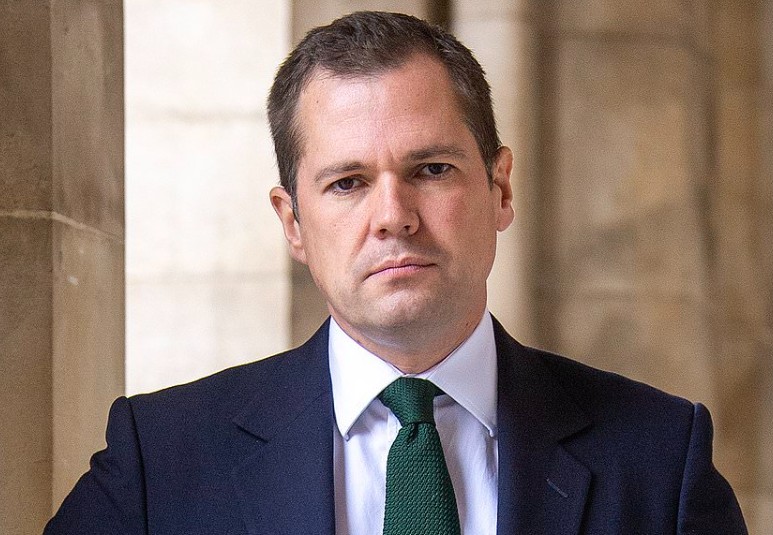
Robert Jenrick will today deliver his first major speech as Reform UK’s Shadow Chancellor, where he is expected to outline sweeping Bank of England changes and a shake-up of the Office for Budget Responsibility (OBR).
The Newark MP will speak in London’s financial district as Reform UK attempts to position itself as a serious economic alternative to Labour and the Conservatives.
Mr Jenrick is expected to argue that Britain’s economic institutions need reform to restore stability, reduce wasteful spending, and rebuild confidence among investors and voters.
His speech comes amid continued public concern over inflation, mortgage costs, household bills, and trust in political decision-making.
What Bank of England changes is Robert Jenrick expected to announce?
Mr Jenrick is expected to confirm that Reform UK would keep the Bank of England independent, but would strip it of what the party describes as “non-core” responsibilities.
In his planned remarks, he is likely to argue that the Bank should focus more narrowly on controlling inflation and supporting financial stability.
Reform will build an economy that serves alarm clock Britain.
For those who do the right thing.
We will cut waste. Cut your taxes and bills. And restore stability. pic.twitter.com/zowZKXmGHO
— Robert Jenrick (@RobertJenrick) February 17, 2026
Reform UK is expected to propose:
- Removing the Bank’s responsibility to support the transition to Net Zero
- Making the institution more open and transparent
- Increasing private sector representation on the Monetary Policy Committee (MPC)
- Criticising the long-term use of quantitative easing (QE)
Quantitative easing refers to the Bank creating money electronically to buy government bonds, which is designed to stimulate the economy. Critics argue it can increase asset prices and deepen inequality, while supporters say it prevents deeper recessions.
Why does Reform UK want to reduce the Bank’s responsibilities?
Reform UK’s argument appears to focus on the message that the Bank should concentrate on inflation and interest rates, rather than wider political or environmental goals.
The party believes the Bank has become overloaded with “mission creep” and that it should not act as a vehicle for wider government policy objectives.
Mr Jenrick is expected to frame this as a cost-of-living issue, linking the Bank’s priorities directly to everyday pressures such as:
- Energy bills
- Food inflation
- Mortgage repayments
- Rent increases
By narrowing the Bank’s remit, Reform aims to present itself as the party of economic discipline and low inflation.
What is Reform UK planning to do with the Office for Budget Responsibility?
Mr Jenrick is also expected to announce major reforms to the Office for Budget Responsibility (OBR), the independent body that checks government spending plans and forecasts the economy.
Reform UK is expected to say it will not abolish the OBR, but will instead restructure it to include a wider range of views and forecasting approaches.
He is expected to say: “Everything the Reform promise will be fully-costed. And because we’re confident about the approach we will take, we’re happy to have our homework marked.”
He is also expected to add: “Rather than abolish it, we will reform it. We will break up this cosy consensus and ensure it has diversity of opinion.”
Reform’s proposed changes include running competitions to recruit top economic “superforecasters” and offering competitive salaries to those who can accurately predict the impact of Treasury decisions.
Why is Reform UK criticising the OBR’s migration and tax forecasts?
Reform UK is expected to claim that the OBR has repeatedly misjudged the economic impact of low-skilled migration.
The party believes forecasts have overstated the economic benefits while underestimating the strain on public services, housing supply, and wage growth.
Reform also argues that the OBR underestimates how tax cuts can stimulate the economy, and that current forecasting models may discourage bolder fiscal decisions.
This is a politically sensitive area, as migration remains one of Reform UK’s strongest campaign themes.
What has Robert Jenrick said about Bank independence?
Despite proposing structural changes, Mr Jenrick is expected to insist that Reform UK will not undermine the Bank of England’s independence.
He is expected to say: “Under Reform, the Bank of England will remain independent.”
He will likely present this as a reassurance to the City of London, financial markets, and international investors who often view Bank independence as a sign of economic credibility.
However, critics may argue that changing the Bank’s remit still counts as political interference, even if independence remains formally intact.
How have Labour and the Conservatives reacted to Jenrick’s plans?
Both Labour and Conservative figures have already criticised the proposals.
Shadow Chancellor Sir Mel Stride has attacked Reform’s economic credibility, claiming the party has failed to properly explain its spending plans and would not survive serious scrutiny.
He is expected to argue that Reform’s figures are unrealistic and risky for Britain’s finances.
Labour has also issued a strong warning, with Treasury minister Dan Tomlinson claiming Jenrick cannot escape his previous record in government and linking him to past Conservative economic decisions.
Labour’s message appears to be that Reform’s proposals are political theatre rather than workable reform.
Could these Bank of England changes affect interest rates and mortgages?
While the proposals do not directly set interest rates, any shift in the Bank of England’s responsibilities could have long-term consequences for how the Bank operates.
In practical terms, changes to the Bank’s structure and decision-making process could influence:
- Market confidence
- Investor stability
- Future interest rate policy
- How quickly is inflation tackled
For the public, this matters because interest rates affect mortgage repayments, credit card costs, and business borrowing.
Even small shifts in economic confidence can cause lenders to adjust rates and pricing.
Why the City of London cares?
The City of London reacts quickly to any political plan that touches the Bank of England.
After past financial shocks, investors became especially sensitive to signs that governments might weaken independent institutions.
Even if Reform UK says it supports independence, investors may still question whether removing climate responsibilities or changing committee membership could shift how decisions get made behind closed doors.
That is why Mr Jenrick’s speech today is likely aimed as much at financial professionals as it is at voters.