


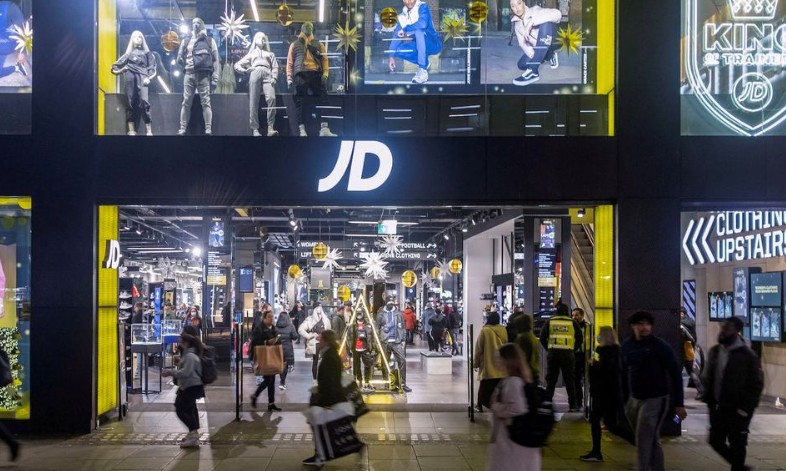
JD Sports is accelerating its fewer, bigger, better retail strategy, resulting in the closure of its specialist Hip brand stores in Manchester and Leeds this week.
This consolidation follows a wider corporate movement to move away from smaller, underperforming physical sites in favour of high-traffic flagship hubs and digital-first growth.
- Targeted Closures: The Hip stores in Manchester (Thomas Street) and Leeds (Vicar Lane) are exiting the high street, moving to an online-only model to reduce overheads.
- Fewer, Bigger, Better: JD Sports is culling smaller units that lack operational leverage, focusing investment on large-scale flagships like their Manchester Trafford Centre site.
- FY27 Guidance: Reflecting a tough consumer backdrop, the group has adjusted its profit guidance to a range of £750 million–£850 million for the 2027 financial year.
Why Is JD Sports Closing Specialist Stores?
The decision to shutter the Hip brand’s physical locations is not merely about individual store performance, but a core component of the JD Group’s global efficiency programme.
CEO Régis Schultz has been vocal about the logistical inefficiencies of smaller shops, noting that they require the same level of staffing and energy overheads as larger stores while delivering lower returns.
By migrating the Hip brand, which JD acquired to capture the niche boutique market, to an online-only platform, the company is effectively cutting dead weight while maintaining its digital market share.
This aligns with the group’s broader strategy, which saw a net reduction of 24 UK branches over the past year to focus capital on sites that support “theatrical” retail experiences.
The Economic Context: A Challenging Trading Environment
The retail giant’s strategy is heavily influenced by domestic and international pressures. According to the Office for National Statistics (ONS), retail sales in the UK have struggled under the weight of dampened consumer confidence and inconsistent weather patterns, with organic sales in the UK declining by 2.5% over the last fiscal year.
JD Sports has explicitly cited heightened uncertainty as a risk factor. While the firm reports no direct exposure to the Middle East, it has warned that geopolitical volatility may drive up logistics and energy costs, forcing the business to adopt a more cautious approach to its physical footprint.
Furthermore, the rising National Living Wage and input cost inflation have made smaller retail footprints increasingly difficult to justify from a margin perspective.
Strategic Pillars and Operational Efficiency
JD Sports is not retreating; it is reallocating. The company’s 2026 Global Impact Report outlines a commitment to:
- Automation: Investing in high-tech distribution centres, such as the one in Heerlen, to streamline logistics across the UK and Europe.
- AI Integration: Utilising agentic AI and data-driven personalisation to improve inventory management and customer discovery.
- Omni-channel Dominance: Integrating digital experiences with physical flagships to future-proof the group against the decline of traditional secondary high streets.
The Future of UK High Streets
The closure of smaller outlets, such as the Hip sites, poses significant questions for local authorities. As major retailers consolidate, high street vacancy rates become a critical concern for the Department for Business and Trade (DBT) and local councils tasked with maintaining town centre vibrancy.
The fewer, bigger, better model suggests that while high-street retail is not dying, it is becoming hyper-concentrated in prime urban locations, potentially leaving smaller shopping districts behind.