


The FBI has reportedly contacted gun shops in Arizona and asked them to check recent firearm sales against a list of names and photos, as the search for missing woman Nancy Guthrie continues into its third week.
A gun store owner in Tucson has claimed an FBI agent visited his business with paperwork showing around 18 to 24 individuals, asking him to search whether any of them had bought guns in the past year.
The development comes as local authorities continue investigating what happened to Guthrie, who vanished from her home area in late January.
The case has drawn wide public attention in the United States due to the unusual circumstances and the involvement of federal investigators.
What happened in the Nancy Guthrie case?
Nancy Guthrie disappeared from her home area in Tucson, Arizona, and authorities believe she may have gone missing during the early hours of 1 February 2026.
Officials say she was last confirmed to be safe on the evening of 31 January, after family members reportedly dropped her off at home.
Investigators later noticed a series of concerning events, including security equipment disconnecting and her medical monitoring system losing contact.
Police have not confirmed whether the case is being treated as an abduction, but they have repeatedly stated that they are working on multiple lines of enquiry. The investigation is now being supported by the FBI.
Why did the FBI contact gun stores in the Nancy Guthrie case?
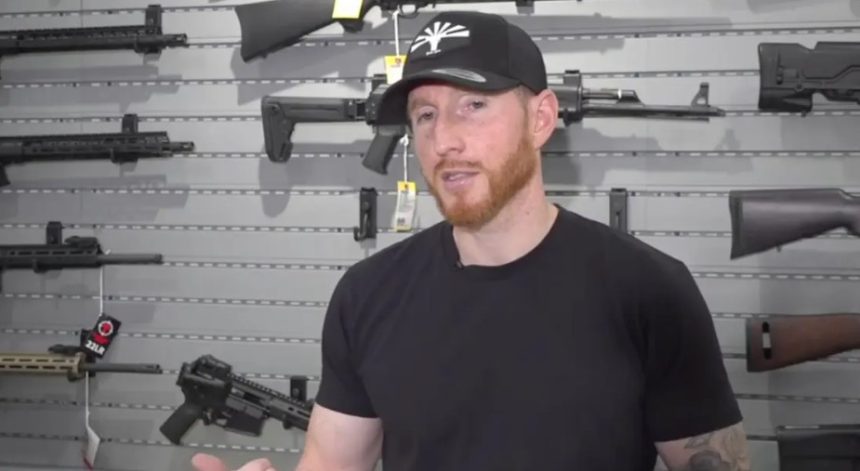
According to reports from US media, Phillip Martin, co-owner of Armor Bearer Arms in Tucson, said an FBI agent came into his shop and asked for help.
Martin claimed the agent provided him with three pages of names and photographs and asked him to check whether any of the individuals had purchased firearms from his store within the last 12 months.
Gun store owner says FBI asked him to check firearm sales against list of names, pics in Nancy Guthrie case “I felt bad for the family. Anything that could help them find the person I was willing to help,” he said. pic.twitter.com/2BrJ3Tg9AN
— NahBabyNah (@NahBabyNahNah) February 18, 2026
Martin said the FBI agent’s request appeared to be part of a wider effort to track possible weapon purchases connected to the investigation.
He told reporters: “He actually had given me a list of paper, a list of people that had pictures and names on it, and he wanted to know if I could help him pull up in my system if any of these people have purchased a gun in the last year.”
Martin also said he initially questioned the request but decided to cooperate due to the seriousness of the case. “I felt bad for the family. Anything that could help them find the person I was willing to help.”
Did any of the names match gun purchases?
Martin said he searched each surname through his store’s electronic sales system, which logs legal firearm purchases and customer details.
He claimed none of the names on the FBI list returned a match for any firearm purchase made within the last year.
This does not mean those individuals have no connection to the case. It simply means they did not buy a gun from his shop during that specific timeframe.
Martin also stated the agent told him investigators planned to visit other gun stores to continue the same checks.
Are police focusing on a small list of suspects?
Despite the reports about the FBI’s list, the local sheriff has pushed back against claims that investigators have narrowed the case down to a limited group of suspects.
Pima County Sheriff Chris Nanos denied that police had identified around 40 people as a focused suspect pool.
He said: “That’s not true. We haven’t narrowed it down to anything other than we have pieces of evidence that we’re looking at to try to find this individual.”
His statement suggests investigators remain in a broad evidence-gathering stage, rather than targeting a specific shortlist.
What is the known timeline of Nancy Guthrie’s disappearance?
Authorities and media reports have shared a rough timeline based on security systems, medical monitoring data, and family contact.
Nancy Guthrie’s disappearance timeline
31 January 2026
- Between 9:30pm and 9:45pm – Nancy is reportedly dropped off at home by family
- 9:50pm – Garage door closes (according to authorities)
1 February 2026
- 1:47am – Doorbell camera disconnects
- 2:12am – Security camera detects motion
- 2:28am – Pacemaker disconnects from phone application
- 11:56am – Family checks on Nancy after she misses a weekly church livestream
- 12:03pm – 911 call placed
- 12:15pm – Sheriff’s deputies arrive at the home
Investigators have not publicly confirmed whether the camera disconnect was caused by a technical issue, deliberate interference, or environmental conditions.
Why is the FBI involved in the investigation?
The FBI usually becomes involved in missing person cases when there is a potential link to:
- interstate crime
- kidnapping concerns
- organised criminal activity
- evidence requiring federal resources or forensic expertise
While officials have not stated clearly why the FBI stepped in, the presence of federal agents suggests investigators consider the disappearance suspicious and possibly criminal.
The reported gun-store checks may point to a concern that someone involved could have accessed a firearm recently.
Could gun-store checks become a normal part of missing person investigations?
In the UK, police sometimes check firearm licence holders or registered gun ownership records when dealing with high-risk disappearances.
However, the US has different gun laws and record systems, which often require investigators to visit multiple sellers individually.
Unlike the UK, where firearms ownership is far more restricted, the US has a much larger number of gun dealers and a wider legal market. That can make investigations slower and more complex.
A UK-based comparison would be similar to police checking licensed firearm owners in rural England or Scotland after a serious disappearance, but the scale in the US is far larger.
What impact could this have on the wider case?
If investigators can confirm whether any individuals of interest recently purchased firearms, it could help them:
- narrow down threats or potential suspects
- track movements using purchase records
- Identify suspicious patterns between buyers and locations
- connect purchases to CCTV sightings or vehicle movements
However, the Tucson gun store owner’s report suggests the FBI may still be casting a wide net.
The fact that no matches were found at his shop could indicate:
- The individuals never purchased firearms locally
- The list may relate to background checks rather than confirmed suspects
- purchases may have happened earlier than one year ago
- Weapons may not be involved at all
What should the public take from the FBI’s actions?
The gun store visit shows that investigators are exploring worst-case possibilities. Even if no weapons are involved, law enforcement often checks firearm access early in missing-person cases because it can quickly change the risk level for the victim, police, and the public.
Sheriff Nanos’s comments also suggest the investigation remains open-ended and evidence-led, rather than centred on a known individual.