


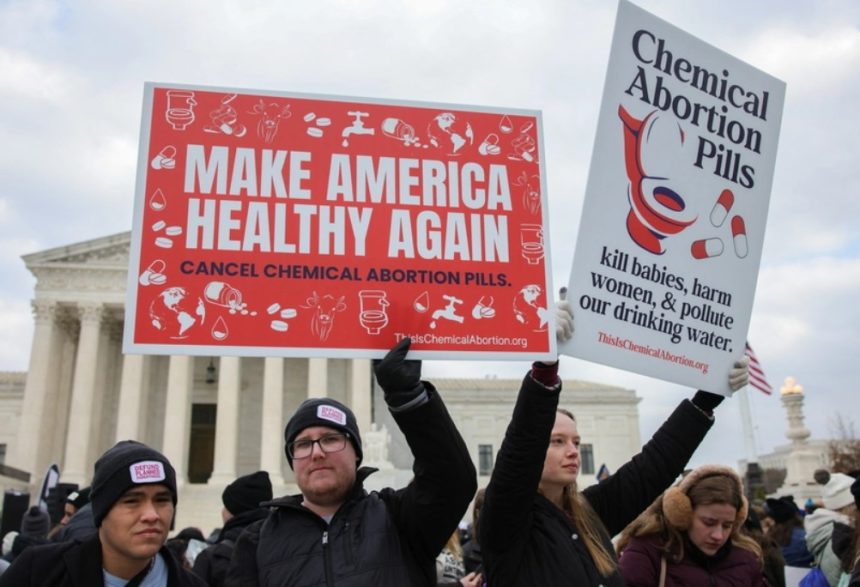
An influential US anti-abortion organisation has launched a campaign urging the Environmental Protection Agency (EPA) to include the abortion drug mifepristone on its list of drinking water contaminants tracked by public utilities under federal rules.
Students for Life of America (SFLA), a well-known anti-abortion group, is mobilising supporters across the country to submit comments to the EPA during the public comment period for updated drinking water regulations.
Their aim is to push the agency to treat mifepristone, a drug used in most medication abortions, as a substance requiring monitoring in water supplies.
Campaigners describe this as an “anti-abortion campaign” that leverages environmental regulation, safe drinking water policy, and public health concerns in a novel way.
However, scientists and reproductive rights advocates raise serious questions about the scientific basis of these claims.
EPA’s Role in Drinking Water Safety
The EPA regularly updates its list of unregulated contaminants, substances it collects data on from water suppliers to decide whether to set future regulatory limits under the Safe Drinking Water Act.
SFLA’s campaign calls on the EPA to treat the active components, or metabolites, of mifepristone as chemicals of concern in water systems, similar to how “forever chemicals” such as PFAS are tracked.
Through its nationwide campaign, the group has been urging supporters to submit comments during the rule-making process, which is a key stage in EPA drinking water rule updates.
These comments can influence future decisions about whether a substance is monitored or regulated.
“All I want for Christmas is for millions of Americans to let the Trump Administration know that we want assurances that the Make America Healthy Again agenda includes clean water for all life,” said an SFLA leader in a recent statement.
What Do Scientists and Water Experts Say About These Claims?
Environmental scientists and water quality experts have repeatedly said that there is no credible evidence suggesting that mifepristone contaminates drinking water at levels posing a threat to human or environmental health.
In Britain, public concern has grown following reports such as bacteria levels spiking in Hampstead Heath ponds, which showed how contamination issues closer to home can have direct consequences for public health and wildlife.
Additionally, critics argue that efforts to single out Mifepristone under environmental law are politically motivated tactics rather than grounded in water science, and that such approaches could misdirect attention from well-documented water contamination issues, such as industrial chemicals and agricultural runoff.
Who Is Behind the Campaign and What’s Their Goal?
Students for Life of America is a large anti-abortion organisation active on high school and college campuses across the United States. It has been campaigning on various fronts to restrict or oppose access to abortion, including legislation and regulatory petitions.
In its latest effort, the group frames its campaign partly in terms of environmental protection and public health safety, with the claim that flushing medication abortion remains could affect water supplies.
Whether or not this strategy will change EPA policy remains uncertain, especially given the lack of scientific evidence supporting the group’s claims.
In addition, federal regulations require validated analytical methods for measuring a contaminant before it can be added to the EPA’s monitoring list.
Implications for Public Policy and Drinking Water Safety
At its core, this campaign sits at the intersection of environmental policy, reproductive rights debate, and federal rule-making processes.
It shows how advocacy groups might try to use regulatory frameworks such as the Safe Drinking Water Act comment period to advance broader political goals.
Critics argue that using environmental claims without scientific backing risks confusing public understanding of real water quality issues and could divert attention from known contaminants that pose genuine risks to ecosystems and community health.
Supporters of the campaign see it as a way to raise public awareness about both water safety and abortion policy, though the strategy remains controversial and heavily debated.