


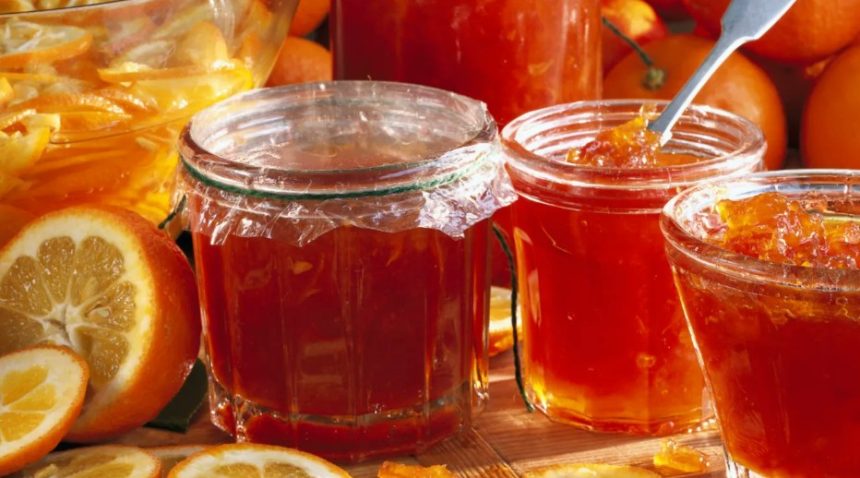
The quintessential British breakfast table is facing its most significant shake-up in decades. In a move aimed at slashing red tape and boosting cross-border trade, the UK Government is preparing to adopt a set of revised European Union food standards that will see the word “marmalade” legally redefined.
Under the proposed measures, the preserve famously adored by Paddington Bear will soon be required to carry the label “citrus marmalade” on British supermarket shelves.
The shift marks a pivot in post-Brexit regulatory strategy as the UK seeks to harmonise with the EU’s updated “Breakfast Directives,” ending a half-century linguistic tug-of-war between British traditionalists and continental food producers.
Why is the “Marmalade” Name Changing Now?
For over 50 years, the term “marmalade” has been a point of contention in European trade. When the UK joined the European Economic Community in the 1970s, British negotiators successfully lobbied for a “reserved description.”
This meant that, within the bloc, only spreads made from citrus fruits, specifically the bitter Seville orange, could be marketed as marmalade.
However, this created a “linguistic minefield” in southern Europe. In nations like Spain and Italy, the local equivalents, mermelada and marmellata, are generic terms used for any fruit preserve, including those made from plums, figs, or quinces.
Key Changes in 2026:
- EU Regulation Update: As of June 2026, the EU will allow member states to market non-citrus spreads as “marmalade.”
- UK Alignment: To maintain trade fluidity and allow British producers easy access to the EU market, the UK Government intends to adopt the new designation of “citrus marmalade” for traditional orange-based products.
- Fruit Content: The revised rules also include stricter compositional requirements, with standard jams requiring a minimum fruit content of 45% (up from 35%).
How Does the Windsor Framework Accelerate This Shift?
The impact of this rebranding is already being felt across various jurisdictions within the United Kingdom, specifically starting in Northern Ireland.
Under the Windsor Framework, Northern Ireland must automatically align with EU food legislation to maintain an open border with the Republic of Ireland.
The Breakfast Foods (Amendment) Regulations (Northern Ireland) 2026 were officially established in early 2026, making the “citrus marmalade” label mandatory from 14 June 2026.
In Great Britain (England, Scotland, and Wales), the Department for Environment, Food and Rural Affairs (Defra) is considering these rules as part of a package of 76 revised EU food laws.
This regulatory shift mirrors broader efforts to stabilise relations, similar to UK-EU fishing rights negotiations, which also aimed to reduce friction in shared markets.
While a definitive start date for the mainland hasn’t been set, the Labour government’s goal for a wider UK-EU veterinary and food deal suggests full implementation by mid-2027.
What Are the Official Stances from UK Authorities?
The debate has drawn commentary from government bodies and industry leaders alike. “We are engaging with affected businesses and will consider aligning with EU standards where it makes sense to do so to support trade.” Defra Spokesperson
A spokesperson for the Food Standards Agency (FSA) noted that the changes aim to provide “increased transparency and help consumers make informed and healthier decisions.”
However, internal Defra assessments previously cautioned that allowing non-citrus fruits to be called marmalade in the UK “could be confusing for UK consumers.”
Beatrice McCosh, Director of the World Marmalade Awards in Cumbria, told reporters: “Our competition seeks to uphold the gold standard of a truly British preserve.
Marmalade has a rich history stretching back to the court of Elizabeth I. We intend to keep our categories reserved for citrus-based spreads, regardless of the labelling changes.”
How Will This Affect Small British Producers and Supermarkets?
The rebranding carries practical and financial implications for everyone from artisan producers in the Lake District to major retailers like Tesco and Sainsbury’s.
Financial and Operational Impact:
- Labelling Costs: Producers must redesign and reprint all packaging. For small artisan businesses, these “sunk costs” can be a significant portion of their annual margin.
- Reformulation Challenges: With the EU raising minimum fruit content to 45% for jams, many manufacturers must rework recipes to ensure the correct balance of pH, pectin, and sugar for shelf-stability.
- The “Not for EU” Label: British products moving to Northern Ireland already require “Not for EU” stickers; adding the “Citrus” prefix further complicates the supply chain.
Will “Strawberry Marmalade” Become a Reality in the UK?
One of the most controversial aspects of the new rules is the potential for non-citrus “marmalades.” If the UK fully adopts the EU definition, supermarket shelves could see products like “strawberry marmalade” or “plum marmalade”, terms that have been illegal in the UK for decades.
While some consumers, such as those on social media, have welcomed the variety, traditionalists argue it devalues the British culinary identity.
Currently, Defra has not confirmed if it will allow these specific terms in Great Britain, though they will be legally permitted in Northern Ireland and across the EU from June 2026.
What Happens Next for the British Breakfast?
The “Marmalade War” is the first major test of the UK’s new regulatory strategy. By mid-2027, the government hopes to have a comprehensive deal with Brussels that minimises border checks.
Timeline to Watch:
- June 14, 2026: Mandatory “Citrus Marmalade” labelling begins in Northern Ireland.
- Late 2026: Defra is expected to announce the formal consultation results for the rest of the UK.
- Mid-2027: Targeted implementation of the wider UK-EU food and veterinary agreement.
FAQ
Is the recipe for orange marmalade changing?
No, the traditional recipe remains the same. The change is purely a labelling requirement to distinguish citrus-based spreads from other fruit spreads that may soon use the “marmalade” name.
Why does the EU want to change an English word?
The EU argues that since many European languages (like Spanish and Italian) use variations of the word “marmalade” for all fruit preserves, the current citrus-only restriction was confusing for continental consumers.
Will the price of marmalade go up?
Potentially. Manufacturers may pass on the costs of redesigning labels and reformulating recipes (to meet higher fruit content requirements) to consumers.
Does this affect “Paddington Bear’s” favourite food?
Legally, yes! If Paddington were to buy his supplies in a UK supermarket after 2027, he would likely be looking for a jar of “Citrus Marmalade.”
Can I still call it “marmalade” at home?
Of course. These regulations apply strictly to commercial labelling and trade descriptions, not to what you call it over your morning toast.