


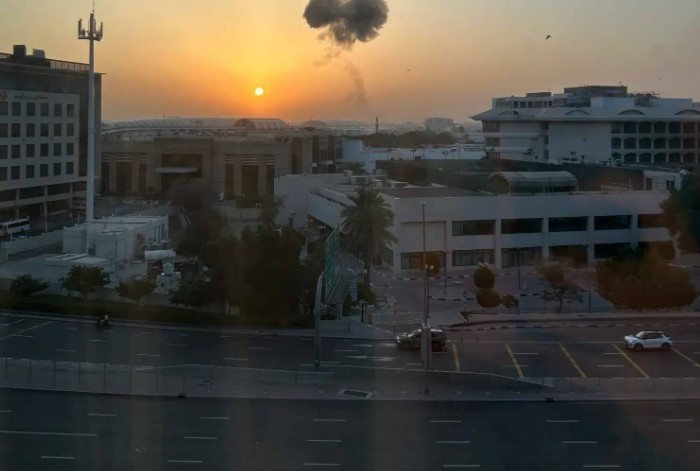
Operations at Dubai International Airport were briefly suspended on Saturday, 7 March 2026, after an air defence interception occurred near the airport during regional missile and drone threats linked to Iran.
Authorities later confirmed that flights had partially resumed from both Dubai airports, including Al Maktoum International Airport, though travel schedules remain unstable.
Officials warned passengers not to travel to the airport unless their airline confirms the flight is operating, as disruptions continue to affect departures and arrivals.
The incident highlights the growing impact of Middle East tensions on global aviation routes, including those used daily by UK travellers.
What exactly happened near Dubai Airport?
Authorities temporarily halted operations at Dubai International Airport, commonly known as DXB, after air defence systems intercepted an aerial object close to the airport perimeter.
The Dubai Media Office announced the suspension through a social media update, stressing that the move was taken purely as a precaution to protect passengers and aviation staff.
“For the safety of passengers, airport staff, and airline crew, operations at Dubai International (DXB) have been temporarily suspended,” the Dubai Media Office said in a statement.
Officials later confirmed the interception caused debris to fall near the airport, which led to a minor incident but no injuries or major damage.
The regime’s president today: “We won’t attack neighboring countries anymore”
The regime an hour ago: Drone strike on Dubai International Airport 👇pic.twitter.com/BZz7db4Da5
— Dr. Eli David (@DrEliDavid) March 7, 2026
Witnesses told reporters they heard a loud explosion followed by smoke in the sky near the airport shortly before the suspension.
Why are missile and drone threats affecting the UAE?
The United Arab Emirates Ministry of Defence confirmed that the country’s air defence systems were responding to missile and drone threats originating from Iran.
Authorities did not disclose the exact target of the intercepted object, but the development forms part of a wider escalation across the region following recent military strikes involving Iran.
Regional tensions have intensified in recent days after Israeli forces reportedly targeted key sites in Tehran, including aviation infrastructure, with further details emerging from the strike on Tehran airport that analysts say could increase the risk of retaliatory drone and missile activity across the Gulf.
Recent incidents reported across the UAE include attacks or debris strikes near several prominent locations:
- Abu Dhabi International Airport
- Palm Jumeirah
- Burj Al Arab
Local authorities also confirmed that drone debris caused a fire earlier this week at the US consulate in Dubai, though the blaze was quickly contained.
The escalation follows a wider regional conflict triggered by military strikes involving the United States and Israel against Iran earlier this month.
How did the disruption affect flights at Dubai Airport?
During the suspension, aircraft approaching Dubai were forced to circle above the city or divert to nearby airports, according to aviation monitoring service Flightradar24.
The Middle East’s largest carrier, Emirates, initially announced that it had suspended all flights to and from Dubai. The airline later confirmed operations had resumed once authorities reopened airspace.
Dubai airport officials said services are currently running at reduced capacity, and schedules may change at short notice.
Airport authorities advised travellers:
- Do not travel to the airport unless your airline confirms your flight
- Check real-time flight updates before departure
- Expect delays, cancellations, or rerouted flights
Why is Dubai Airport critical for global air travel?
Dubai International Airport is the world’s busiest airport for international passenger traffic, making it a central hub for global aviation.
Key aviation data highlights its importance:
| Key Statistic | Details |
|---|---|
| Annual international passengers | Over 86 million in peak travel years |
| Major airline hub | Emirates and Flydubai |
| Global connectivity | Links Europe, Asia, Africa and Australia |
| UK travel routes | Direct flights from London, Manchester and Birmingham |
Because of this role, even a short disruption at DXB can affect flight networks worldwide, including major routes connecting the UK with Asia and the Middle East.
What should UK travellers know right now?
Dubai remains one of the most popular long-haul destinations and transit hubs for UK passengers.
Daily flights operate between the UK and Dubai from major airports, including:
- Heathrow Airport
- Manchester Airport
- Gatwick Airport
The UK Foreign, Commonwealth & Development Office has not issued a new travel ban, but travellers are advised to monitor airline updates and security developments closely.
Passengers connecting through Dubai should also allow extra time for rebookings or flight changes, as airlines adjust schedules following the disruption.