
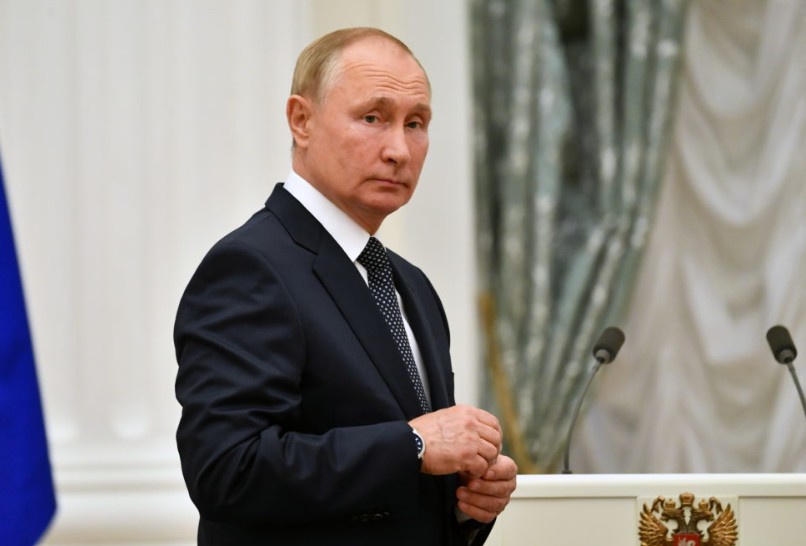
Russian President Vladimir Putin has said Moscow is ready to commit $1 billion (£790m) from Russian assets frozen in the United States to support a proposed Gaza “Board of Peace”, a new international body aimed at stabilising the war-hit territory.
The offer, announced this week, has already split international opinion, with Ukraine refusing to take part if Russia is involved, while several Arab states have publicly welcomed the move.
The proposal matters because it links frozen Russian funds, Middle East peace efforts, and wider global diplomacy at a time when wars in Gaza and Ukraine continue to strain international institutions.
What exactly did President Putin announce and why now?
President Putin told a Russian government meeting that $1bn from Russian state assets frozen by the US could be redirected to fund a proposed international peace board for Gaza.
“Russia views this board primarily as a tool to support a broader regional settlement,” Putin said, according to official remarks.
BREAKING 🚨 President Putin says Russia is ready to contribute $1 billion to President Trump’s “Board of Peace” and accepts Trump’s offer to join
Trump is the PEACE President of the world
PEACE THROUGH STRENGTH 🔥 pic.twitter.com/r31yBcQJnj
— MAGA Voice (@MAGAVoice) January 21, 2026
He added that any remaining frozen funds could later be used to rebuild areas damaged by conflict, including territories affected by fighting after a peace agreement between Russia and Ukraine.
The timing is significant. The initiative follows a UN Security Council resolution passed in November, which opened the door for an international stabilisation mechanism for Gaza once active hostilities ease.
Why does it matter? Frozen Russian assets have long been a point of tension between Moscow and Western governments. Putin’s proposal reframes the issue as a peace and reconstruction tool, rather than a sanctions dispute.
How is the Gaza “Board of Peace” supposed to work?
The proposed board would initially oversee temporary administration and stabilisation in Gaza, with possible expansion to other global conflict zones later.
According to US officials, the board would:
- Coordinate humanitarian aid
- Support post-war reconstruction
- Lay groundwork for a long-term Israeli-Palestinian settlement
- Work alongside a potential international stabilisation force
President Putin said any solution must respect existing UN resolutions and the “inalienable needs and wishes of the Palestinians.”
Why did President Putin accept Donald Trump’s invitation?
US President Donald Trump confirmed that President Putin had accepted an invitation to join the peace board, with a formal announcement expected during Trump’s appearance at the World Economic Forum in Davos.
Putin confirmed he had instructed Russia’s foreign ministry to study the proposal and consult allies.
“I tasked the foreign ministry with reviewing the documents and consulting with our strategic partners,” Putin said.
From Moscow’s perspective, participation offers:
- A seat at a major diplomatic table
- Influence over Middle East stabilisation
- A chance to reframe Russia as a peace broker, not just a combatant in Ukraine
Why has Ukraine refused to join if Russia participates?
Ukrainian President Volodymyr Zelensky said Kyiv received an invitation but would not participate alongside Russia.
“It is very difficult for me to imagine being on the same board with Russia in any form,” Zelensky said.
Ukraine argues that allowing Russia to sit on a peace body while its war in Ukraine continues would undermine international credibility and reward aggression.
This refusal highlights how Russia’s role in Ukraine continues to limit cooperation, even on unrelated conflicts like Gaza.
How are Arab states and Europe reacting to the proposal?
Eight Arab and Islamic foreign ministers issued a joint statement welcoming the initiative and Trump’s invitations to their leaders.
US Special Envoy Steve Witkoff said:
- Around 20 world leaders have accepted invitations
- Several European countries declined, citing political and legal concerns
For many Middle Eastern states, the priority is immediate stabilisation in Gaza, even if the framework involves controversial actors.
What role do frozen assets play in international law?
Russian assets frozen in the US are part of sanctions imposed after the invasion of Ukraine. Their use remains legally complex.
In the UK, similar debates continue over whether frozen Russian funds held in London could legally be redirected to:
- Ukraine reconstruction
- Humanitarian causes
- International peace efforts
Legal experts warn that repurposing assets without clear frameworks could set global precedents, affecting financial trust and future sanctions.