


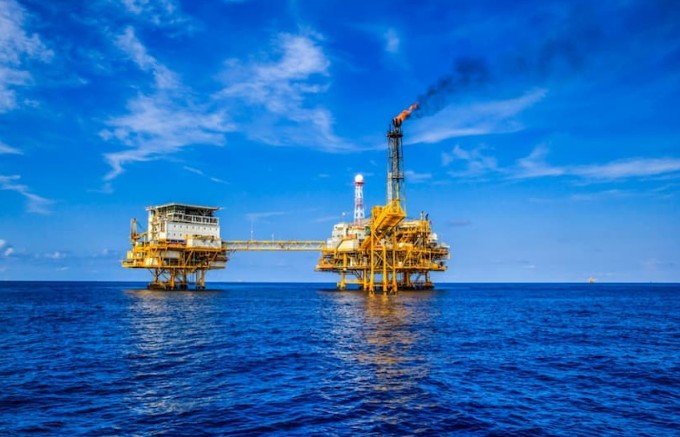
To modern environmentalists, the North Sea is often framed as a “spent force”, a relic of a carbon-heavy past that must be shuttered to meet Net Zero 2050 obligations.
However, for the veterans who built the industry, it remains the bedrock of British industrial identity. The recent unearthing of a 1984 UK North Sea Oil Atlas by industry veteran Maurice Tidy, 85, has reignited a fierce national debate: has the UK abandoned its most valuable economic asset too soon?
As Britain grapples with record energy prices in 2026 and a shifting geopolitical landscape, this 42-year-old “trade bible” provides a startling visual contrast between the peak of the British oil boom and the legislative gridlock currently stalling the sector.
What is the 1984 North Sea Oil Atlas, and why is it Resurfacing Now?
The discovery of the 1984 North Sea Atlas, originally produced by Oilfields Publications Ltd, offers a rare, high-definition glimpse into the “Golden Age” of British offshore extraction.
Maurice Tidy, a former proposal manager for offshore specialists Brown & Root, recovered the document from his personal archives to highlight the sheer scale of the infrastructure that once powered the UK.
In 1984, the North Sea was a frontier of British innovation. The atlas details a sprawling web of:
- Major Fields: Icons like Brent (which set the global price benchmark, Brent Crude), Forties, and Clair, the latter still considered the largest oil accumulation on the UK Continental Shelf (UKCS).
- Infrastructure: Detailed maps tracing “red and green” veins, the gas and oil pipelines, terminating at major processing hubs like Grangemouth in Scotland and Teesside in North East England.
- Commercial Vitality: Advertisements for bespoke North Sea steel, entire drilling rigs, and research vessels, illustrating a self-sustaining British supply chain that once employed hundreds of thousands.
Where Did Britain’s Oil Empire Reach? Mapping the UKCS
The North Sea Atlas meticulously records the geography of the UK Continental Shelf (UKCS), focusing on key hubs that transformed the UK’s economic map.
Aberdeen: The Energy Capital
The atlas shows the massive concentration of blocks east of Aberdeen, where the Forties field became the first major oil field to come on stream.
This region remains the nerve centre for the North Sea, though the atlas reveals how much more active the exploration was four decades ago.
Shetland and the Atlantic Margin
The maps highlight the Clair field, located west of Shetland. This area, known as the Atlantic Margin, remains one of the most resource-rich environments in the world.
However, as the atlas shows, the demarcation line between UK and Norwegian waters was once a site of British dominance, a lead that has since evaporated.
How Does 2026 Production Compare to the 1984 Heyday?
The statistics from the atlas and the current 2026 data reveal a dramatic reversal of fortunes between the UK and Norway.
| Metric | 1984 (Atlas Data) | 2026 (Current Estimates) |
| UK Production | 2.5 Million Barrels/Day | ~0.7 Million Barrels/Day |
| Norway Production | 0.7 Million Barrels/Day | ~2.0 Million Barrels/Day |
| Exploration Wells | 100+ annually | 3 (Estimated for 2026) |
| Headline Tax Rate | Competitive | 78% (Energy Profits Levy) |
Analysts from Westwood Global Energy Group recently noted that operators offshore Norway are currently finding seven times more resources than those in the UK, primarily due to “non-geological influences”, namely, UK fiscal policy.
The Political Tug-of-War
The debate over the North Sea’s future is split between industry bodies seeking security and a government prioritising a “Clean Energy Superpower” status.
Amidst these tensions, even prominent political figures have voiced concerns that a total halt in drilling could be catastrophic. Indeed, Tony Blair urges North Sea drilling as a necessary measure to maintain national stability during global energy shocks.
Offshore Energies UK (OEUK): The leading trade body warns that the 78% Energy Profits Levy (EPL) is causing “capital flight.”
David Whitehouse, CEO of OEUK, stated that while the North Sea could power the UK for decades, “political uncertainty is driving away billions in investment.”
The UK Government: The Department for Energy Security and Net Zero (DESNZ) recently launched the North Sea Future Board in Aberdeen.
Energy Minister Michael Shanks described the current era as a “turning point,” focused on a “managed decline” of oil while pivoting to offshore wind and carbon capture.
The Legal Blockade:
In early 2025, the Scottish Court of Session ruled that consents for the Rosebank and Jackdaw fields were granted unlawfully because “Scope 3” emissions (emissions from burning the fuel) were not taken into account.
As of 2026, these projects remain in a state of “construction without extraction,” awaiting new Environmental Impact Assessments.
What is the Impact on the British Public and Economy?
The transition from the world mapped in the 1984 atlas to the present day has profound implications for every UK household.
- Energy Security: The Tony Blair Institute has warned that stopping domestic production does not stop domestic demand; it simply increases reliance on imports, which often have a higher carbon footprint than domestic gas.
- The “Windfall” Dilemma: While the 78% tax rate generates roughly £200m per month for the Treasury (according to the End Fuel Poverty Coalition), it has stalled new projects. No major final investment decisions have been sanctioned since mid-2024.
- The Skilled Workforce: The offshore sector supports over 200,000 UK jobs. The 1984 atlas reminds us that these skills were built over decades. Experts warn that if the industry collapses too quickly, this expertise will migrate to Norway or the Middle East before the UK’s “Green Transition” is ready to absorb them.
What Happens Next?
The UK is approaching a “cliff edge” in 2026. Wood Mackenzie predicts this may be the last year UK production exceeds 1 million barrels of oil equivalent per day.
- Fresh Applications: Equinor (Rosebank) and Shell (Jackdaw) are currently resubmitting environmental reports to meet the new “Scope 3” requirements.
- The Hamburg Pact: UK Energy Secretary Ed Miliband recently signed a clean energy pact with European leaders to transform the North Sea into a “clean energy reservoir” with 100GW of offshore wind by 2050.
The 1984 North Sea Oil Atlas serves as a poignant reminder of what the UK once possessed: total energy independence. Whether the North Sea becomes a “clean energy powerhouse” or remains a graveyard of lost industrial potential depends entirely on the government’s ability to balance the books with the planet.