


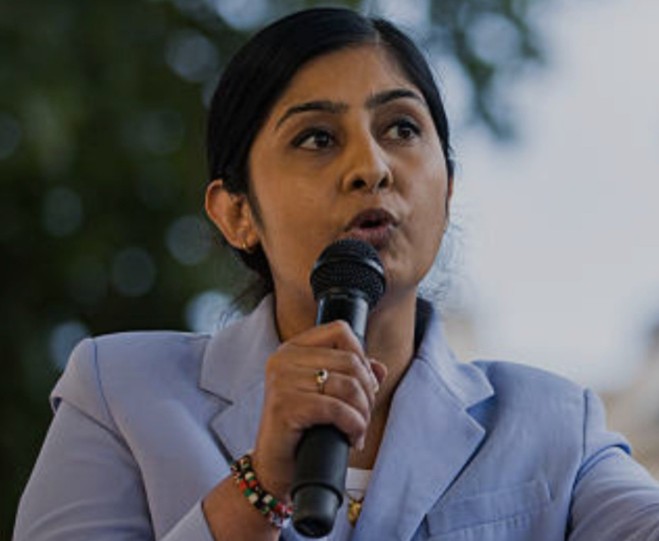
Zarah Sultana vows her new party will aim to “run government”
In a confident declaration, Zarah Sultana has said that the new left-wing political party she is launching with Jeremy Corbyn is not just a protest movement, but one determined to govern Britain.
“I’m in politics because of a desire to change people’s lives for the better, and that means winning state power, that means actually running government,” Sultana said in an interview.
“This is a 10, 20, 30-year project.” She added, “We’re building a party of the left that can win power and deliver justice.”
Her remarks come after a turbulent start for the fledgling movement, which, despite attracting a surge of early supporters, has faced infighting over leadership, finances, and even its temporary name.
Sultana, the MP for Coventry South, left the Labor Party in July to form a new political group with Corbyn. She described it as a “40-year project,” one designed to create a genuine socialist alternative in British politics.
The new party, she said, will be “socialist, democratic and member-led.” Its aims include “nationalizing, building council homes, providing people with good secure jobs.”
Yet behind the idealism lies tension. Three senior figures recently quit the board of MoU Operations Ltd, the company set up to handle the party’s membership and finances, leaving Sultana as its only director.
Reports suggest around £800,000 in donations and data are currently under dispute.
The conflict deepened after Sultana launched a membership portal through official party emails, reportedly collecting sign-ups and payments from some 20,000 supporters.
Corbyn condemned the move as “unauthorized,” urging members to cancel direct debits. The fallout soon escalated into legal wrangling and accusations of a “sexist boys’ club.”
Though the pair have since reconciled, the episode highlighted the fragile foundations of the project.
The party still operates under the working title Your Party, though Sultana has suggested renaming it The Left Party. Corbyn, meanwhile, hinted the original name might stay.
Members will vote on the official name and constitution at a founding conference in Liverpool next month.
Sultana said she hopes to co-lead the party alongside Corbyn, but if members opt for a single leader, she plans to “throw her hat in the ring.”
The party’s draft constitution outlines a member-driven structure with elected representatives, strict accountability measures, and financial transparency rules, all aimed at avoiding the pitfalls that fractured the Labor left in recent years.
In her interview, Sultana took a sharp swipe at Reform UK’s leader, Nigel Farage, warning: “I have legitimate concerns about what a Nigel Farage government would do to trade unionists, to working class communities, to minority communities, to LGBT people.
When someone attacks trade union rights, when they are not supportive of minority communities, when they try to get us out of the European Convention on Human Rights so they can get away with anything, that is a descent into fascism.”
Sultana argued that the rise of Reform UK reflects public anger after years of austerity and disillusionment with both main parties.
She also spoke warmly about the Green Party’s resurgence, saying she admired its new leader, Zack Polanski, but stressed her group was “a different party.”
Future cooperation, however, wasn’t ruled out. “There will be those alliances and those electoral pacts in the future,” she noted.
When asked if her new movement would split the left and siphon votes from Labor, Sultana didn’t hold back.
“The Labor party actually was quite content because it thought the left had nowhere else to go, and now the left has choices.”
She added that Labor “probably should have worried about that before it enabled genocide and passed through austerity.”
The coming months will be crucial for Sultana’s political gamble. The party faces internal strife, legal complications, and the daunting task of building a national organization from scratch.
Still, her message is clear: this is a long game. A movement built to “win state power,” not just protest.
Whether it succeeds in reshaping the British left, or simply becomes another short-lived political experiment, will depend on whether Zarah Sultana can turn her ambition into momentum.