


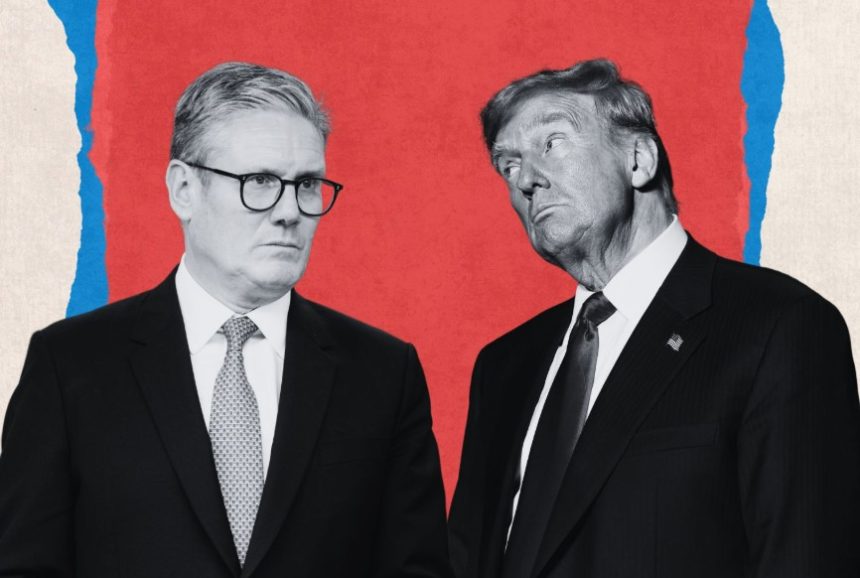
The historic “Special Relationship” between the United Kingdom and the United States has reached a perilous breaking point.
Following a month of escalating public hostility between Prime Minister Sir Keir Starmer and President Donald Trump, the UK’s former National Security Adviser, Lord Peter Ricketts, has issued a definitive warning: the era of the special relationship is over.
As the conflict with Iran intensifies and the Strait of Hormuz remains a volatile flashpoint for global energy, the diplomatic rift between 10 Downing Street and the White House has moved from private disagreement to a full-blown international crisis.
With President Trump openly mocking the Royal Navy and the Prime Minister insisting that Britain will not be “dragged” into an offensive war, the very foundation of Transatlantic security is being fundamentally rewritten.
Why has the Starmer-Trump Relationship Soured So Quickly?
The current US-UK relations crisis was triggered by a fundamental disagreement over military intervention in the Middle East.
While the Trump administration has pursued a policy of “maximum pressure,” escalating into direct kinetic action against Iranian infrastructure, the Starmer government has maintained a strictly “defensive” posture.
The tension peaked following the disruption of the Strait of Hormuz. President Trump has repeatedly lambasted the UK for its perceived “weakness,” famously telling The Sun that while France has been “great,” the UK has been “much different.”
The President’s frustration centers on Sir Keir Starmer’s initial refusal to allow US bombers to use British bases, such as RAF Fairford and Diego Garcia, for offensive strikes.
Lord Peter Ricketts, speaking on, argued that this friction is a “huge wake-up call.” He suggested that the relationship is now purely transactional, mirroring Trump’s “America First” doctrine, and that the UK must urgently pivot toward European security partners.
Which UK Locations are Most Affected by the Diplomatic Rift?
While the political crisis is centered in Westminster and Washington D.C., the practical security implications are being felt at specific UK strategic hubs:
- RAF Akrotiri (Cyprus): This sovereign base area was recently targeted by an Iranian-made drone, causing minimal damage but escalating fears for the safety of British service personnel.
- RAF Fairford (Gloucestershire): A key US-UK joint base that became a point of contention when Starmer initially blocked its use for offensive missions against Iranian missile silos.
- Portsmouth and Plymouth: As the homes of the Royal Navy’s carrier strike groups, these cities are at the heart of the debate over UK military readiness. Trump’s recent dismissal of British aircraft carriers as “toys” has caused significant offense in these naval communities.
- Diego Garcia: The British Indian Ocean Territory is a critical launchpad for US long-range bombers. The ongoing dispute over the Chagos Islands handover to Mauritius, now criticized by Trump despite prior US support, has added another layer of instability to the relationship.
What are the Official Positions of the UK Government and its Critics?
The crisis has split the UK political establishment, with the government defending its “cool-headed” approach while the opposition claims Britain is being sidelined.
The Prime Minister’s Stance
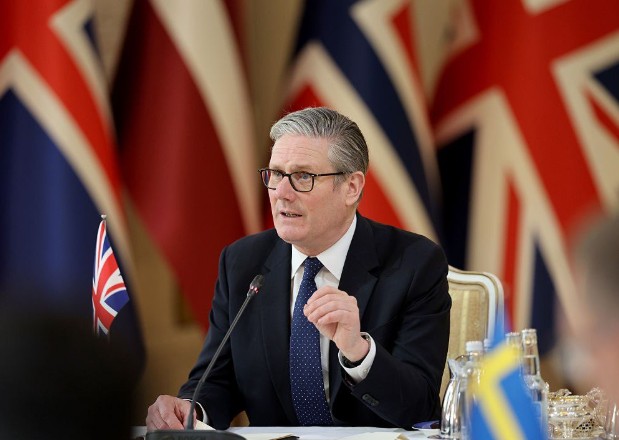
In a statement to the House of Commons, Sir Keir Starmer defended his decision to limit British involvement to defensive actions: “President Trump has expressed his disagreement with our decision not to get involved in the initial strikes, but it is my duty to judge what is in Britain’s national interest… This government does not believe in regime change from the skies.”
Lord Peter Ricketts’ Analysis
The former National Security Adviser provided a sobering “reality check” on the state of the alliance: “The idea of a special relationship we should now completely forget. It’s a transactional relationship with Washington as with every other country…
Above the waves, it’s very, very choppy. Down below, I think the operational cooperation goes on, but we can no longer rely on the kind of relationship we’ve had for 50 years.”
Political Opposition
Conservative leader Kemi Badenoch accused the Prime Minister of a “dithering and equivocal response,” suggesting that Labour’s reluctance is rooted in “partisan political calculations” rather than national security.

Meanwhile, Nigel Farage noted that while he supports the use of UK bases, Trump’s rhetoric regarding the “death of an entire civilization” in Iran went “way too far.”
How Does This Crisis Impact the British Public and Economy?
The US-UK relations crisis is not merely a matter for diplomats; it has tangible effects on British citizens and the wider economy:
- Energy Prices and Inflation: The blockade of the Strait of Hormuz, coupled with the lack of a unified US-UK response, has caused Brent Crude prices to spike. UK households are facing an immediate 15% rise in petrol prices and a further hike in domestic energy bills.
- Trade and Tariffs: A trade deal signed with much fanfare in May 2025 has been cast into doubt. Trump’s recent “tariff pronouncements” threaten UK exports, potentially impacting sectors from automotive to Scotch whisky.
- Defence Spending: With the US signaling it may no longer “underwrite European security,” the Ministry of Defence (MoD) is under pressure to increase spending to 3% of GDP. This could necessitate budget cuts to the NHS or social care to fund the shortfall.
- Cost of Living: The disruption of shipping lanes increases the cost of imported goods, further squeezing British supermarkets and the manufacturing sector.
Is the Royal Navy Still a Global Force?
A major point of contention in the current crisis is the state of the UK’s armed forces.
President Trump’s Secretary of Defense, Pete Hegseth, recently mocked the “big, bad Royal Navy” after it was revealed that HMS Dragon, a Type 45 destroyer, was not ready for immediate deployment when the Iran war began and suffered technical issues shortly after docking in the Mediterranean.
However, the MoD maintains that the UK has a “robust and layered” presence in the region, including Typhoon and F-35 jets, Wildcat helicopters, and advanced counter-drone systems.
British jets have already shot down several Iranian drones over Iraqi and Jordanian airspace, protecting both American and British lives.
What Happens Next for UK Foreign Policy?
The coming weeks will define the UK’s global standing for the remainder of the decade. Several key developments are expected:
- A Pivot to Europe: Expect the Foreign Office to fast-track a new “Security Pact” with France and Germany. Lord Ricketts noted that Saudi Arabia is already looking toward China for stability; the UK may similarly look to its nearest neighbors to buffer against American volatility.
- The Chagos Islands Uncertainty: The handover of the Chagos Islands to Mauritius is currently in limbo as the UK waits for US backing, a move Trump has publicly condemned.
- Parliamentary Scrutiny: The Foreign Affairs Select Committee is expected to launch an inquiry into the “Future of Transatlantic Intelligence Sharing,” questioning whether the Five Eyes agreement remains secure under the current political strain.