


The UK weather has turned sharply colder as an Arctic blast spreads across the country, delivering snow, ice, and freezing temperatures at the very start of 2026.
Weather warnings are now in force across multiple regions, while health officials have raised concerns over the impact of prolonged cold on vulnerable people.
Forecasters say the cold spell is set to last well into next week, increasing the risk of travel disruption and health complications.
Why has the UK entered such a cold start to the new year?
A surge of Arctic air from the north has replaced milder Atlantic weather, allowing freezing temperatures to spread rapidly across the UK.
This pattern is expected to remain dominant, bringing widespread frost overnight and snow showers, particularly in northern areas.
The Met Office has confirmed that the colder air mass will linger, meaning this is not a brief cold snap but the start of a sustained wintry period.
“We are now firmly under Arctic air, which is why temperatures have dropped so quickly, and snow risks are increasing,” a Met Office forecaster said.
Where are snow and ice warnings currently in place?
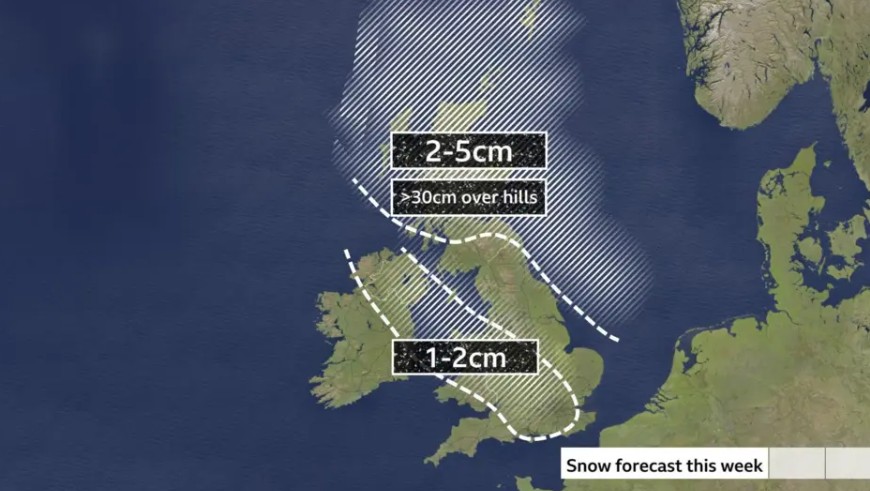
Snow and ice warnings cover large parts of the UK as conditions continue to deteriorate. Northern Scotland has already seen heavy snowfall, with accumulations of up to 10cm at lower levels and as much as 30cm over higher ground.
Forecasters warn that drifting snow and blizzard conditions could leave some rural communities temporarily cut off.
Elsewhere, yellow warnings extend across much of England and Wales, Northern Ireland, and parts of the Midlands and North West, where rain is expected to turn to sleet and snow overnight.
Even small snowfall totals could cause disruption due to freezing road surfaces.
How cold has it become across the UK?
The first night of 2026 brought freezing conditions for many people celebrating outdoors.
In southern England, temperatures dropped well below zero, with Bournemouth recording -6.2°C and Cardiff falling to -2.5°C. A widespread frost followed on New Year’s morning.
Although cloud initially prevented severe freezing further north, colder air is now pushing into Scotland and northern England.
Daytime temperatures are expected to struggle, reaching only 1°C to 7°C, while some areas may experience so-called ice days, where temperatures remain below freezing throughout the day.
What do the amber cold health alerts mean for England?
The UK Health Security Agency (UKHSA) has issued amber cold health alerts for the whole of England until midday on 6 January.
These alerts indicate a heightened risk of illness and death, particularly among older people and those with existing heart or lung conditions.
The agency has warned that cold weather can make it harder for people to keep indoor temperatures at the recommended 18°C, especially in poorly insulated homes.
Hospitals and care homes may also see indoor temperatures fall below levels considered safe for vulnerable patients.
“Extended cold spells increase pressure on health and care services and raise the risk of avoidable deaths,” UKHSA guidance states.
How likely is travel disruption in the coming days?
Travel disruption is becoming increasingly likely as snow and ice warnings continue. Icy roads, untreated surfaces, and sudden snowfall could lead to delays on major routes, while rural roads may become impassable during heavier snow showers.
Rail services in affected regions may also face delays, particularly where ice builds up on tracks or overhead lines. Drivers are being advised to check forecasts regularly and only travel if necessary during warning periods.
How long will this cold UK weather last?
Current forecasts suggest the cold spell will persist well into next week, with frequent overnight frosts and continued snow showers in northern Scotland.
Temperatures are expected to stay below average for early January, with little sign of a rapid return to milder conditions.
Weather experts stress that small shifts in wind direction could alter snowfall locations, making it important to stay updated.