


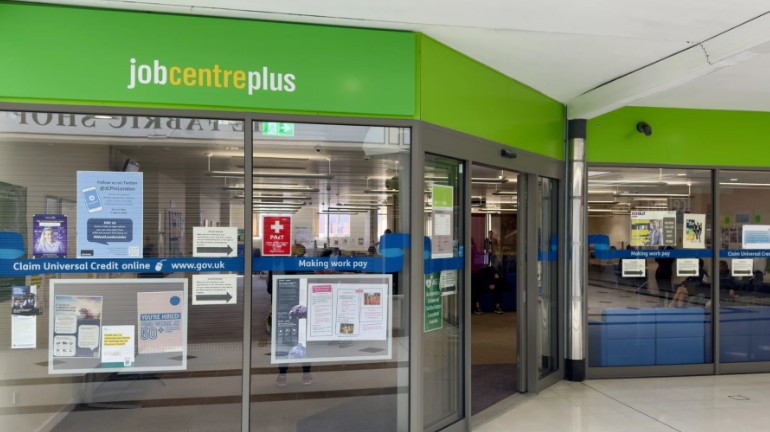
The British labour market has delivered a sharp surprise to economists and policymakers alike. New figures released today by the Office for National Statistics (ONS) show that the UK unemployment rate fell to 4.9% in the three months to February 2026, defying expectations of a steady 5.2%.
However, the “good news” headline masks a darker reality for the British economy. As geopolitical conflict in the Middle East sends energy prices soaring, underlying data suggests a significant cooling of the jobs market.
With payroll numbers contracting and wage growth hitting its lowest level in over five years, the UK is now facing a heightened risk of stagflation, the toxic combination of stagnant growth and rising inflation.
Why did the UK unemployment rate fall despite a slowing economy?
The headline drop from 5.1% to 4.9% has been met with scepticism by City analysts who point to “economic inactivity” as the hidden driver.
Unlike the period when UK unemployment hits 5.2%, the current decrease is not necessarily due to people finding new roles, but rather people leaving the workforce entirely. Several factors explain this disconnect:
UK unemployment rate drops more than expected to 4.9%
Unemployment in the UK has fallen sharply from a post-pandemic high in the three months to February.
Office for National Statistics
— Rob Yeldham (he/him) (@RobYeldham) April 21, 2026
- Rise in Economic Inactivity: A significant driver behind the falling rate is the increase in people leaving the workforce entirely. This includes students, those with long-term illnesses, and discouraged workers who have stopped seeking employment.
- Survey Data Challenges: The ONS continues to advise caution, noting ongoing data quality issues with the Labour Force Survey (LFS).
- The “Lag” Effect: The figures cover the period ending in February 2026. Because the escalation of the US-Iran conflict began late in that month, the full impact of the resulting energy shock on business hiring has not yet been captured in the headline unemployment percentage.
Why are payrolls and vacancies plummeting
While the unemployment rate fell, more up-to-date tax data paints a more worrying picture for UK PLC.
March Payroll Contraction
Data from HM Revenue and Customs (HMRC) revealed that the number of payrolled employees in the UK fell by 11,000 in March 2026. This is a direct signal that the momentum in the jobs market has stalled.
Employers are increasingly hesitant to commit to new permanent staff as operational costs, driven by high industrial energy prices, begin to bite.
Five-Year Low for Job Vacancies
Vacancies have dropped to their lowest point in nearly half a decade. In the private sector, businesses are reporting a “survival first” strategy.
Sectors such as manufacturing and logistics, particularly in the North of England and the Midlands, are seeing a sharp reduction in job postings as firms prioritise absorbing higher input costs over expansion.
How the Middle East Conflict is Reshaping the British Labour Market
The “Iran war,” which commenced on February 28, has become the primary external shock to the UK economy in 2026.
- Energy Price Surge: Wholesale gas prices rose by roughly 75% between late February and late March. This has translated into a 10% hike in petrol prices and a 20% surge in diesel costs for UK commuters.
- Business Fragility: Trade bodies like Make UK and the National Farmers’ Union (NFU) have warned that these energy spikes will lead to higher food prices and potentially more job cuts in the manufacturing sector later this year.
- Stagflation Risk: Suren Thiru, Chief Economist at the ICAEW, warned that skyrocketing energy costs and weaker customer demand are likely to push the UK unemployment rate back up toward 6% by early 2027.
Why workers are feeling the pinch
For the first time in five years, regular wage growth (excluding bonuses) has slowed significantly, falling to 3.6%.
While the Bank of England might see this as a “silver lining” to prevent a wage-price spiral, it spells disaster for household budgets. With inflation now forecast to peak at 4% later this year due to fuel costs, real-term wages are effectively falling.
Ben Harrison of the Work Foundation noted that “four in ten workers already report cutting back on food and essentials,” a figure expected to rise as energy bills increase in the coming months.
What is the Government’s Plan?
Chancellor Rachel Reeves is scheduled to address the House of Commons today. Following her Spring Statement in March, where she admitted growth would slow to 1.1% (and some analysts now suggest as low as 0.7%), the Chancellor is under immense pressure to provide relief.
Key Policy Expectations:
- Rejection of Universal Subsidies: Despite calls for a repeat of the 2022-23 energy support package, the Government has signalled it will prioritise targeted support for the most vulnerable households rather than broad interventions that could further fuel inflation.
- Energy Security Focus: Reeves is expected to emphasise long-term investments in UK energy infrastructure to reduce the economy’s exposure to Middle Eastern volatility.
- Fiscal Discipline: The Treasury has indicated it will not risk the UK’s credit stability by increasing borrowing for immediate relief, even as the tax burden heads toward a postwar high of 38%.
Which UK areas are most affected?
| Region | Impact Level | Key Sector Strain |
| North East & Humber | High | Manufacturing & Heavy Industry (Energy Intensive) |
| West Midlands | High | Automotive & Logistics (Fuel Cost Impact) |
| London | Medium | Retail & Hospitality (Squeezed Discretionary Spending) |
| Scotland | Medium | North Sea Energy (Volatility in Oil/Gas Markets) |
What Happens Next?
The outlook for the remainder of 2026 remains highly uncertain. The Item Club has projected that the UK unemployment rate could rise to 5.8% within the next 12 to 18 months, potentially leaving an additional 250,000 people out of work.
The Bank of England’s Monetary Policy Committee (MPC) faces a difficult decision on April 30. While a loosening labour market would typically suggest an interest rate cut, the inflationary pressure from energy costs may force them to keep the base rate held at 3.75% or even consider a hike to protect the pound.
FAQ
Why did unemployment fall to 4.9% if people are losing jobs?
The headline rate is a “lagging indicator.” It represents the period before the full force of the 2026 energy crisis hit. Additionally, thousands of people have moved into “economic inactivity,” meaning they are no longer counted in the unemployment statistics.
How will the 3.6% wage growth affect my mortgage?
Slower wage growth may encourage the Bank of England to keep interest rates steady rather than raising them further. However, because real wages (adjusted for inflation) are falling, many households will still find their mortgage repayments more difficult to manage.
Which industries are hiring right now?
Hiring is currently strongest in the public sector and specialised green energy roles. Conversely, retail, manufacturing, and hospitality are seeing significant slowdowns in recruitment.
Is the UK heading for a recession in 2026?
While the official forecast is for weak growth of 0.7% to 1.1%, many independent economists warn the UK is “flirting” with a technical recession if Middle East tensions persist and energy prices remain at peak levels.