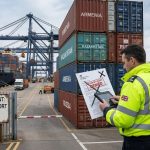


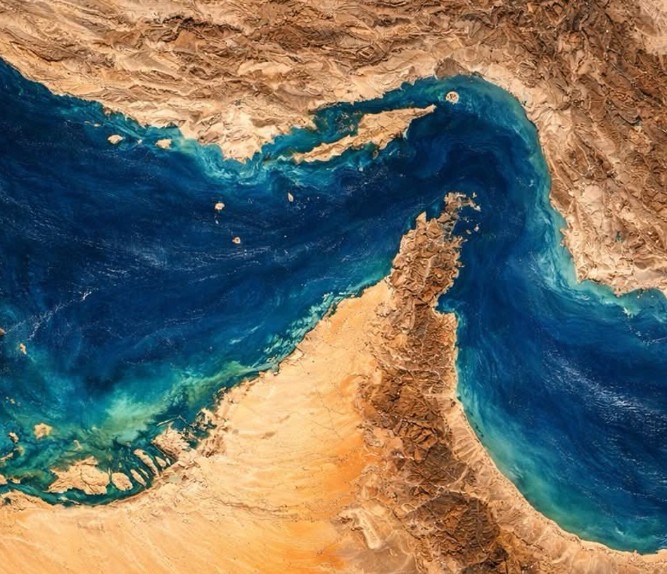
The UK’s Permanent Joint Headquarters (PJHQ) in Northwood, North London, has become the focal point of global maritime security this week.
Military planners from over 30 countries have gathered for the UK-France Hormuz conference, a high-stakes operational summit designed to reopen one of the world’s most volatile and vital naval chokepoints.
Following months of economic paralysis caused by the closure of the Strait of Hormuz on 4 March 2026, the UK and France are now leading a strictly defensive multinational coalition.
This two-day conference, which commenced on Wednesday, 22 April 2026, aims to transition from the diplomatic promises made at last week’s Paris Summit into a concrete military reality.
With global energy security hanging in the balance and the UK economy facing its toughest inflationary pressure in decades, the mission represents a critical intervention to restore the flow of oil and liquefied natural gas (LNG) to the West.
What is the Goal of the Northwood Planning Conference?
The Northwood summit is not about political posturing; it is about the nuts and bolts of naval warfare and maritime safety.
Under the joint leadership of the UK and France, military experts are currently drafting the operational parameters for an independent, multinational mission.
The core objectives of the talks include:
- Tactical Mine Clearance: Developing a strategy to neutralize the hundreds of naval mines reportedly laid by Iranian forces. Unlike traditional blockades, the current threat is asymmetric, utilizing small vessels to deploy mines that can disable even the largest tankers.
- Establishing “Safe Corridors”: Creating specific, protected lanes of transit for merchant vessels, supported by military escorts from the 30 participating nations.
- Unified Command Structure: Determining how diverse naval assets, from the Indian Navy to European partners, will coordinate their movements under a combined UK-French command based at Northwood.
Why has Northwood Been Chosen as the Operational Hub?
Northwood Headquarters, located in the quiet London suburb of Eastbury/Northwood, is the UK’s primary command centre for all overseas military operations. It is home to the Permanent Joint Headquarters (PJHQ) and serves as the operational heart of the British Armed Forces.
By hosting the conference here, the UK Ministry of Defence (MoD) is signalling that this is a British-led operational effort. The proximity to London allows for immediate communication with the Cabinet Office Briefing Rooms (COBR) and the Foreign, Commonwealth & Development Office (FCDO).
For residents in North-West London and Watford, the summit has brought a visible increase in security and diplomatic motorcades, highlighting the global significance of this local military installation.
Who are the Key Stakeholders and Official Sources?
The summit is the operational sequel to the international summit in Paris hosted by Prime Minister Keir Starmer and President Emmanuel Macron.
The UK Government Stance
UK Defence Secretary John Healey has been clear about the mission’s necessity. In an official statement, he noted: “International trade, energy security and the stability of the global economy depend on freedom of navigation.
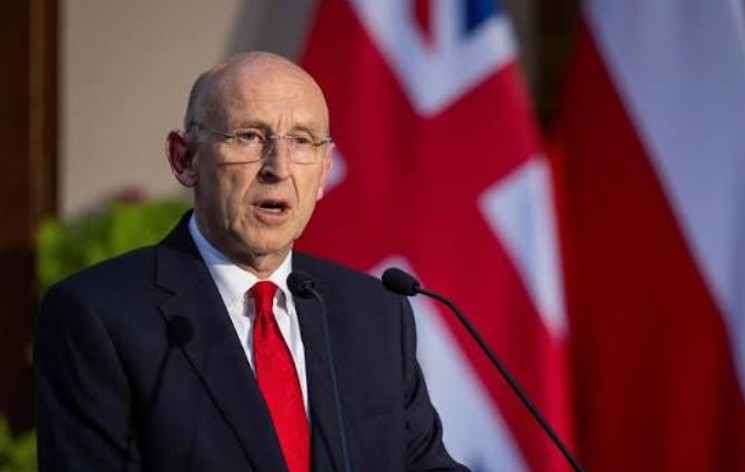
By strengthening multinational coordination and planning for effective collective action, we can help reopen the Strait and protect our people.”
Global Partners
While the US has been preoccupied with its own regional blockade strategies, the UK-France coalition is viewed as a “coalition of the willing” for non-belligerent states.
India, Germany, and Italy have all sent representatives to Northwood, reflecting a global consensus that the current energy crisis is unsustainable.
How Does the Hormuz Crisis Affect the British Public?
The closure of the Strait is not a distant problem; its effects are being felt in every household across the United Kingdom.
The Petrol Pump “Shock”
Since the blockade began in early March, the price of fuel in the UK has skyrocketed. Data from the House of Commons Library reveals that petrol prices rose by 14 pence per litre within just three weeks of the closure. Diesel has seen an even steeper hike of 29 pence per litre.
Energy Bills and Inflation
The Bank of England has revised its inflation projections, warning that CPI (Consumer Price Index) could hover between 3% and 3.3% for the remainder of 2026 if maritime traffic does not resume.
With the Strait carrying 20% of the world’s LNG, UK wholesale gas prices have surged by nearly 75%, threatening a massive spike in household energy bills later this year.
The Impact on UK Industry
UK manufacturing trade body Make UK has warned that chemical and steel manufacturers are already imposing surcharges of up to 30% to cover energy costs.
Without a successful outcome at the Northwood conference, there is a legitimate fear of “permanent deindustrialization” in some UK regions.
What are the Military Challenges Facing the Coalition?
Despite the high-level expertise at Northwood, the mission faces significant hurdles:
- Depleted Royal Navy Resources: Critics, including the Guardian’s political editor, have pointed out that the UK has a limited number of mine-hunting ships available for deployment.
- Asymmetric Threats: Even if a ceasefire holds, the threat from “rogue” mines dropped from small civilian craft remains a persistent danger to commercial insurance viability.
- The “Trump Factor”: The mission must navigate a complex geopolitical landscape where US President Donald Trump has criticized allies for their lack of naval spending, calling the reopening of the Strait “not America’s job.”
What Happens Next?
The two-day conference is expected to conclude with a formal “Concept of Operations” (CONOPS).
- Late April 2026: Finalization of the 50-nation diplomatic coalition support.
- May 2026: Staging of naval assets in the Gulf of Oman.
- June 2026: Commencement of the mine-clearing phase, aimed at providing “reassurance” to commercial shipowners and insurers like Lloyd’s of London.
If the Northwood planners succeed, the first “protected” tankers could pass through the Strait by early summer, potentially triggering a much-needed drop in global oil prices.