
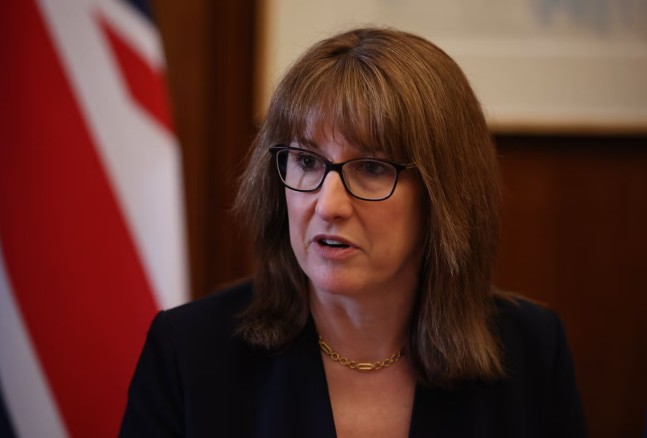
The “Special Relationship” is facing one of its most rigorous tests in recent memory as the UK Chancellor, Rachel Reeves, arrives in Washington DC this week.
Her objective is clear: to challenge the Trump administration over a military and economic strategy in the Middle East that she has branded a “folly.”
As the International Monetary Fund (IMF) slashes Britain’s economic growth forecasts, the Chancellor finds herself in the crosshairs of a global energy crisis.
With US Treasury Secretary Scott Bessent dismissing the current market volatility as “a small bit of economic pain,” Reeves is carrying the frustration of British households to the heart of American power.
Why has the Chancellor launched a public attack on US strategy?
The shift in tone from HM Treasury is no accident. Rachel Reeves has moved from diplomatic nuance to open “anger and frustration” regarding the US-led blockade of Iranian ports.
In a frank interview with The Mirror, Reeves accused the US of entering a conflict without a “clear exit plan,” leaving allies like the UK to absorb the domestic shockwaves.
The Chancellor’s primary concern is the financial fallout on families. With the Resolution Foundation warning of a £480 hit to average household budgets, Reeves is under immense pressure to prove that the Labour government can shield the UK from external shocks.
By labeling the US approach as “aggressive” and “offensive,” she is attempting to carve out a distinct British foreign policy that prioritizes global economic stability over unilateral military pressure.
What is the ‘Small Bit of Economic Pain’ mentioned by the US?
The friction point between the two nations was ignited by US Treasury Secretary Scott Bessent. His assertion that the current economic turmoil is a “transient” price worth paying to prevent a nuclear Iran has not landed well in London.
Bessent argued that:
- The risk of a nuclear-armed Tehran is an “incalculable tail risk.”
- The surge in gasoline and headline inflation is temporary.
- Once the conflict ends, prices will “come down” naturally.
For the UK, however, this “transient” pain threatens to derail a fragile economic recovery. The IMF’s warning that a global recession is now a “close call” suggests that the “pain” Bessent describes could be far more systemic and long-lasting than Washington is willing to admit.
How has the IMF downgraded the UK’s economic outlook?
The IMF Spring Meetings have been overshadowed by a significant darkening of the global forecast. The UK, in particular, is bearing the brunt of the geopolitical instability.
| Economic Metric | IMF Forecast Change |
| UK GDP Growth | Slashed for the next two years (Worst in the G7) |
| Inflation | Expected to rise due to energy costs |
| Unemployment | Predicted to trend upwards |
| Global Status | Outlook “abruptly darkened.” |
The IMF noted that the UK faces a “large jolt” due to its specific energy dependency and trade vulnerabilities. While Bank of England Governor Andrew Bailey has offered some reassurance regarding the resilience of the UK banking sector, the macro-outlook remains the most challenging since the 2008 financial crisis.
Is the Strait of Hormuz blockade the main driver of UK inflation?
The Strait of Hormuz is arguably the most important maritime corridor in the world for UK energy security. Approximately 20% of the world’s oil and gas flows through this narrow waterway.
The effective closure of the Strait by Iran, coupled with the US blockade of Iranian ports, has created a “Law of the Jungle” scenario, as described by Chinese President Xi Jinping. For the UK public, this translates to:
- Transport Hubs: Increased fuel costs for logistics in major hubs like the Port of Dover and Heathrow Airport.
- Public Services: Higher operational costs for the NHS and local councils as heating and fuel bills rise.
- Food Prices: Increased shipping costs leading to “shelf inflation” in UK supermarkets.
Sir Keir Starmer has spent recent days coordinating with international partners to ensure the waterway remains open to commercial shipping, even as the US Navy and Iranian forces remain in a tense standoff.
How do UK political parties differ on the Iran conflict?
The Chancellor has used this international crisis to draw a sharp line between the current government and its predecessors. Reeves took aim at both the Conservatives and Reform UK, accusing them of wanting to “jump in feet first” into aggressive action.
- Labour’s Position: De-escalation, maintaining open shipping lanes, and refusing to join the US blockade.
- Opposition Views: Some members of the opposition have called for stronger solidarity with the Trump administration, arguing that a nuclear Iran is the ultimate threat to UK security.
What are the expected developments in the coming days?
As the talks in Washington commence, several key factors will determine the trajectory of the UK economy:
- The “Two-Day” Negotiation: Donald Trump has signaled that a deal with Iran could happen within 48 hours. If a ceasefire is reached, market volatility may subside instantly.
- The Blockade Standoff: US Central Command continues to monitor the Strait. Any engagement between American warships and Iranian vessels would likely send oil prices to unprecedented highs.
- Domestic Policy: Reeves may be forced to consider further interventions in the UK energy market if the IMF’s “severe scenario” of a global recession begins to materialize.