


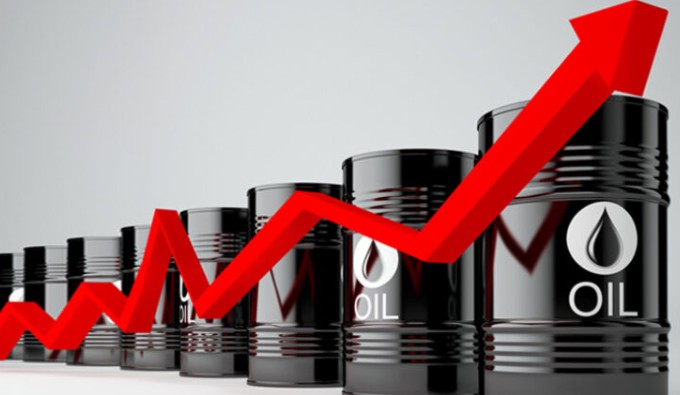
Oil price inflation is back in sharp focus after a major escalation in the Middle East sent global crude prices higher this week.
Following US and Israeli military action against Iran over the weekend, markets reacted swiftly, with Brent crude climbing to $82.76 per barrel, its highest level since January 2025.
For the UK, this matters immediately. Higher oil prices can push up petrol costs, food transport expenses and household energy bills. At a time when inflation remains above target, the renewed oil shock presents a serious test for the Bank of England.
Why is oil price inflation rising again?
Oil markets reacted to fears that the Strait of Hormuz, the world’s most important oil shipping route, could face disruption. Around one-fifth of the global oil supply passes through the narrow Gulf waterway.
Brent crude has now risen by 36% since the start of 2026. US benchmark West Texas Intermediate has climbed by roughly 32% over the same period.
When oil prices rise sharply, the effects ripple quickly through the UK economy:
- Petrol and diesel prices increase within weeks
- Delivery and haulage costs rise
- Airlines face higher fuel bills
- Food and retail prices often follow
This is how oil price inflation feeds into the wider Consumer Prices Index (CPI). The UK imports a significant share of its refined fuel despite North Sea production. That leaves households exposed to global energy swings.
How could oil price inflation affect UK interest rates?
The key question is whether this surge proves temporary or becomes sustained. UK inflation recently eased to 2.8%, down from its 11% peak in 2022 but still above the Bank’s 2% target. Financial markets had expected gradual interest rate cuts later this year.
However, if oil price inflation pushes transport and food costs higher again, policymakers may delay any rate reductions.
Andrew Bailey, Governor of the Bank of England, has previously warned that persistent energy shocks can “feed through more broadly” into core inflation, meaning price pressures spread beyond fuel alone.
What would this mean for mortgage holders?
If rates stay higher for longer:
- Fixed mortgage deals may remain elevated
- Tracker mortgages would not benefit from expected cuts
- Business borrowing costs could stay restrictive
For example, a homeowner with a £200,000 variable-rate mortgage would pay roughly £20–£25 more per month for every 0.25 percentage point rise in interest rates. Even holding rates steady rather than cutting them carries financial consequences.
Are other central banks also worried about oil price inflation?
The UK is not alone in facing this dilemma. The European Central Bank has described the situation as a “genuine dilemma”, as higher oil prices risk pushing eurozone inflation back up while economic growth slows.
In the United States, former Treasury Secretary Janet Yellen warned that the conflict could “fuel inflationary pressures” and make rate cuts less likely.
Global policy decisions matter for Britain. If US rates stay higher, the pound could weaken against the dollar. Since oil trades in dollars, a weaker pound would make imports more expensive, adding to inflation in domestic oil prices.
Could oil prices hit $100 per barrel?
Energy analysts warn that a prolonged disruption to tanker traffic in the Strait of Hormuz could push Brent crude above $100 per barrel.
If that happens, the UK would likely see:
- Petrol prices are rising by 10p per litre or more
- Higher wholesale gas prices
- Increased electricity costs
- Fresh pressure on food inflation
During the 2022 energy crisis, similar price spikes triggered emergency government intervention. Public borrowing remains elevated today, limiting fiscal room for another large-scale subsidy programme.
How exposed is the UK economy to an oil shock?
While Britain produces oil and gas in the North Sea, it still operates within global pricing markets. Even domestically produced energy follows international benchmarks.
Energy makes up a smaller share of inflation than during the 2022 peak. However, second-round effects, such as rising transport costs feeding into supermarket prices, remain a key risk.
Economists say the scale and duration of the shock will determine the outcome:
- A short-term spike may have a limited impact
- A six to eight-week disruption could push CPI materially higher
- A prolonged conflict could reset inflation expectations
The Bank of England’s next policy meetings will closely assess energy market trends before making any rate decisions.