

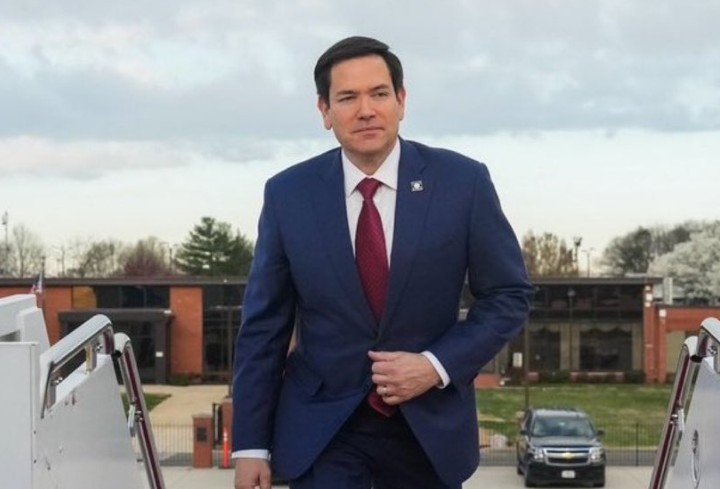
US Secretary of State Marco Rubio has skipped a key Ukraine meeting with European leaders during the Munich Security Conference, raising fresh concerns about unity among Western allies as the war approaches its fourth year.
Rubio was expected to join officials from nearly a dozen European countries, including Germany, Poland and Finland, alongside senior figures from the European Commission and Nato.
However, he reportedly pulled out at the last minute, citing scheduling clashes. Despite this, he remains set to hold direct talks with Ukrainian President Volodymyr Zelensky on Saturday.
European officials are watching closely after Marco Rubio’s Munich Security Conference appearance raised fresh questions about the US role in upcoming peace talks.
The decision matters because European leaders are currently trying to keep a united front against Russia while also pushing for a clear diplomatic pathway to end the war.
Why Did Marco Rubio Skip the Munich Ukraine Meeting?
Marco Rubio’s absence has drawn frustration from European officials, particularly because the meeting was designed to coordinate policy and messaging between Ukraine’s closest allies.
According to reports, US officials said Rubio had too many meetings taking place at the same time and could not attend the full session.
However, European diplomats reportedly viewed the cancellation as a major disruption, arguing the meeting lost political weight without US involvement.
This development comes at a sensitive time when European governments are already worried the United States may be shifting its priorities in how it handles the Ukraine conflict.
What Was the Berlin Format Meeting Supposed to Achieve?
The Berlin Format meeting was intended to strengthen alignment between:
- Ukraine’s government
- European Union officials
- Nato representatives
- Key European states supporting Kyiv
The goal was to build momentum ahead of upcoming diplomatic negotiations, including discussions about ceasefire terms and long-term security support for Ukraine.
Without Rubio present, some officials suggested the talks lacked direction and authority, particularly on the issue of whether Washington will remain fully committed to the European-led approach.
Is Marco Rubio Still Meeting Zelensky?
Yes. Despite skipping the European meeting, Marco Rubio is still expected to meet President Zelensky directly in Munich.
This suggests Rubio has not stepped away from Ukraine diplomacy entirely, but it also raises questions about whether the US is prioritising bilateral discussions over coordinated talks with European allies.
For the UK and wider Europe, that difference matters because most military support, financial aid, and security planning requires coordination across multiple governments.
What Did Zelensky Say About Elections and a Ceasefire?
During the same conference, President Zelensky signalled that Ukraine could hold elections if a ceasefire was achieved.
He reportedly said elections would be a “great idea” if US President Donald Trump could push Vladimir Putin into agreeing to a ceasefire lasting around two to three months.
Ukraine has delayed elections during wartime due to security concerns, including the risk of missile strikes and the difficulty of organising voting while millions remain displaced.
Zelensky’s remarks come after Trump publicly warned that Ukraine must “get moving” if it wants a peace deal with Moscow.
What Talks Are Expected Next in the Ukraine-Russia War?
Diplomatic momentum is now shifting towards Geneva, where the next round of trilateral talks is expected to take place next week.
Russian officials have indicated the discussions will involve representatives from Russia, Ukraine and the United States to explore potential peace frameworks and ceasefire options.
The war has now lasted almost four years, with fighting continuing across a frontline stretching around 1,200 kilometres.
Both sides still appear far apart on key issues such as:
- Control of the eastern Ukrainian territory
- Crimea’s status
- Nato membership ambitions
- Long-term security guarantees
How Are European Leaders Reacting to Rubio’s Absence?
European officials have expressed anger and disbelief, with some reportedly calling the decision “insane”.
Many European capitals already worry that the US could change its approach depending on domestic political pressures.
Rubio’s decision to skip the Berlin Format meeting has added fuel to those concerns, even though he still held other discussions with senior European figures.
For European governments, especially those bordering Russia or Belarus, the fear is that any weakening of US engagement could reduce deterrence and increase instability.
What Does This Mean for the UK and European Security?
The UK remains one of Ukraine’s strongest supporters, both diplomatically and militarily. But Rubio’s move highlights a growing reality: Europe may need to carry more of the burden if US leadership becomes inconsistent.
For the UK public, this could mean:
- Higher long-term defence spending
- Increased pressure on Nato readiness
- Continued risk to European energy and trade stability
- Prolonged political uncertainty around Russia’s future intentions
It also raises questions about whether peace talks will happen in a structured and unified way, or through separate deals negotiated behind closed doors.