

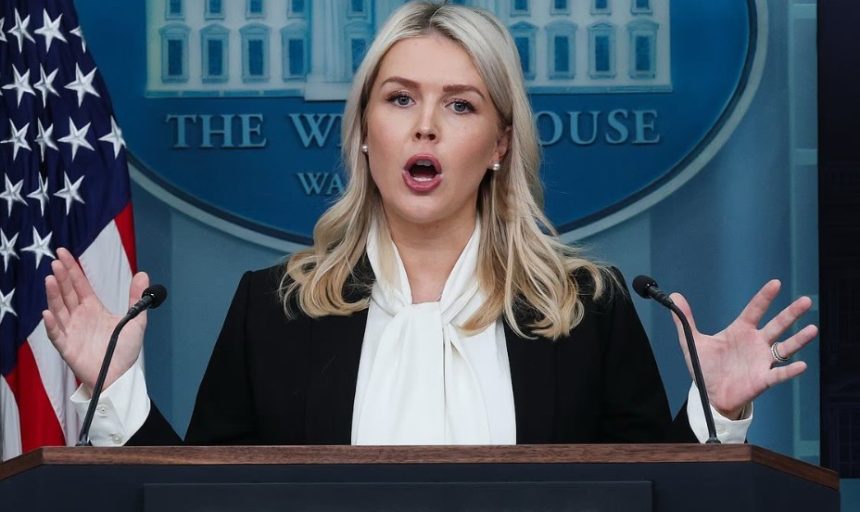
A tense Karoline Leavitt CNN clash unfolded at the White House on Wednesday after Press Secretary Karoline Leavitt publicly rebuked CNN’s chief correspondent Kaitlan Collins during a heated exchange about US soldiers killed in the escalating Iran conflict.
The confrontation took place during a live White House press briefing, where Collins questioned the administration’s stance on media coverage of six American service members killed in an attack on a command centre in Kuwait on Sunday.
The clash matters because it highlights growing tensions between the Trump administration and major US news outlets at a time of widening military action in the Middle East.
For UK audiences following the Iran war developments, the dispute offers insight into how US leadership is managing both wartime communication and press scrutiny.
What triggered the Karoline Leavitt CNN clash?
The exchange began after Collins referenced remarks made earlier by Defence Secretary Pete Hegseth. Speaking at the Pentagon, Hegseth criticised what he described as “fake news” coverage of the soldiers’ deaths, claiming some outlets were reporting the tragedy to make President Donald Trump “look bad”.
Collins asked directly: “Is it the position of this administration that the press should not prominently cover the deaths of U.S. service members?”
Leavitt responded that the administration expects the press to “accurately report on the success of Operation Epic Fury and the damage it is doing to the rogue Iranian regime”.
🔥 Karoline Leavitt GOES OFF on CNN’s Kaitlan Collins
“You know you are being disingenuous… The press does only want to make the president look bad, that’s a fact… especially you and especially CNN… You and your network know that you take every single thing this… pic.twitter.com/XZGVbbXpSg
— Mr Producer (@RichSementa) March 4, 2026
When Collins pushed back, citing Hegseth’s exact comments, Leavitt accused her of being “disingenuous”. “You know you’re being disingenuous. Listen to me, especially you, and especially CNN,” Leavitt snapped.
The confrontation quickly became one of the most combative moments of the briefing.
Why were US troops killed in Kuwait?
The six American soldiers died on Sunday during an attack on a US command facility in Kuwait, as fighting intensified between US forces and Iran-linked targets across the Middle East.
The White House has framed the military operation, dubbed “Operation Epic Fury”, as a defensive action designed to prevent what Leavitt called an “imminent threat” from Iran.
During Wednesday’s briefing, she said President Trump acted on what she described as a “feeling based on fact” that Iran would strike US assets and allies.
The President is expected to attend the dignified transfer of the soldiers’ remains, a solemn military ceremony honouring fallen personnel.
For UK readers, dignified transfers are similar in significance to repatriation ceremonies at RAF Brize Norton, which often draw national attention and political scrutiny.
Did the White House criticise media coverage?
Yes, strongly. Leavitt doubled down on the Defence Secretary’s remarks, stating: “The press does only want to make the president look bad. That’s it. That’s a fact.”
Collins countered by saying US media outlets report on service member deaths “under any president”, arguing that coverage is standard practice during wartime.
The dispute underlines a familiar pattern in US politics, where relations between the White House and major broadcasters, particularly CNN, have remained strained.
Why does this matter for UK audiences?
The Karoline Leavitt CNN clash goes beyond a personal spat. It raises broader questions about:
- Wartime transparency
- Government messaging during military operations
- Press freedom and accountability
- Political communication in crisis situations
The UK has historically maintained close military cooperation with the US in Middle East operations. Any escalation with Iran could impact British defence planning, intelligence sharing, and diplomatic positioning.
Political communication during conflict also affects financial markets and oil prices, issues that directly influence UK households through energy costs.
How does this compare with past White House–media confrontations?
Tensions between US administrations and the press are not new. However, direct accusations that media outlets report casualties to undermine the president mark a sharper tone.
During previous conflicts, including operations in Iraq and Afghanistan, US administrations faced heavy scrutiny but rarely framed frontline casualty reporting as politically motivated in such blunt terms.
Media experts say confrontational briefings can energise political bases but risk damaging public trust in institutions.