


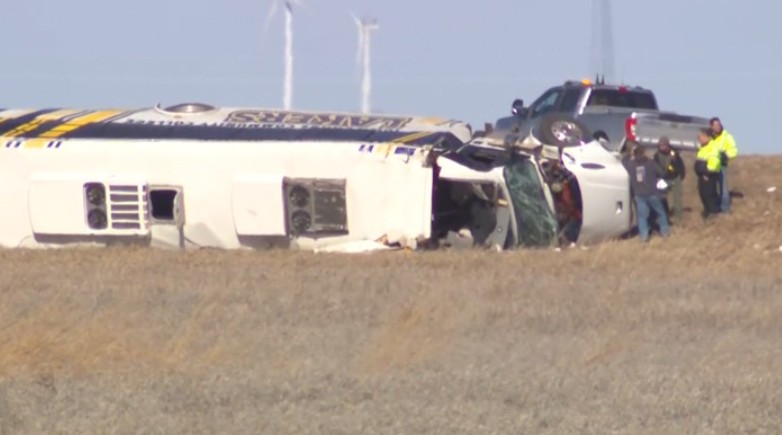
A bus carrying the Iowa Lakes Community College baseball team crashed in rural Iowa, USA, on Wednesday, killing one person and leaving 32 others injured.
The crash happened near Twin Lakes, around 110 miles northwest of Des Moines, at roughly 11am local time, after the vehicle reportedly overturned into a roadside ditch.
Authorities confirmed that no other vehicles were involved, and investigators are now working to establish what caused the bus to leave the road.
The tragedy has sent shockwaves through the local college community and has reignited wider concerns about safety during long-distance travel for student athletes.
What Happened in the Iowa Lakes Baseball Bus Crash?
Emergency crews rushed to the scene after reports that the team bus had overturned on a highway near Twin Lakes. The vehicle ended up in a ditch, with passengers trapped or injured inside.
Officials later confirmed that the crash involved a single vehicle, meaning no other cars or lorries collided with the bus.
Authorities have not yet explained what caused the bus to overturn, but they have confirmed the incident is being treated as a serious road traffic investigation.
In rural areas like this part of Iowa, long stretches of road and limited nearby services can make emergency response more difficult, which often increases concern when major incidents happen.
How Many People Were Injured and Who Was Killed?
The bus was believed to be carrying 33 people in total.
Authorities confirmed:
- 1 person died
- 32 people were injured
Some passengers reportedly suffered serious injuries, though officials have not yet released full details about medical conditions or long-term outcomes.
At this stage, authorities have also not publicly identified the person who died or any of the injured passengers, which is common practice while families are notified.
Why Is the Iowa Lakes Baseball Bus Crash So Significant?
The Iowa Lakes baseball bus crash has drawn widespread attention because it involved young student athletes travelling as part of an organised sports schedule.
Unlike professional sports teams, college teams often rely on long coach journeys rather than flights. These trips can involve hours of travel, early starts, and tight match schedules, all of which can increase risks on the road.
The incident also highlights how serious coach crashes can be. Even at moderate speeds, a large bus overturning can cause major injuries because passengers may be thrown from seats or hit by loose equipment.
The scale of injuries, 32 people hurt in a single crash, makes it one of the more severe sports travel incidents reported in recent months.
What Has Iowa Lakes Community College Said?
Iowa Lakes Community College released a statement expressing deep concern and confirming it is working closely with emergency services and families.
The college said it is supporting those affected and maintaining direct communication with relatives.
In cases like this, colleges often provide:
- counselling support for students and staff
- accommodation for families travelling to hospitals
- coordination with local authorities
- academic flexibility for injured students
The college has not yet confirmed whether future matches will be postponed, but disruption to the season is widely expected.
What Was the Team’s Travel Plan Before the Crash?
The Iowa Lakes baseball season had only just started, with the team recently completing its opening fixtures.
The bus was reportedly travelling to an away series scheduled for later this week. The opponents due to play Iowa Lakes also issued a public message offering condolences and support.
Such responses are common within US college sport, where institutions often act quickly to show solidarity after serious incidents.
What Do Investigators Know So Far About the Cause?
Officials have confirmed that the crash remains under investigation.
While authorities have not released a confirmed cause, investigators typically examine several key factors in major rollover incidents like this, including:
- road surface conditions (potholes, uneven shoulders, loose gravel)
- weather conditions (wind, rain, ice, reduced visibility)
- driver fatigue (long travel times and concentration loss)
- speed and braking
- mechanical failure (tyres, steering, brakes)
- seatbelt use and passenger safety measures
Single-vehicle bus crashes often take longer to investigate because experts must rule out mechanical faults and assess the road environment in detail.
How Does This Compare to Similar Coach Crashes?
Bus and coach crashes involving student groups are not common, but when they happen, they can lead to high casualty numbers because so many people travel together.
Rollover incidents, in particular, tend to cause severe injuries due to the force involved when a large vehicle flips or slides.
In many previous cases involving sports teams, investigations later identified factors such as poor road conditions, driver fatigue, or sudden loss of vehicle control.
However, investigators in this case have not yet confirmed any contributing cause.
Why Should UK Readers Care About the Iowa Lakes Baseball Bus Crash?
Although the crash happened in the United States, it carries strong relevance for UK audiences for several reasons.
Many British families have relatives studying in the US or travelling abroad for sports scholarships, university placements, or international competitions. Incidents like this underscore the risks of long road journeys, even when travel seems routine.
The tragedy also reflects concerns familiar to UK travellers, including:
- Coach safety on rural roads
- driver working hours and fatigue checks
- emergency response delays outside cities
- The importance of proper passenger restraints
Coach travel remains common in Britain for football academies, rugby tours, school trips, and university sports clubs. This crash is a reminder that safety planning matters just as much as sporting preparation.