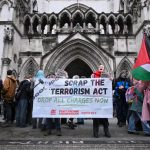


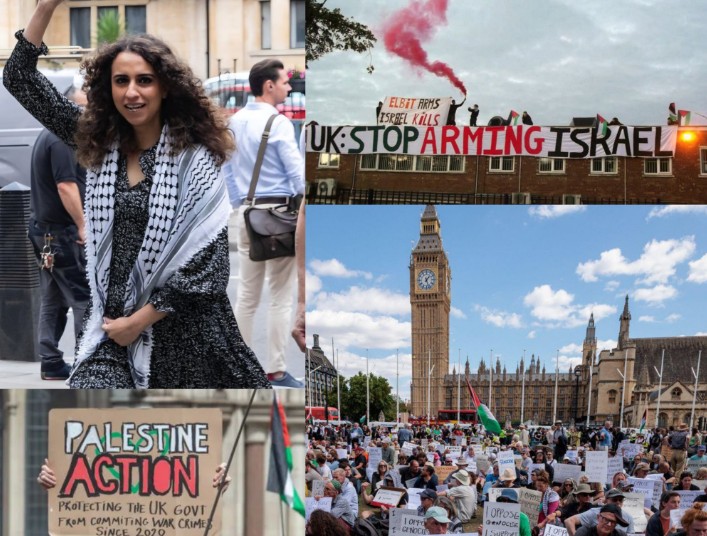
The High Court in London has ruled that the Government’s decision to ban Palestine Action under UK anti-terror laws was unlawful, despite judges also accepting that some of the group’s activities could meet the legal definition of terrorism.
The decision, delivered on Thursday, has triggered political backlash and fresh debate over how Britain applies its counter-terror legislation.
The ruling matters because it directly affects police powers, public protest rights, and the Government’s ability to quickly outlaw organisations it believes pose a serious threat.
Although the court criticised the ban, Palestine Action remains proscribed for now, as ministers prepare an appeal.
What did the High Court decide about Palestine Action?
Three senior High Court judges said the Home Office’s decision to proscribe Palestine Action was “disproportionate”, even though they agreed the group had organised and carried out acts that could fall under terrorism laws.
The court’s judgment focused heavily on how the Government made the decision, and whether it followed a fair and lawful process.
In simple terms, the judges accepted that Palestine Action had crossed serious legal lines in some cases, but they did not accept that the Government had proved the group’s actions were consistent or widespread enough to justify a full terrorism-style ban.
The judges also raised concerns about the effect such a ban has on lawful protest activity.
Why was Palestine Action banned in the first place?
The Government banned Palestine Action last year after a series of high-profile incidents involving damage to property and disruption at sites linked to defence manufacturing.
The group is known for targeting companies it claims support Israel’s military operations, including UK-based firms and sites connected to defence supply chains.
The Home Office argued the group’s actions went beyond normal protest and into criminal activity that posed wider risks, including threats to public safety.
Under UK law, proscription makes it a serious criminal offence to:
- belong to the organisation
- promote or support it publicly
- attend meetings linked to it
- wear clothing or carry symbols showing support
In some cases, individuals convicted under proscription laws can face up to 14 years in prison.
Did the court say Palestine Action is a terrorist group?
Not in a straightforward way. The judges said Palestine Action had carried out actions that could be viewed as terrorism under the law, but they also stressed that only a small number of incidents reached that threshold.
The court highlighted that the group had not yet shown the “level, scale and persistence” of activity normally expected for proscription.
That part of the ruling has caused outrage among critics, who argue terrorism should not need to reach a high “volume” before the state steps in.
Supporters of the judgment argue that the court was simply applying the law properly and protecting civil liberties from overreach.
What role did human rights law play in the ruling?
A key issue in the case was the impact of proscription on basic rights protected by the Human Rights Act, including:
- freedom of expression
- freedom of peaceful assembly
- freedom of association
The court said banning Palestine Action interfered sharply with these rights, particularly because it criminalises even non-violent expressions of support.
In its ruling, the judges suggested the Home Office failed to properly justify why such a severe legal step was necessary.
This has reignited political arguments over whether the UK’s human rights framework makes it harder for the Government to respond quickly to extremist threats.
What happens now?
Is Palestine Action still banned? Yes, for the moment.
Even though the High Court found the ban unlawful, Palestine Action remains banned while legal steps continue. Ministers are expected to appeal, and the case could eventually reach the Supreme Court, which would likely take months.
The High Court has ruled that the ban on Palestine Action is unlawful.
The ban is resulted in the unlawful arrest of nearly 3,000 people – among them an 83-year-old priest for holding a sign saying “I oppose genocide. I support Palestine Action” pic.twitter.com/WY3nIsWN1P
— Taj Ali (@Taj_Ali1) February 13, 2026
The Home Secretary has already confirmed she will challenge the ruling.
Meanwhile, police forces face uncertainty over enforcement. The Metropolitan Police has indicated it will pause arrests solely for expressing support, while the legal position remains unclear.
That decision could create a temporary gap where people feel freer to publicly back the group, even though the ban technically still stands.
Why does this ruling matter for UK anti-terror laws?
The case could have major consequences for how Britain defines and applies terrorism laws in protest-related cases.
Counter-terror legislation was originally designed for threats like extremist violence, organised terror networks, and national security risks.
This ruling suggests courts may resist efforts to use the same legal framework against activist groups unless ministers prove the threat is both sustained and severe.
Some legal experts believe the judgment may force the Government to:
- Tighten the prescription process
- set clearer standards for what qualifies as terrorism
- Update guidance for police enforcement
Critics, however, argue the ruling weakens deterrence and could encourage groups to test the limits of the law.
What are ministers likely to do next?
The Government is expected to push forward with an appeal quickly, with political pressure mounting for a tougher approach.
There are also growing calls inside Westminster for emergency legislative changes that would make it easier to ban groups accused of extremist behaviour, especially when they repeatedly commit criminal damage or disrupt critical infrastructure.
However, any attempt to rewrite proscription laws would likely face serious scrutiny in Parliament, particularly from MPs concerned about protest rights.
How does this affect policing on the ground?
The immediate impact will likely be felt in London and other major cities where Palestine Action-related protests have taken place.
For example, officers policing demonstrations outside defence-linked sites have relied on the proscription status to justify arrests based on signs, chants, and clothing.
If courts ultimately overturn the ban fully, police will have to return to using standard public order and criminal damage laws instead.
That could reduce the number of arrests linked to “support” offences but increase reliance on evidence-based charges tied to specific acts.