
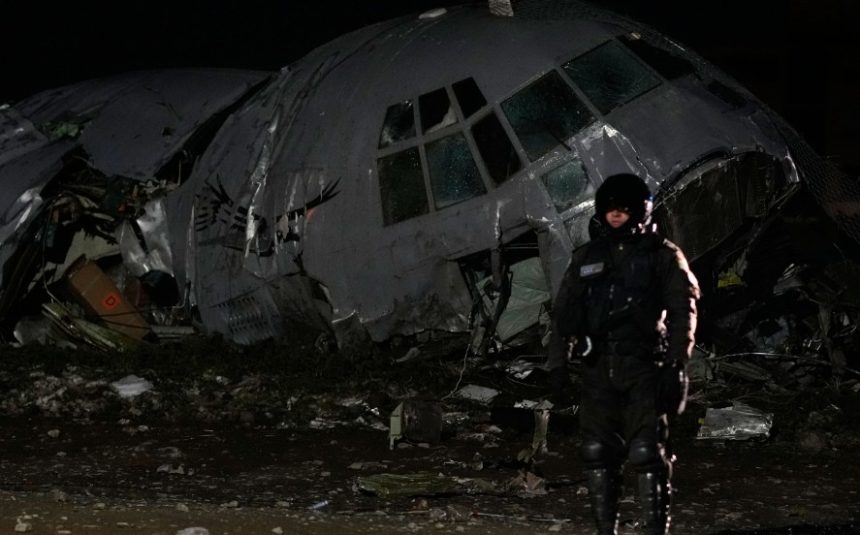
At least 15 people have died, and more than 30 others have been injured after a military cargo aircraft crashed onto a busy motorway near La Paz in a devastating Bolivia plane crash.
The Bolivian air force Hercules C-130 was attempting to land at El Alto International Airport at around 6.20pm local time on Friday when it veered off the runway in poor weather conditions.
The aircraft was transporting freshly printed banknotes from Santa Cruz to the capital. It ploughed into a nearby field before striking vehicles on the road below, triggering a major fire and chaotic scenes.
The incident has shocked Bolivia and drawn international attention due to the scale of destruction and the unusual cargo involved.
What exactly happened during the Bolivia plane crash?
Defence minister Marcelo Salinas confirmed that the Hercules C-130 “landed and veered off the runway” before crashing beyond the airport perimeter. The aircraft struck at least 15 vehicles on the motorway, crushing cars into twisted metal as it burst into flames.
National fire chief Pavel Tovar confirmed 15 fatalities late on Friday but said authorities were still verifying whether the victims were on board the aircraft or travelling in vehicles at the time of impact.
He warned the death toll could rise as emergency crews continue recovery operations.
Two of the six crew members remained unaccounted for, according to Bolivian air force general Sergio Lora.
BREAKING: At least 15 people have died and 30 others were injured in a plane crash near La Paz, Bolivia pic.twitter.com/N89A3sFw3u
— Baba Banaras™ (@RealBababanaras) February 28, 2026
Emergency services extinguished the blaze and transferred dozens of injured people to nearby hospitals. At El Alto’s Hospital del Norte, staff placed a black ribbon at the entrance in mourning, while distressed relatives gathered outside seeking updates.
Why was the plane carrying banknotes?
The aircraft was transporting newly printed Bolivian currency that had reportedly arrived from overseas. Authorities were moving the notes from Santa Cruz to La Paz ahead of their planned entry into circulation.
Central Bank president David Espinoza travelled directly to the crash site to oversee the handling of the cargo. He said, “The bills have no legal value because they never entered circulation.”
Officials declined to reveal the total value of the banknotes on board. However, Bolivia’s defence ministry warned that collecting or attempting to use the currency would constitute a criminal offence.
Police and military personnel later destroyed boxes of damaged banknotes under official supervision to prevent misuse.
How did crowds hamper rescue efforts?
The presence of loose banknotes scattered across the crash site triggered disorder within minutes of impact.
Fire chief Pavel Tovar said hundreds of people rushed towards the wreckage to collect the cash, severely obstructing emergency operations.
Riot police deployed tear gas to disperse crowds, while water hoses were used to push back individuals attempting to access the debris.
Authorities deployed more than 500 soldiers and 100 police officers to regain control of the area. Officials confirmed that the public interference delayed rescue access to damaged vehicles and parts of the aircraft.
The disorder added a complex layer to an already dangerous recovery operation involving fire, fuel, debris and potential unexploded equipment.
What caused the Bolivia plane crash?
Investigators have launched a formal inquiry into the cause of the Bolivia plane crash. Officials confirmed that poor weather conditions affected visibility at the time of landing.
However, authorities have not yet determined whether weather, mechanical failure, runway conditions or pilot error played the primary role.
Flights at El Alto airport were temporarily suspended following the incident, but resumed after safety inspections.
Aviation investigators are expected to analyse flight data, cockpit recordings and maintenance logs as part of the inquiry.
Why does this incident matter beyond Bolivia?
Although the crash occurred thousands of miles from the UK, aviation safety remains a global concern. International investigations often lead to safety recommendations adopted by regulators worldwide.
The incident also highlights the challenges of transporting high-value cargo by air and the need for strong perimeter security during major emergencies.
Public interference at disaster scenes can significantly hinder rescue efforts, a lesson emergency planners globally continue to emphasise.