
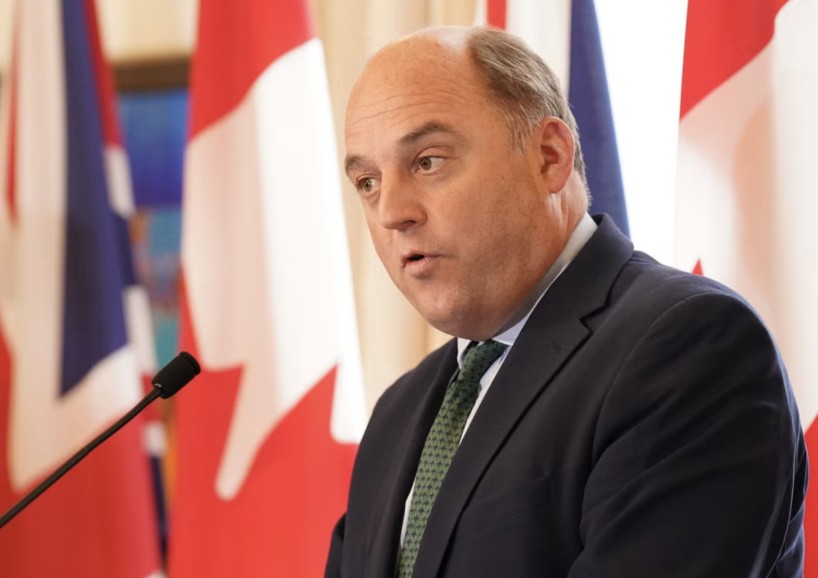
Former Defence Secretary Sir Ben Wallace has warned that deploying British warships to the Strait of Hormuz is a “fantasy” due to depleted military resources. He accused the government of overstretching troops and “taking the public for fools” regarding UK defence readiness.
Why is the Strait of Hormuz deployment being called a “fantasy”?
The reality is that Britain’s naval fleet is currently facing a “temporary trough” in capability. Sir Ben Wallace argues that the Ministry of Defence (MoD) operating budgets have been cut so deeply that any significant deployment would leave remaining troops dangerously unprotected.
While Armed Forces Minister Luke Pollard refused to rule out the move following demands from Donald Trump, recent calls for Iran to stop hijacking vessels highlight the severe pressure on the region.
Experts suggest our “hollowed out” forces simply cannot sustain a long-term blockade-running mission without significant risk.
Can the Royal Navy still protect British shipping?
But here’s the kicker: the UK no longer maintains the standing presence of mine-countermeasure vessels in the Gulf that it did for the last 20 years.
Dr Sidharth Kaushal from RUSI points out that while the UK has “niche capabilities,” the transition from small-scale interventions to large-scale conflict is incomplete.
Even as the UK leads a 35-nation fix for the fuel crisis, the delay of HMS Dragon, which took a week to leave Portsmouth for Cyprus, has become a symbol of this lack of readiness.
How does this affect UK petrol prices and inflation?
Disruptions in the Strait, which sees roughly 20% of the world’s oil consumption pass through daily, have a direct “pump-to-pocket” impact on British households.
| Metric | Current Status / Data | Source |
| Global Oil via Strait | Approx. 21 million barrels per day | US EIA / Lloyd’s List |
| UK Defence Spending | 2.3% of GDP (Targeting 2.5%) | Gov.uk / HM Treasury |
| Royal Navy Escort Fleet | 19 Frigates and Destroyers (Nominal) | Royal Navy |
| Maintenance Delays | Type 45 Destroyers (Ongoing reliability issues) | National Audit Office |
Is the British Army too small to fight?
The assessment isn’t just limited to the sea. General Sir Richard Barrons recently offered a stinging critique, suggesting the British Army is so depleted it could only “seize a small market town” in a real-world conflict.
Anyway, for most people, the concern is whether the UK is “punching above its weight” with an increasingly thin fist.
Why This Matters?
We found that the rhetoric coming from Whitehall often fails to align with the cold, hard numbers on the MoD’s balance sheet.
Our analysis suggests that the government is caught between a “special relationship” with a demanding US administration and a Treasury that is tightening the purse strings.
By claiming we are “ready” while ships sit in Portsmouth awaiting repairs, ministers risk damaging the UK’s credibility with allies and adversaries alike.
It isn’t just about the ships; it’s about the honesty of the civilian leadership regarding what a “post-transition” military actually looks like.