


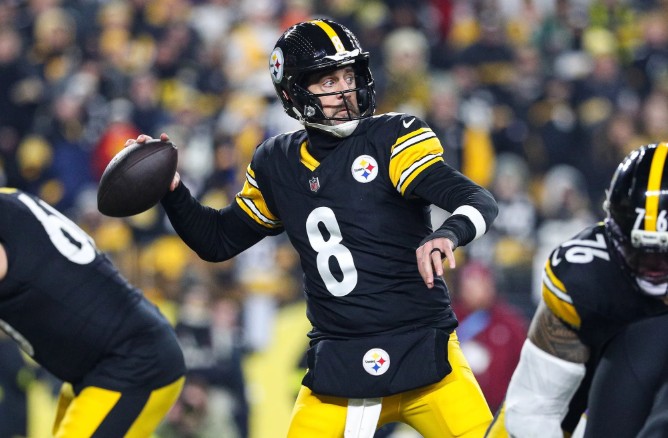
Aaron Rodgers endured a punishing night in the NFL as the Houston Texans produced a decisive defensive moment that swung the wild-card tie firmly in their favour.
In what could prove to be the final game of his remarkable career, the 42-year-old quarterback was repeatedly pressured, hurried and hit.
That pressure finally told in the fourth quarter, when a brutal strip-sack handed Houston a touchdown and left the Pittsburgh Steelers with an uphill task they could not overcome.
What happened to Aaron Rodgers in the decisive fourth quarter?
With just over 11 minutes remaining and Pittsburgh trailing by four points, Rodgers faced a crucial third-and-12. He dropped back to pass, but the Texans’ defence collapsed the pocket almost instantly.
Led by rookie edge rusher Will Anderson Jr., Houston’s pass rush swarmed the veteran quarterback.
Rodgers was hit hard, lost the ball, and defensive lineman Sheldon Rankins reacted quickest, picking up the fumble and running it in for a touchdown.
The play changed the shape of the game in seconds:
- The Texans moved from a narrow lead to an 11-point advantage
- Pittsburgh lost possession at a critical moment
- Momentum swung decisively towards the home side
From that moment on, the Steelers struggled to mount any meaningful response.
Why was this strip-sack such a defining moment?
In knockout NFL football, mistakes are costly. A turnover is damaging enough, but when it results directly in a defensive touchdown, it can be fatal.
Keep that ball, Calen. Might be the last one taken away from Aaron Rodgers. pic.twitter.com/fgWn4xYZwG
— Mike Garafolo (@MikeGarafolo) January 13, 2026
Commentators on the night summed up the moment succinctly, saying, “You keep asking your quarterback to stand in against pressure, eventually the defence wins.”
Before the turnover, Pittsburgh were still firmly in the contest. After it, belief drained from the offence, and the stadium sensed the game was slipping away from the visitors.
How much pressure was Rodgers under throughout the game?
Rodgers was rarely comfortable from the opening drive. Houston’s defensive front consistently beat the Steelers’ offensive line, forcing quick throws and limiting opportunities downfield.
That pressure was made more significant given Pittsburgh’s recent defensive changes off the field, including a notable defensive shake-up earlier in the season, highlighting a side still searching for balance at both ends of the ball.
Key indicators of the Texans’ dominance included:
- Frequent quarterback hits and hurried releases
- Minimal time for routes to develop
- A near-constant collapse of the passing pocket
For UK fans, the dynamic was similar to watching a football team repeatedly pressed high up the pitch; eventually, the pressure produces an error.
Who stood out for the Houston Texans?
Will Anderson Jr. once again showed why he is regarded as one of the league’s brightest defensive talents. His speed and timing were central to the turnover, and his presence alone altered Pittsburgh’s approach.
Sheldon Rankins also played a vital role. Defensive touchdowns rely on anticipation as much as strength, and his quick reaction turned chaos into points that effectively sealed the game.
How did the Steelers reach the playoffs?
Pittsburgh’s path to the postseason was far from convincing. They secured the final play-off spot after the Baltimore Ravens missed a late field goal in the final game of the regular season.
Without that moment of fortune:
- The Steelers would not have qualified for the wild-card round
- Rodgers would have missed this match entirely
- Houston would have faced a different opponent
Instead, the Texans took full advantage of their opportunity.
Is this the end of the road for Aaron Rodgers?
That question now hangs heavily over the NFL. Rodgers, a four-time NFL MVP, has previously spoken about the physical demands of playing into his forties. Monday night offered a stark reminder of those demands.
There has been no official word on his future, but the sight of Rodgers repeatedly getting up after heavy hits felt symbolic. If this does prove to be his final appearance, it was a harsh and physical ending to an extraordinary career.