


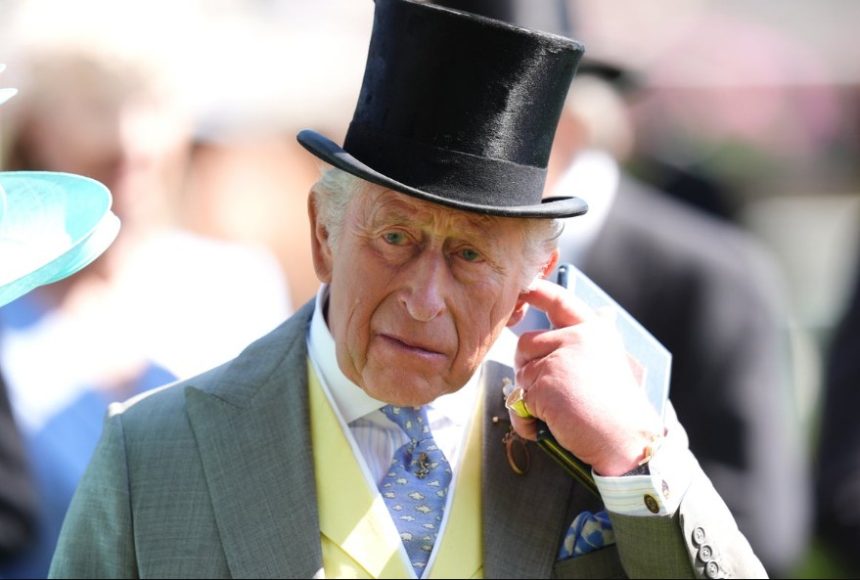
King Charles III has paid more than £30 million in personal taxes since his accession in September 2022, Buckingham Palace announced. This historic move marks the first time a reigning British monarch has publicly disclosed private tax obligations, signalling a major shift towards transparency as public interest spikes around the total King Charles tax payments.
- Historic Precedent: The King’s personal tax bill reached £24.6 million over the last two full tax years, placing him among the UK’s top 100 taxpayers.
- Prince William Disclosures: The Prince of Wales concurrently revealed personal tax payments exceeding £20 million since inheriting his title.
- Buckingham Palace Exit: Alongside financial records, the Palace confirmed the King and Queen Camilla will not return to Buckingham Palace as a personal residence after its £370 million refit.
How Did the King Incur a £30m Tax Bill?
Under long-standing constitutional arrangements, the reigning British monarch is legally exempt from paying income, capital gains, or inheritance taxes via the Sovereign Crown Exemption.
However, since the landmark 1993 agreement established under Queen Elizabeth II following public backlash over the Windsor Castle fire, the Sovereign has voluntarily paid these duties on private income streams.
What breaks centuries of royal privacy is the active choice to publicise the exact figures. According to figures released by James Chalmers, Keeper of the Privy Purse, the definitive sum of the King Charles tax payments since taking the throne has surpassed £30 million. For the 2023-24 financial year, the King’s voluntary contribution stood at £11.7 million, rising to £12.9 million for the 2024-25 fiscal period.
This private income is primarily derived from the Duchy of Lancaster, a private estate held in trust for the Sovereign since 1399, which generated a £25.2 million surplus last year. Crucially, these figures do not cover the Sovereign Grant, which is the taxpayer-funded mechanism used to support official duties and palace upkeep.
Simultaneously, Prince William disclosed his personal financial liabilities stemming from the Duchy of Cornwall. The heir to the throne paid £8.34 million in 2023-24 and £7.76 million in 2024-25, confirming he pays the top rate of income tax on all personal revenue.
What Does This Disclosure Reveal About Secret Royal Assets?
While critics have praised the transparency, tax specialists like Dan Neidle point out that a few raw figures do not clarify the true extent of royal holdings. The declaration includes no itemised breakdown of deductions or the net private wealth generating these taxes.
Independent audits estimate King Charles’s private fortune at roughly £1.8 billion, spanning racehorses, multi-million-pound stamp collections, offshore investments, and fine art by Claude Monet and Salvador Dalí.
Because the voluntary tax is only paid on the Duchy surplus minus private official expenses (such as funding non-working royals), the exact tax rate remains known to the Palace and HM Revenue and Customs (HMRC) alone.
Furthermore, the figures do not cover the King’s highly lucrative private estates, Balmoral in Scotland and Sandringham in Norfolk, which are held completely separate from the public ledger.
Why Has the Royal Household Abandoned Buckingham Palace as a Residence?
In an unexpected operational shift, the Palace confirmed that King Charles and Queen Camilla will permanently retain Clarence House as their London home. Buckingham Palace will be treated strictly as an operational monarchy HQ, a workplace for the Royal Household, and a ceremonial centre.
The structural relationship between the public purse and royal wealth is outlined by the Treasury below:
| Financial Metric | 2024-25 | 2025-26 | 2026-27 (Projected) | 2027-28 (Target) |
| Sovereign Grant Total | £51.8m | £132.1m | £137.9m | £99.9m |
| Crown Estate Operating Profits | £1.4bn | £1.2bn | TBD | TBD |
The temporary surge in public funding up to £137.9 million for 2026-27 is explicitly tied to the final phase of the 10-year, £370 million structural modernisation program for Buckingham Palace. This extensive capital works scheme places heavy demands on London’s infrastructure.
It involves major freight and construction logistics management around Transport for London (TfL) corridors and central arterial hubs, ensuring heritage engineering teams can safely overhaul decades-old electrical, piping, and heating networks.
Crucially for regional tourism and local council economies, leaving the palace as a public heritage asset means public access will scale up dramatically. Expected to draw well beyond its typical 700,000 annual visitors, the increase in footfall will directly boost commercial business density and hospitality revenues across Westminster and the wider London tourism economy.
Conversely, the Crown Estate reported a dip in operating profits to £1.2 billion, caused by a transition phase in offshore wind farm leasing fees, a critical structural component of the UK’s green energy grid spanning the British coastline.
How Have Politicians and Campaigners Responded?
“The amount of tax payable by His Majesty since Accession is more than £30 million. This landmark disclosure is part of the Royal Household’s commitment to transparency as its finances come under increasing public scrutiny.” James Chalmers, Keeper of the Privy Purse
Constitutional experts view the disclosure as a calculated strategic defence. Craig Prescott, a constitutional law specialist at Royal Holloway, University of London, noted: “This indicates there is substantial private income going towards the King.
The Palace hopes these tax disclosures will demonstrate that the King is not simply living off the public purse, but actively paying back into it, especially to draw contrast with the financial opacity of Andrew Mountbatten-Windsor.”
However, the voluntary disclosure has drawn sharp criticism from anti-monarchy groups and left-wing politicians. Graham Smith, Chief Executive of the campaign group Republic, strongly rejected the reporting style: “The royals cannot be allowed to self-declare their tax.
Despite ongoing concerns about the massive cost of the royals, the Sovereign Grant will remain hugely inflated at £99.9 million compared to its initial level of £31 million in 2012. If it had simply risen by inflation, it would stand at £45 million.”
Labour peers have also expressed worry. Baroness Margaret Hodge stated there are many “questions to be asked” about the finances of the royal family, calling the grant massively generous even after the projected fall.
Former Scotland minister Lord George Foulkes called the tax disclosure a “diversionary tactic to get away from the whole question of the sovereign grant,” and called for a joint committee of the Commons and the Lords to supervise the expenditure.
What Is the Legislative Timeline for Royal Funding Reforms?
The structural relationship between the public purse and royal wealth is scheduled for a legislative reset. As the Buckingham Palace reservicing project wraps up, Prime Minister Keir Starmer and Chancellor Rachel Reeves are moving forward with the Sovereign Grant Bill.
- Late 2026: The final structural work on the Buckingham Palace infrastructure finishes, transitioning the landmark into a full-time ceremonial workspace and enhanced public heritage asset.
- April 2027: The statutory formula governing royal funding will officially adjust. The Sovereign Grant is slated to be reset downwards to £99.9 million.
- 2027-2031: Under the new legislative mechanism introduced by the Treasury, a stricter capping protocol will prevent future funding spikes, ensuring that future windfalls from offshore energy developments on Crown Estate land flow back directly to public services rather than expanding the royal allocation.