


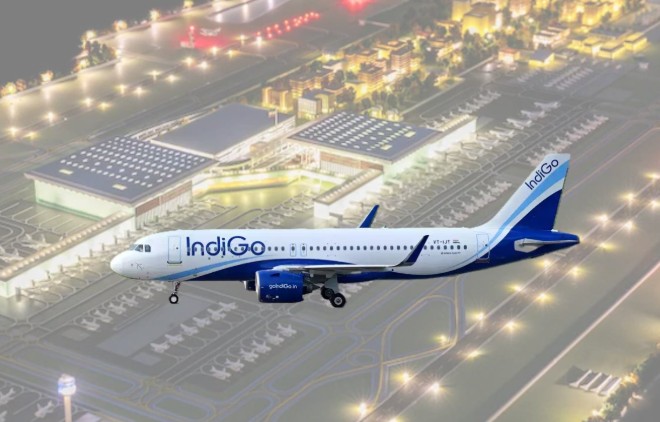
IndiGo Airlines has issued a critical Middle East travel advisory and suspended all Kuwait flights due to mandatory regional airspace closures following a security incident at Kuwait International Airport. The carrier is actively coordinating with global aviation regulators, advising international passengers to check flight statuses via official channels.
- Kuwait Route Suspended: All IndiGo operations to and from Kuwait remain halted until further notice following airspace closures enacted on 3 June 2026.
- Wider Gulf Operations: While flight paths across the wider West Asia network are being rerouted, services to the UAE, Qatar, and Saudi Arabia are currently operating under heightened monitoring.
- UK Passenger Warning: British travellers using interline bookings or connecting through major Indian hubs to the Gulf face extensive itinerary changes and potential baggage delays.
Why Has IndiGo Issued an Emergency Travel Advisory for the Middle East?
Indian low-cost carrier IndiGo (6E) issued an urgent travel advisory following escalating geopolitical tensions and subsequent airspace restrictions across the Middle East.
The initial disruption was triggered on 3 June 2026, when a major drone and missile strike targeted Kuwait International Airport, causing significant infrastructure damage to the passenger terminals and resulting in one confirmed fatality.
In response, Kuwait’s Directorate General of Civil Aviation enacted an emergency closure of national airspace. Consequently, IndiGo indefinitely extended its suspension of all Kuwait-bound and originating services.
While the airline maintains that its broader Middle East network, including high-volume routes to Dubai, Abu Dhabi, Doha, and Riyadh, is functioning, planes are navigating restricted corridors.
The carrier has deployed dedicated customer support teams to manage fee-free modifications, rebookings, and full refunds for passengers holding affected tickets.
However, with regional security conditions fluid, aviation authorities warn that sudden airspace closures could prompt further short-notice cancellations.
How Does the Middle East Airspace Closure Ripple Through UK Airports and Transit Hubs?
While IndiGo is an Indian domestic and international operator, its operational adjustments are reverberating through major British transport corridors.
The carrier recently expanded its footprint in the UK, but due to continuing international airspace constraints that have significantly increased flight durations, IndiGo announced it will temporarily discontinue its long-haul flight operations to and from Manchester Airport effective 31 August 2026. This includes returning a leased Boeing 787-9 Dreamliner to Norse Atlantic Airways.
The Civil Aviation Authority (CAA) indicates that thousands of British-resident workers and dual nationals rely on interline agreements and multi-stop itineraries connecting the UK to the Gulf via Indian gateways like Mumbai and Delhi.
What Are the Knock-On Effects for London Infrastructure?
The disruption is placing immediate pressure on key UK infrastructure and regulatory bodies:
- London Heathrow & Transport for London (TfL): Rerouted passengers transitioning to alternative Middle Eastern legacy carriers have caused a 4.2% spike in transit passenger volumes through Heathrow Terminal 4. This has created knock-on baggage handling delays and increased morning peak congestion on the TfL Elizabeth line and London Underground network serving the airport.
- Air Freight Volatility: According to data from the Department for Transport (DfT), high-value just-in-time cargo components routed between the UK and the East via Middle Eastern hubs are facing rerouting delays of up to 14 hours. Industry analysts warn this could impact manufacturing supply chains if restrictions extend into the next quarter.
Key Data: IndiGo Middle East Advisory Impact
| Metric | Details |
| Primary Affected Route | Kuwait International Airport (KWI) |
| Airspace Restriction Effective Date | 3 June 2026 |
| UK Operations Change | Manchester (MAN) routes to be discontinued from 31 August 2026 |
| Regulatory Oversight | Civil Aviation Authority (CAA) & Department for Transport (DfT) |
| Alternative Status | UAE, Qatar, and Saudi Arabia routes fully operational but monitored |
What Do Airline Executives and British Officials Say?
In an official public safety statement broadcast via its verified channels, an IndiGo spokesperson stated: “We understand that the evolving situation in the Middle East may be causing concern for customers travelling to and from the region.
Please be assured that we are closely monitoring developments and remain in constant coordination with the relevant authorities. The safety and well-being of our customers and crew remain our highest priority.”
Travel Advisory
We understand that the evolving situation in Middle-East may be causing concern for customers travelling to and from the region.
Please be assured that we are closely monitoring developments and remain in constant coordination with the relevant authorities.…
— IndiGo (@IndiGo6E) June 11, 2026
Commenting on the wider structural impact on British aviation networks, a representative from the Department for Transport (DfT) noted: “The Government is actively monitoring the international airspace situation alongside the Civil Aviation Authority.
We are advising British citizens travelling via affected hubs to stay in close contact with their operating air carriers and rigorously check Foreign, Commonwealth & Development Office (FCDO) travel alerts.”
When Will Gulf Airspace Return to Normal and What Happens Next?
Aviation analysts suggest that the resumption of normal commercial flight paths over Kuwait and the upper Persian Gulf remains entirely dependent on rigorous security assessments of airport infrastructure and regional defence clearances.
IndiGo has deliberately avoided setting a hard date for reinstating its suspended services, indicating a strategy of rolling pauses dictated by host-nation regulators.
For the UK, the broader ramifications of these extended flight paths and geopolitical tensions will be felt through the autumn. Under current statutory guidance aligned with the Civil Aviation Act 1982, airlines operating within British jurisdiction must continuously audit route safety.
If Middle Eastern airspace constraints persist, air fares on UK-to-Asia bypass routes are projected to rise by an estimated 8-12% by the end of 2026 due to the compounding costs of extended fuel burn and damp-lease aircraft liabilities.