

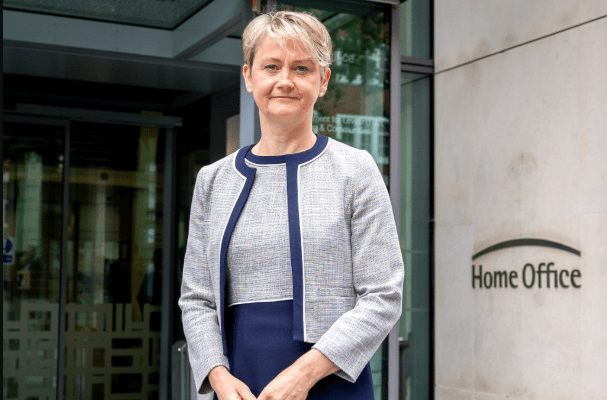
The stability of the British economy is currently hanging in a delicate balance following a major diplomatic intervention by Foreign Secretary Yvette Cooper.
Speaking from the Antalya Diplomacy Forum on Saturday, 18 April 2026, Cooper issued a stark warning: while a ceasefire has halted active hostilities in the Iran war, the Strait of Hormuz remains a “hostage” situation for global trade.
For the UK, this isn’t just a distant foreign policy issue. The Strait is a vital artery for the liquefied natural gas (LNG) and oil that keep British homes warm and transport networks moving.
With Tehran maintaining “strict Iranian control” over the waterway, the threat of an energy price hike looms over every UK household.
Why has the Ceasefire Failed to Clear the Waterways?
The conflict, which began on February 28, 2026, when U.S. and Israeli forces launched operations against Iran, effectively shuttered one of the world’s most critical maritime chokepoints.
While a truce was recently signed, the Islamic Revolutionary Guard Corps (IRGC) announced on Saturday that it has only agreed to “managed passage” for a “limited number” of vessels.
British officials are concerned that this “managed passage” is a tactical move by Tehran to maintain leverage over the West.
This has led to direct calls for Iran to stop hijacking the Strait as a prerequisite for any long-term diplomatic normalization. By deciding which ships pass and which are blocked, Iran retains the ability to disrupt the UK’s energy supply chains at a moment’s notice.
Is the Royal Navy Preparing for a Demining Mission?
A significant revelation from Cooper’s briefing in Antalya was the readiness of a coalition of over 50 countries to enforce “freedom of navigation.” Crucially, the Foreign Secretary noted that more than a dozen nations are prepared to provide direct maritime support, including:
- Naval Demining: Clearing the narrow lanes of the Strait of, of underwater explosives laid during the conflict.
- Aegis Protection: Providing a protective screen for tankers destined for UK ports like Milford Haven and Immingham.
- UKMTO Coordination: The UK Maritime Trade Operations will play a central role in guiding British-flagged vessels through the “managed” corridors.
Which UK Regions are Most Vulnerable to Shipping Delays?
While the physical restricted zone is thousands of miles away, the “bottleneck effect” is felt at specific UK transport hubs:
- Pembrokeshire (Milford Haven): As the entry point for a massive portion of the UK’s gas supply, local terminals are on high alert. Any delay in the Strait means LNG tankers arrive out of sequence, potentially causing temporary supply dips in the National Grid.
- The Humber (Immingham): As a major hub for refined oil products, eastern England’s industrial sector is highly sensitive to the fluctuations in tanker arrivals now being “managed” by the IRGC.
- The English Channel: Ships that were delayed during the war are now arriving in a “clump,” creating significant congestion for the Port of Dover and the Maritime and Coastguard Agency (MCA).
What Does “Managed Passage” Mean for Your Cost of Living?
The Foreign Secretary’s use of the word “hostage” refers directly to the economic pressure on the British public. Even with a ceasefire, the lack of “normal passage” means:
- Petrol Station Volatility: UK fuel retailers often hike prices based on “market jitters.” The IRGC’s insistence on “strict control” provides exactly the kind of uncertainty that keeps prices at the pump high.
- Supermarket Inflation: Container ships carrying consumer goods from Asia to the UK are forced to take longer routes or pay higher insurance premiums, costs that eventually land on the price tags at Tesco, Sainsbury’s, and ASDA.
- Manufacturing Costs: UK factories relying on “just-in-time” components are seeing lead times drift, affecting the automotive and aerospace sectors in the Midlands.
How is the UK Government Responding to Tehran’s Demands?
Iran has stated that full freedom of navigation will only be granted if the U.S. ensures reciprocal freedom for Iranian vessels. The UK’s position, as outlined by Yvette Cooper, is that maritime trade should not be used as a diplomatic bargaining chip.
The Official Standpoint:
- Urgency: Cooper described the restoration of shipping as “urgent for the global economy.“
- Multilateralism: The UK is not acting alone but leading a diplomatic charge to turn the ceasefire into an “enduring settlement.“
- Pressure: The Foreign Office is working with the United Nations to ensure that international waters remain exactly that—international, rather than under the “strict control” of a single state.
What Happens Next?
The coming days are critical for the UK shipping industry. If the first convoy of tankers passes without incident this weekend, insurance “war risk” premiums may begin to drop. However, if the IRGC halts a Western-flagged vessel, we could see a rapid re-escalation.
The UK Government is expected to keep the Royal Navy’s HMS Duncan and other Type 45 destroyers in the region to provide a “visible deterrent” and ensure that British economic interests are not compromised during this “fragile diplomatic moment.“