


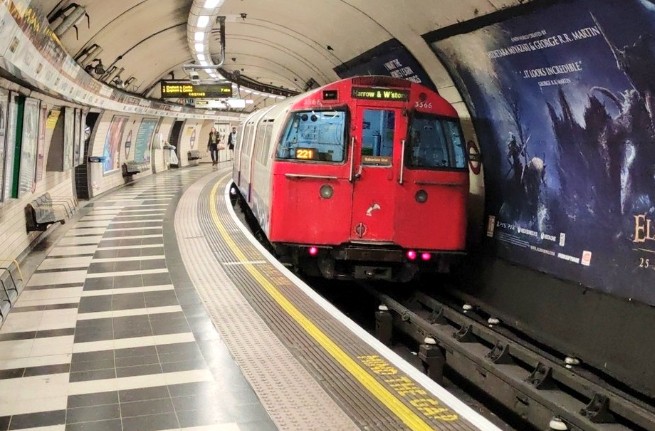
London is facing a period of unprecedented transport uncertainty as a series of synchronised strikes threatens to bring the capital to a standstill throughout the spring and early summer of 2026.
While a set of 24-hour walkouts by London Underground drivers scheduled for late March was suspended following “constructive progress” in talks, the Rail, Maritime and Transport (RMT) union has made it clear that eight further strike dates in April, May, and June remain firmly on the calendar.
The dispute, which centres on a controversial “compressed” four-day working week, has now expanded.
The Unite union is currently balloting over 150 safety-critical bus station and network traffic controllers, raising the prospect of the first combined Tube and bus network shutdown in years.
With millions of daily journeys at stake, the pressure is mounting on Transport for London (TfL) and the Mayor of London, Sir Sadiq Khan, to find a resolution before the first wave of April walkouts begins.
Which Tube Strike Dates Are Still Going Ahead?
The RMT has confirmed that while the March dates were suspended to allow for intensive negotiations, the following 24-hour walkouts are still scheduled to proceed:
- April: 21–22 April and 23–24 April
- May: 19–20 May and 21–22 May
- June: 16 June and 18 June
Each strike is typically scheduled to begin at 12:00 (midday) on the first date and conclude at 11:59 the following day.
This “staggered” timing is strategically designed by the union to maximise disruption across three calendar days, as morning services on the day after a strike are often severely delayed while trains are returned to their correct depots.
Why Is the “Four-Day Week” Causing Such a Row?
At the heart of the RMT dispute is a TfL proposal to transition London Underground drivers to a compressed four-day working week. On the surface, the plan, which is currently being trialled on the Bakerloo line, appears attractive:
- The Plan: Drivers would work their 35-hour week over four longer shifts rather than five.
- The Incentive: For the first time, these shifts would include paid meal breaks.
However, the RMT, led by General Secretary Eddie Dempsey, has voiced “serious concerns” regarding the physical toll on drivers.
The union argues that extending daily driving shifts from roughly seven hours to nearly nine hours will lead to extreme fatigue and compromise passenger safety.
The RMT is instead advocating for a 32-hour week over four days without a pay reduction, a demand that TfL has so far labelled as “unaffordable.”
In contrast, the ASLEF union, which also represents a significant portion of Tube drivers, has largely welcomed the four-day week, describing it as one of the most significant improvements to working conditions in decades.
This split between the unions has created a complex negotiating environment for TfL management.
Will London’s Bus Network Also Be Hit?
The threat to London’s transport infrastructure intensified this week as Unite launched a strike ballot for its members working as bus station controllers and network traffic controllers.
Who is striking?
The ballot involves approximately 150 staff who perform safety-critical roles. These individuals are responsible for managing accidents, rerouting buses during emergencies, and ensuring bus stations remain safe for the 6.5 million passengers who use them daily.
What is the dispute about?
Unite claims that the new roster changes imposed by TfL will force staff to cover unfamiliar sites and increase weekend working. Sharon Graham, Unite General Secretary, warned that these changes “severely impact work-life balance” and could leave staff “at risk of being disciplined for situations outside their control.”
The Unite ballot closes on 13 April 2026. If members vote for action, strikes could be timed to coincide with the RMT’s April 21 walkout, creating a “total transport vacuum” in the city.
How Much Will These Strikes Cost the UK Economy?
The economic impact of a London-wide transport strike is staggering. According to the Centre for Economics and Business Research (CEBR), a single week of major Tube strikes can cost the capital’s economy upwards of £230 million.
| Sector | Estimated Impact (per week of disruption) |
| Hospitality | £110 million loss in bookings and walk-ins |
| Retail | 10-15% drop in Central London footfall |
| Productivity | 700,000 working days lost due to travel delays |
UKHospitality has already warned that the upcoming spring strikes coincide with a vital trading window. Previous strikes in late 2025 saw hospitality bookings in the West End drop by as much as 67%, as visitors avoided the capital entirely.
Which Areas and Lines Will Be Most Affected?
While the RMT strike involves drivers across the network, certain areas will feel the brunt of the disruption more than others.
- The Bakerloo Line: As the site of the four-day work trial, this line is expected to see the highest participation in industrial action.
- Zone 1 Interchanges: Major hubs such as Oxford Circus, King’s Cross, and Waterloo will likely be closed or subject to severe crowd-control measures.
- East London: Recent localised bus disputes in areas like Bow and Lea Interchange mean residents in Newham and Tower Hamlets could face a “double hit” of both bus and Tube cancellations.
Note on Alternative Travel: The Elizabeth line, DLR, and London Overground are expected to remain operational as their staff are under different contracts. However, these services will be “exceptionally busy,” with queuing systems in place at peak times.
What are the Authorities Saying?
The Mayor of London, Sadiq Khan, has struck a cautious tone. While he welcomed the suspension of the March strikes, he noted that “talks must continue in good faith” to protect London’s reputation as a global city.
Nick Dent, Director of Customer Operations at London Underground, stated: “We are pleased the RMT has suspended action for March. We continue to believe the four-day work week is a positive step for our staff, and we are committed to addressing the union’s concerns without the need for further strikes.”
The RMT has suspended its planned industrial action on the London Underground scheduled for Tuesday 24 to Friday 27 March.
Check before you travel and follow @TfL for the latest updates.
— Transport for London (@TfL) March 20, 2026
Essential Travel Tips for the 2026 Strike Period
- Check the “TfL Go” App: Live updates will be most accurate here, as “Plan a Journey” tools may not reflect last-minute closures.
- Avoid the “Morning After” Peak: Services rarely return to normal before 10:00 AM the day after a strike ends.
- Utilise the “Bakerloop”: If the Bakerloo line is down, the new “Bakerloop” express bus service is designed to cover key sections of the route.
-
Work from Home: Businesses across the City of London are being advised to implement “strike day” remote working policies to ease pressure on the bus network.