


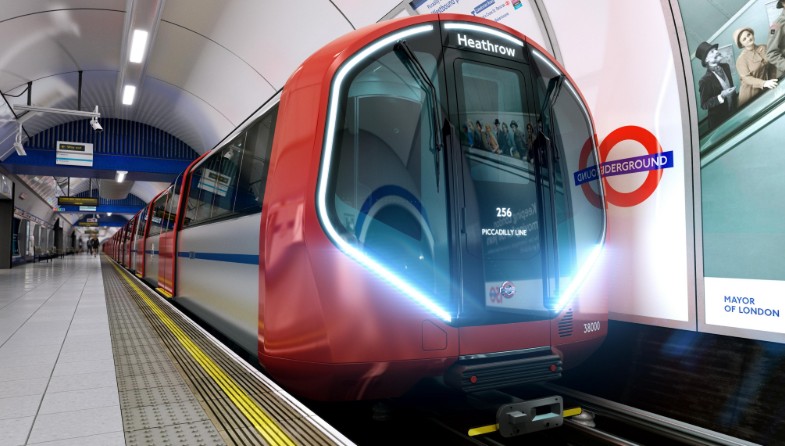
Transport for London (TfL) has admitted that the rollout of its “game-changing” new Piccadilly Line trains has been pushed back for a second time.
Passengers, who were originally told to expect the state-of-the-art fleet in 2025, are now looking at a launch window between December 2026 and June 2027.
This multi-billion-pound modernisation project is designed to replace the 1973 rolling stock, currently the second oldest on the London Underground, with 94 high-capacity, air-conditioned trains built by Siemens Mobility.
However, the “complexity of introducing 21st-century trains onto a 20th-century railway” has led to significant technical “niggles” and a ballooning budget that has now reached £3.4 billion.
Despite the setbacks, TfL insists it has a “credible plan” to deliver the fleet, which promises to transform the commute for millions of Londoners by offering the first walk-through, air-cooled carriages on a deep-level Tube line.
What Caused the Latest Setback?
The delay is not a result of a single catastrophic failure, but rather a series of integration challenges involving the line’s 120-year-old infrastructure.
The “4×4 in a Small Garage” Problem
Stuart Harvey, TfL’s Chief Capital Officer, compared the task to “fitting a 4×4 sports utility vehicle in a garage designed to house a small car.”
While the trains technically fit in the tunnels, they have been built to such a tight millimetre tolerance that certain trackside equipment, such as signals and cabling, has had to be physically moved.
Software and Traction Challenges
A primary focus of current testing involves the sophisticated software required to manage the train’s location. This digital system ensures:
- Selective Door Opening: Doors must only open on the correct side of the platform, a challenge given the varied curves of Piccadilly Line stations.
- Traction Package Management: To maximise passenger space, equipment was moved under the carriages. Engineers recently had to reposition traction cables that were making contact with the ground during high-speed test runs.
- Digital Camera Systems: Traditional platform mirrors are being replaced with digital camera feeds in the driver’s cab, a system that is currently being refined to ensure 100% reliability in low-light tunnel conditions.
Where the Impact is Being Felt?
The delay affects multiple locations across the UK, from manufacturing hubs in the North to the busiest transport corridors in London.
- Goole, East Yorkshire: Roughly 50% of the 94-train fleet is being assembled at the Siemens Mobility Goole Rail Village. The facility supports over 700 jobs, but the “re-profiling” of the delivery schedule means units are being stored or retrofitted before they can be sent south.
- Northfields and Cockfosters Depots: These two London sites are the heart of the project’s cost increases. Upgrading these Victorian-era depots while they remain operational has proved more expensive than anticipated, contributing to a £409 million budget overspend.
- The “Navy Blue” Corridor: The delay hits 53 stations across London. Crucially, the vital link to Heathrow Airport, a major gateway for UK tourism and business, will continue to be served by ageing trains that lack the capacity and cooling of the new fleet.
Why has the Budget Ballooned to £3.4 Billion?
Originally budgeted at £2.9 billion, the “Estimated Final Cost” (EFC) has soared due to several factors:
- Depot Modernisation: The cost of transforming the Cockfosters and Northfields sites to handle the new digital trains has exceeded forecasts.
- Inflation: Rising material costs for rail and electronics have impacted the Siemens contract and associated civil engineering works.
- Infrastructure Readiness: Unexpected remedial work on tunnel walls and track beds was required to accommodate the new fleet’s power and cooling requirements.
To mitigate costs, TfL has opted to “life-extend” certain parts of the Northfields depot rather than a full rebuild, deferring some expenditure for another 15 years.
How Will This Affect Your Daily Commute?
For the 200 million passengers who use the Piccadilly Line annually, the wait for a comfortable summer journey continues.
- Capacity Issues: The current fleet struggles with overcrowding during peak hours. The new trains offer 10% more space per carriage and will eventually allow for a frequency increase from 24 to 27 trains per hour.
- The Heat Factor: The Piccadilly Line is one of the deepest and hottest on the network. The delay means commuters will face at least one more summer without the 10% temperature reduction promised by the new air-con systems.
- Reliability: The 1973 stock is increasingly prone to “technical failures” and signal issues. TfL is now forced to spend more on “patch-up” maintenance to keep the old trains running until 2027.
| Feature | 1973 Stock (Current) | 2024 Stock (New Siemens) |
| Carriages | 7 Separate cars | Walk-through train |
| Cooling | Windows/Fans only | Air Conditioning |
| Capacity Increase | N/A | +10% (Stage 1) |
| Energy Efficiency | Baseline | 20% Reduction |
What Happens Next? The Testing Roadmap
TfL’s “credible plan” relies on a strict testing schedule over the next 18 months:
- Night and Weekend Testing: The four trains currently in London will continue “dynamic testing” during engineering hours to ensure they don’t interfere with the existing legacy signalling system.
- Software Patching: Siemens is expected to deliver a major software update in mid-2026 to resolve the current location-tracking “niggles.”
- Shadow Running: Before passengers are allowed on board, the trains must complete thousands of miles of “fault-free” running without commuters.
- Signalling Upgrade (Stage 2): While the trains will arrive by 2027, the full benefit, 36 trains per hour, depends on a separate signalling upgrade that currently lacks government funding.
FAQ
1. Why is the new Piccadilly Line delayed again?
The complexity of integrating modern digital trains with 120-year-old infrastructure is the main cause. Specific issues include software “niggles” for location tracking and the need to reposition under-train traction cables.
2. When will the first new Piccadilly Line train enter service?
TfL is now targeting a rollout window between December 2026 and June 2027.
3. Will the new trains have air conditioning?
Yes. These will be the first trains on a “deep-level” Tube line to have air conditioning, achieved by a space-saving design that places the cooling units under the floor.
4. How much extra is the project costing?
The budget has risen by £409 million, bringing the total project cost to approximately £3.4 billion. This is largely due to the high cost of upgrading maintenance depots.