


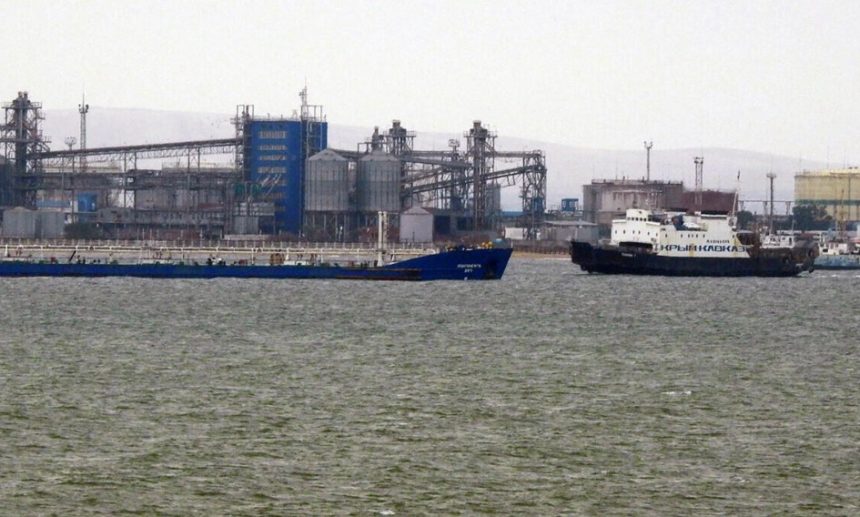
A new wave of Kyiv drone strikes has hit a key Russian Black Sea port, sparking fires and damaging oil-related infrastructure just days before US-backed peace talks are due to begin in Geneva this week.
The strike, reported on Sunday, comes at a politically sensitive moment as Russia and Ukraine prepare for fresh negotiations aimed at ending a war that is approaching its fourth anniversary.
It also signals that both sides remain willing to escalate military pressure, even as diplomats attempt to restart serious peace discussions.
Russian officials said the attack injured two people and caused major disruption at the port of Taman in the Krasnodar region, a site linked to Russia’s export routes and energy supply chain.
What happened in the latest Kyiv drone strikes?
According to regional authorities in southern Russia, Ukrainian drones struck facilities at the port of Taman, triggering fires and damaging parts of the port’s infrastructure.
Officials reported that the attack affected an oil storage tank, warehouses, and terminal areas used for logistics and shipping operations. Emergency teams were deployed to control the flames and assess structural damage.
Although Moscow has not released a full estimate of losses, the location of the strike suggests Ukraine aimed to disrupt Russia’s ability to move fuel and supplies through one of its strategically important Black Sea gateways.
Why are Kyiv drone strikes intensifying ahead of peace talks?
The timing of the attack is not accidental. Analysts widely view such strikes as part of Ukraine’s effort to strengthen its position before negotiations by proving it can hit deep into Russian territory.
For Kyiv, the goal is clear: reduce Russia’s war-funding capacity by targeting energy-linked infrastructure, particularly ports and storage sites that support oil exports. Ukraine has argued repeatedly that Russia uses export revenue to sustain its military campaign.
Russia has responded with similar tactics, continuing to target Ukrainian infrastructure through drone and missile strikes, especially in areas where power and water systems remain vulnerable.
This has turned the conflict into more than a frontline war. It has become a battle of endurance, aimed at weakening each other’s economy and civilian stability.
What is happening in Ukraine as Russia continues drone attacks?
Ukraine’s southern region, including the Black Sea city of Odesa, also faced fresh disruption over the weekend.
Ukrainian emergency services reported damage to civilian and transport infrastructure after Russian drone debris fell in populated areas. Officials said parts of the region experienced interruptions to water and electricity supplies.
In one of the most serious incidents, an elderly woman was killed after a drone strike hit a residential building in Odesa. The death has renewed public anger in Ukraine and added pressure on Western allies to deliver stronger air defence systems.
What did Volodymyr Zelensky say about Ukraine’s priorities?
Ukrainian President Volodymyr Zelensky has stressed that air defence remains Ukraine’s most urgent need, particularly as Russia continues to use drones and missiles to hit civilian infrastructure.
Several more cold days lie ahead, and everyone has already seen how the Russians exploit this. Please take care of yourselves and heed air raid alerts. We are in constant contact with all partners, emphasising that each such threat only worsens the prospects for ending the war. pic.twitter.com/k1MdgLPhVN
— Volodymyr Zelenskyy / Володимир Зеленський (@ZelenskyyUa) February 15, 2026
Speaking after international meetings, Zelensky said, “There were many meetings, and most importantly, there will be new support packages for Ukraine. The key priority is missiles for air defence, for protection against ballistic missiles.”
He added: “Air defence is a daily necessity.”
The message underlines Kyiv’s belief that peace talks cannot succeed unless Ukraine can protect its cities, energy network, and population from daily strikes.
Zelensky has repeatedly warned that any ceasefire without reliable security guarantees could leave Ukraine exposed to renewed attacks.
How do the Geneva talks fit into the wider war?
The upcoming Geneva peace talks, backed by the United States, are expected to take place on Tuesday and Wednesday. Officials hope the discussions could open a path towards reducing hostilities, even if a full peace agreement remains difficult.
Negotiators are likely to focus on potential ceasefire conditions, prisoner exchanges, and longer-term security arrangements.
However, continuing drone strikes on both sides highlight the key challenge facing mediators: neither Russia nor Ukraine appears ready to reduce military operations while talks are ongoing.
In practical terms, the fighting is continuing because both sides believe battlefield leverage will shape any future deal.
Why are Black Sea ports becoming key targets?
The Black Sea has become one of the most strategically important regions in the war. Ports such as Taman matter because they connect Russia to export routes that bring in revenue from oil, fuel, and other commodities.
Ukraine has increasingly targeted infrastructure linked to energy transport because it believes this weakens Russia’s ability to finance military operations.
These strikes also send a political message to Moscow: Ukraine can reach beyond the battlefield and hit assets Russia depends on for economic stability.
For Russia, the continued targeting of Ukraine’s power grid serves a similar purpose. Ukrainian officials have repeatedly accused Moscow of trying to exhaust the public by cutting off heat, electricity, and clean water during the winter months.
What does this mean for the UK and Europe?
For the UK, the latest escalation reinforces concerns that the war remains far from a diplomatic breakthrough.
British officials have consistently backed Ukraine through military support, training, and sanctions.
Continued attacks on energy infrastructure may also affect European economic stability, especially if the fighting disrupts shipping routes or drives up oil prices.
While the UK is not directly involved in the Geneva talks, any outcome will shape Britain’s wider defence strategy, including decisions about future support packages and cooperation with NATO allies.
The growing use of long-range drones also raises broader security questions across Europe. It shows how modern warfare has shifted from traditional frontlines to precision strikes that can reach hundreds of miles from the battlefield.