

A tragic crash involving Tenerife flights remains one of the darkest moments in British holiday aviation history, even more than four decades later.
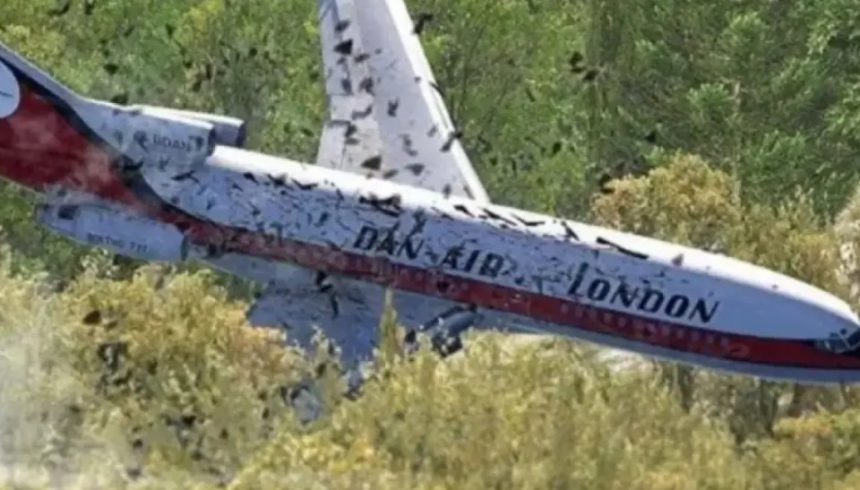
On 25 April 1980, Dan Air Flight 1008, a Boeing 727 travelling from Manchester to Tenerife, crashed into Mount La Esperanza near Tenerife North Airport, killing all 146 people on board.
The flight carried 138 passengers, many of them British holidaymakers, along with eight crew members.
The crash shocked the UK and raised serious questions about air traffic control, cockpit communication, and how safe it was for British tourists flying to Tenerife during the booming package holiday era.
What happened to Dan Air Flight 1008 on its way to Tenerife?
The aircraft took off from Manchester Airport and completed most of its three-hour flight without any reported issues.
Problems began as it approached Tenerife. Weather conditions in the area reportedly became more difficult, and air traffic control instructions became critical as multiple aircraft entered the same airspace.
As the plane prepared to land at Tenerife North Airport, controllers directed it into a holding pattern, a manoeuvre where aircraft circle in the sky while waiting for clearance to land.
However, investigators later found that the aircraft flew dangerously low while carrying out those instructions.
At around 9.20am, the Boeing 727 struck the mountainside at roughly 5,450 feet, just below the summit of Mount La Esperanza. The impact destroyed the aircraft instantly.
There were no survivors.
Why did the crash happen during a routine Tenerife flight?
Investigators later concluded the crash resulted from a mix of human error and communication failure.
The official findings suggested the aircraft descended below the minimum safe altitude for that part of Tenerife. This meant it flew into high terrain while still under the assumption it was following correct instructions.
A key issue raised was that air traffic control instructions were not clearly understood, and the flight crew did not properly confirm them.
This is important because pilots normally repeat instructions back word-for-word to avoid misunderstanding, a rule that has become far stricter in modern aviation.
One report pointed to unclear guidance from the Tenerife control tower, while another placed responsibility on the flight crew for not maintaining a safe altitude.
What were the pilot’s final recorded cockpit words?
Reports into the crash included chilling cockpit voice recorder details.
According to published accounts, the flight crew appeared uncertain about their route and holding pattern shortly before impact.
One crew member was reported to have said: “Bloody strange hold, isn’t it? It doesn’t parallel with the runway or anything.” Moments later, the captain reportedly expressed concern: “I don’t like that.”
As the aircraft approached the mountain, warning alarms sounded in the cockpit. The final words recorded have been widely reported as: “Let’s get out of here.”
Seconds later, the aircraft hit the mountain.
These final moments have become some of the most haunting in UK aviation history.
Why was Tenerife a dangerous airport for older holiday flights?
In 1980, Tenerife’s aviation infrastructure was far less advanced than what passengers expect today.
Unlike major UK airports, Tenerife North at the time had limited radar support and relied heavily on pilot navigation and air traffic controller instructions.
Tenerife is also surrounded by steep and rugged terrain, with cloud cover and shifting winds that can change quickly, especially in higher altitude areas.
Aviation analysts have repeatedly described the region as one where pilots must follow strict altitude rules at all times. Even a small error in descent can become fatal.
What did the investigation say about blame and responsibility?
The crash investigation involved Spanish authorities and British aviation experts.
Spanish investigators concluded that the aircraft descended into terrain while not maintaining a safe minimum altitude.
Meanwhile, a British report highlighted problems with air traffic control clarity and suggested the aircraft should never have been cleared to descend to a dangerous level in that location.
The investigation became an example of how shared responsibility in aviation can sometimes lead to fatal gaps, where no single mistake is enough to cause disaster, but several combined failures create a deadly chain of events.
How did this tragedy change Tenerife flights and UK aviation rules?
The Dan Air disaster became part of a wider push for better safety standards in European air travel.
After accidents like this, aviation regulators across Europe strengthened key safety systems, including:
- mandatory read-back rules for pilots
- improved minimum altitude enforcement
- Better cockpit training on terrain risk
- improved navigation technology
- stricter approach procedures at airports surrounded by mountains
Modern commercial aircraft now carry advanced warning systems, including Terrain Awareness and Warning Systems (TAWS), which give pilots clearer and earlier alerts when they risk flying into the ground.
This technology was not widely used in 1980.
Are Tenerife flights safer today than in 1980?
Yes, and by a significant margin. UK airlines operating Tenerife flights must comply with strict safety rules enforced by the UK Civil Aviation Authority (CAA) and European aviation standards.
Modern flight systems also rely heavily on GPS navigation, improved radar tracking, and real-time monitoring.
Experts say that the type of navigation confusion seen in 1980 is far less likely today because cockpit systems now provide more accurate location awareness than older aircraft ever could.
However, Tenerife’s geography still means pilots must treat arrivals with caution, especially during bad weather.
Why do British families still remember this Tenerife crash?
For many families across the UK, the tragedy remains personal. The flight carried dozens of British tourists who were travelling for sunshine breaks, a growing trend at the time.
Some passengers were believed to be travelling as part of package holidays, a booming industry in the late 1970s and early 1980s, particularly for Tenerife flights.
The crash left a lasting emotional impact because it happened at a time when many UK families were only just beginning to trust international holiday travel.
The incident became a reminder that aviation safety depends not just on aircraft, but also on communication, training, and strict procedures.