


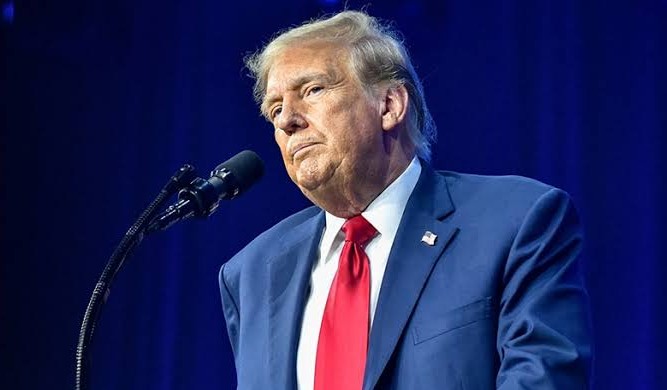
Air Force One was required to return to its departure base late on Tuesday evening after a technical issue was detected while US President Donald Trump was on board.
The presidential aircraft had been travelling from the United States to Switzerland for the World Economic Forum in Davos when flight crews identified an electrical fault shortly after take-off.
Despite the unexpected return, US officials were quick to stress that the situation posed no risk to the president or those travelling with him.
What caused Air Force One to return to base?
The issue emerged not long after the aircraft departed Joint Base Andrews in Maryland, the main hub for US presidential flights.
The White House confirmed the decision to turn back was made purely as a safety precaution. Press Secretary Karoline Leavitt said:
“After takeoff, the AF1 crew identified a minor electrical issue. Out of an abundance of caution, AF1 is returning to Joint Base Andrews. The President and team will board a different aircraft and continue on to Switzerland.”
Air Force One landed back at the base at around 11:07pm Eastern Time, with no injuries or further technical concerns reported.
Members of the travelling press later said cabin lights briefly switched off during the flight, although no explanation was provided while the aircraft was airborne.
Was Donald Trump ever in danger?
Officials have made it clear that there was no immediate threat at any point.
Air Force One, a highly customised Boeing 747, is built to operate safely even when faults occur. It contains several layers of backup systems, allowing the aircraft to continue flying under a wide range of scenarios.
Aviation experts say returning to base is standard practice when the US president is on board, even if the issue would be considered minor on a commercial flight. In this case, the move was described as preventative rather than reactive.
How did the president continue his journey?
Following the return to Maryland, President Trump switched to a US Air Force C-32, a modified Boeing 757 regularly used for presidential travel when conditions require an alternative aircraft.
White House officials confirmed that:
- Staff and journalists were redistributed across two smaller aircraft
- The president’s schedule in Davos is expected to proceed
- Any final adjustments will be assessed once the delegation arrives in Switzerland
President Trump is due to speak to international political and business leaders on Wednesday, as part of the annual global summit.
How common are issues involving Air Force One?
While any incident involving Air Force One attracts attention, such events are unusual.
That said, there have been a handful of similar cases over the years:
- September 2025: Donald Trump and First Lady Melania Trump were travelling on Marine One when a hydraulic issue led to an early landing near London
- February 2025: A US Air Force aircraft carrying Secretary of State Marco Rubio returned to Washington following a mechanical fault
- 2012: Air Force Two, with then-Vice President Joe Biden on board, experienced a bird strike while flying in California
- 2011: President Barack Obama abandoned a landing attempt in Connecticut due to poor weather conditions
🚨 BREAKING UPDATE: Per the White House, Air Force One suffered an “electrical issue” after takeoff, and is returning to DC
Thank God.
President Trump will be boarding another Air Force aircraft to continue his journey on to Switzerland
The Air Force maintains at least two… pic.twitter.com/OHa66nucTP
— Nick Sortor (@nicksortor) January 21, 2026
In all instances, safety systems worked correctly, and passengers landed without harm.
Why are presidential flights handled with such caution?
Aircraft carrying the US president operate under a zero-tolerance safety policy.
Even small warning signals can result in an immediate return, especially on long international routes. Security protocols are designed to remove uncertainty entirely, prioritising safety above timing or convenience.
UK aviation specialists often compare these procedures to RAF flights transporting senior British officials, which also follow strict rules when technical issues arise.