
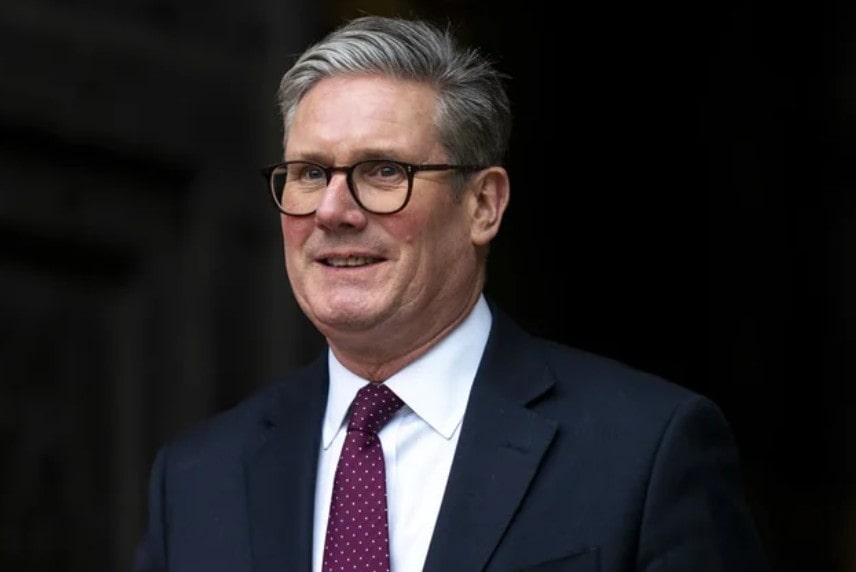
Sir Keir Starmer has issued a firm warning to Donald Trump, pledging to stand up for UK national interests after the US President threatened sweeping tariffs amid a growing row over Greenland.
In an emergency press conference held in London this morning, the Prime Minister said the world had become “remarkably more turbulent in recent weeks” and warned that global instability is already affecting everyday life in Britain.
The comments come as President Trump threatens to impose tariffs of up to 25 per cent on UK and European goods, unless allies agree to talks over US control of Greenland.
What did Keir Starmer say in the emergency press conference?
Speaking directly to the nation, Sir Keir outlined a clear three-point message focused on stability, alliances, and British interests.
He said global politics now directly affects “the cost of energy, the price of food, the security of jobs and the stability that families rely on to plan their lives.
Keir Starmer sends message to Trump over Greenland saying “calm discussion” is needed.
“On Greenland, the right way to approach an issue of this seriousness is through calm discussion between allies.”
— Oli London (@OliLondonTV) January 19, 2026
Being pragmatic does not mean being passive. A partnership does not mean abandoning principles.
That is why it’s important to be clear about who we stand with, what we stand for, and where our interests lie,” the Prime Minister said.
Sir Keir confirmed he held urgent talks yesterday with:
- The US President
- European leaders
- Nato Secretary General Mark Rutte
The aim, he said, was to find a solution “rooted in partnership, facts and mutual respect”.
Why is Greenland at the centre of the dispute?
The row centres on Donald Trump’s renewed push for US control of Greenland, a self-governing territory within the Kingdom of Denmark that holds major strategic importance in the Arctic.
Sir Keir was clear that Britain rejects any pressure on Denmark or Greenland. “Any decision about the future status of Greenland belongs to the people of Greenland and the Kingdom of Denmark alone.
That right is fundamental, and we support it.” European leaders say Arctic security is vital to NATO’s wider Euro-Atlantic defence, especially as Russia increases its presence in the High North.
Why has Keir Starmer criticised Trump’s tariff threats?
Sir Keir directly criticised the use of tariffs against allies, calling the approach “completely wrong”.
President Trump has warned he will:
- Impose a 10 per cent tariff on UK exports from 1 February
- Increase this to 25 per cent from 1 June
- Apply similar measures to Denmark, France, Germany, Sweden and Norway
“It is not the right way to resolve differences within an alliance,” Sir Keir said.
Economists warn tariffs at this level could push up prices for UK consumers and damage exporters already under pressure.
How could this affect the UK economy and households?
Sir Keir stressed that geopolitics is no longer distant or abstract.
Tariffs on UK goods could:
- Increase food and energy prices
- Put pressure on manufacturing jobs
- Weaken the pound
- Raise costs for small UK exporters
This is why, he said, defending UK national interests is about protecting living standards at home, not just foreign policy.
What is Britain’s position compared to Europe and Nato allies?
The UK has aligned closely with European partners and Nato.
On Sunday, the UK joined seven European countries in a joint statement backing Denmark and Greenland, warning that tariff threats risk a “dangerous downward spiral” in transatlantic relations.
Britain also supported Denmark’s Arctic military exercise Arctic Endurance, despite contributing just one officer to the mission.
How has Donald Trump responded?
Donald Trump reacted angrily on social media, accusing Denmark of failing to counter Russian threats in Greenland. “Now it is time, and it will be done!!!” the President wrote.
He also criticised European military exercises in Greenland, claiming they were conducted “for purposes unknown”.
What does the UK government say next?
Culture Secretary Lisa Nandy struck a more measured tone, saying Britain must engage in “adult debate” with Washington, while stressing that Greenland’s future is non-negotiable.
She told the BBC the UK remains open to dialogue but firm on principle.