


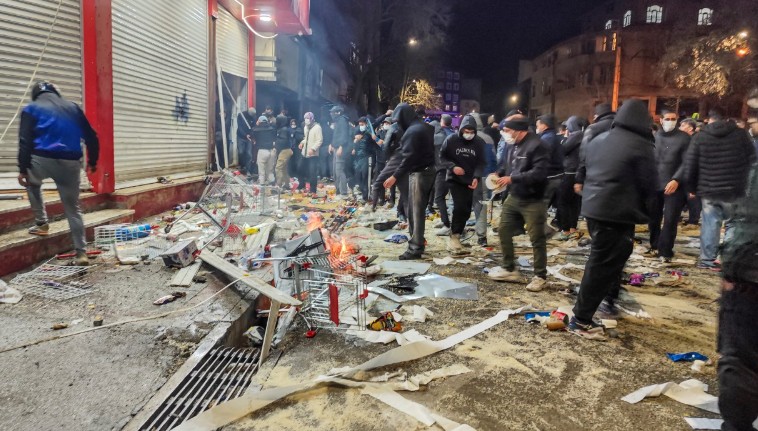
Iran has warned it will strike back if the United States launches any form of military action, as mounting evidence suggests hundreds of people have been killed during a sweeping crackdown on nationwide protests.
Human rights groups, verified videos, and hospital accounts paint a grim picture of escalating violence, with live ammunition reportedly used against demonstrators.
The unrest has become the most serious internal crisis for Iran’s leadership since the 2022 Mahsa Amini uprising, raising fears of wider instability across the Middle East and renewed tensions with Western governments, including the UK.
Why have the Iran protests become so serious?
The protests began earlier this month over Iran’s worsening cost-of-living crisis, driven by high inflation, unemployment, and fuel prices.
What initially appeared to be economic anger has since turned into open political resistance, with protesters openly calling for an end to Iran’s clerical rule and the leadership of Supreme Leader Ayatollah Ali Khamenei.
BBC Verify and BBC Persian have authenticated multiple videos showing violent confrontations between protesters and security forces in cities such as Tehran, Mashhad, Rasht, Ilam, and Kermanshah.
Gunfire can be heard in several clips, while others show crowds taking shelter near hospitals and residential streets.
One Tehran-based source told the BBC that conditions on the ground resemble a conflict zone rather than civil unrest.
“They are shooting live bullets. The streets are covered in blood. Bodies are being removed in trucks.”
How many people have been killed and arrested so far?
Exact figures remain difficult to confirm due to Iran’s strict media controls and internet shutdowns.
However, the Human Rights Activists News Agency (HRANA), which tracks incidents using local networks and verified sources, says it has confirmed the deaths of 495 protesters and 48 security personnel within two weeks.
The same organisation reports that more than 10,600 people have been detained.
BBC analysis of video footage from a mortuary near Kahrizak, south of Tehran, identified approximately 180 body bags, many placed outside due to a lack of capacity. Hospital staff interviewed by BBC Persian say emergency wards have been overwhelmed.
Health worker in Tehran (quoted by BBC Persian): “Many were shot in the head or chest. Some died immediately after arriving. Others never reached the hospital.”
How is the Iranian government justifying the crackdown?
Iranian authorities insist the protests are not homegrown. President Masoud Pezeshkian has accused the United States and Israel of training and directing unrest inside Iran, including claims of attacks on mosques and markets.
No independent evidence has been provided to support these allegations.
Iran’s Attorney General has taken a particularly hard line, warning that protesters will be treated as “enemies of God”, a charge under Iranian law that can carry the death penalty.
Ayatollah Khamenei has dismissed demonstrators as “vandals” acting to please foreign powers.
State media has announced three days of national mourning for those described as martyrs killed in what officials call a “national battle” against foreign enemies.
What has the US said, and how real is the threat of intervention?
US President Donald Trump said Iranian leaders had contacted him to discuss negotiations, but warned that the US may need to act before any talks take place.
While no military action has been confirmed, American officials have told US media that President Trump has been briefed on a range of options.
These reportedly include potential military strikes, cyber operations targeting Iran’s military infrastructure, increased sanctions, and support for anti-government messaging online.
Why has Iran shut down the internet?
Iran has imposed one of the most severe internet restrictions in its history, cutting off access to most global platforms and limiting communication to local networks.
Experts say this is designed to slow the spread of protest footage and make coordination more difficult.
HOLY SH*T 🚨 The Iranian regime just SHUT OFF electricity in Tehran during massive protests
AMERICA STANDS WITH THE PEOPLE OF IRAN
The Iranian people want their country back pic.twitter.com/6VfA3pmFT2
— MAGA Voice (@MAGAVoice) January 10, 2026
Internet researcher Alireza Manafi told BBC Persian that the current shutdown is even more extensive than during the 2022 “Women, Life, Freedom” protests.
While satellite services such as Starlink offer limited access, users risk being traced by authorities.
How does this compare with earlier Iranian uprisings?
Human rights groups say the scale and speed of the current crackdown are comparable to, and potentially worse than, recent uprisings.
The 2022 protests following the death of Mahsa Amini left more than 550 people dead and around 20,000 arrested over several months.
The current unrest has reached similar death figures in a far shorter timeframe, heightening concerns among international observers.
What role is Reza Pahlavi playing?
Reza Pahlavi, son of Iran’s last Shah and living in exile in the United States, has publicly voiced support for the protesters.
In a message shared on social media, he praised their courage and claimed parts of Iran’s security forces were refusing to suppress demonstrations. These claims have not been independently verified.
He has urged protesters to continue demonstrating but advised them to remain in groups and avoid unnecessary risk.
Why does this matter for the UK?
The unrest has spilled beyond Iran’s borders. Protests have taken place in London, where social media footage appears to show demonstrators removing Iranian flags from the Iranian Embassy.
Iranian authorities have since summoned the UK ambassador in Tehran, signalling rising diplomatic tensions.
For the UK government, the crisis raises difficult questions around human rights, diplomatic engagement with Tehran, and regional security at a time when global energy markets remain sensitive to instability in the Middle East.