

US President Donald Trump has revealed that Iran’s leadership has reached out to seek negotiations, after Tehran faced mounting protests and reports of hundreds of deaths.
The announcement comes amid escalating tensions, with Trump warning that the US may take military action if the Iranian government continues its crackdown.
The crisis has drawn international attention, including from UK authorities and human rights organisations, as concerns grow over the scale of violence and the potential for political upheaval in Iran.
What Did Trump Say About Iran Negotiations?
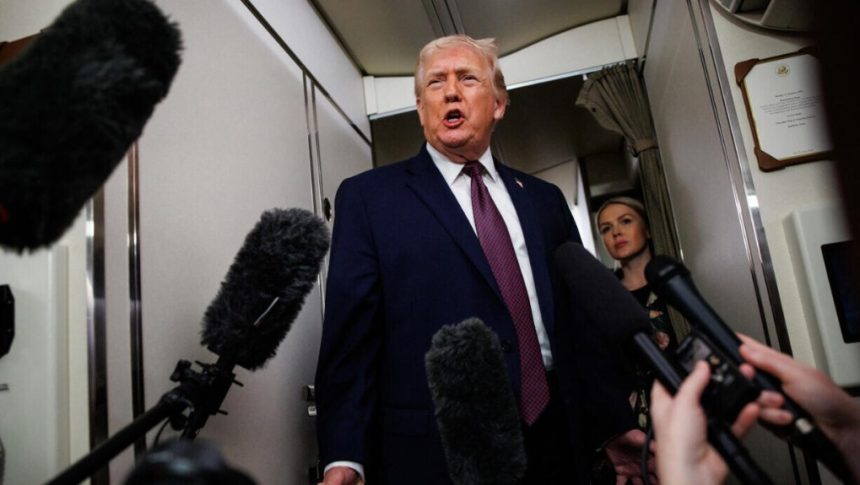
US President Donald Trump revealed on Sunday that Iran’s leadership has reached out to him seeking negotiations. This follows Trump’s repeated warnings of potential military intervention if Tehran continued to violently suppress protests.
Speaking to reporters aboard Air Force One, Trump stated: “The leaders of Iran called yesterday… a meeting is being set up. They want to negotiate.”
🚨 BREAKING: Iran has CALLED President Trump, a meeting is being set up – but he says they STILL could launch strikes
“The leaders of Iran are tired of being BEAT UP by the US. Iran wants to negotiate, yes.”
“A meeting is being set up – but we may have to ACT because of what’s… pic.twitter.com/Of2QemsMf4
— Eric Daugherty (@EricLDaugh) January 12, 2026
However, he added a cautionary note: “We may have to act before a meeting.”
This announcement comes as Iran faces one of its largest waves of anti-government protests in recent years.
How Many People Have Been Killed in the Iran Protests?
The situation on the ground in Iran remains extremely volatile. According to the Norway-based NGO Iran Human Rights (IHR):
| Data Source | Reported Deaths | Notes |
|---|---|---|
| IHR | 192 confirmed | Believed to be undercounted due to restricted access |
| IHR | 2,000+ (unverified) | Based on eyewitness accounts and NGO estimates |
| Arrests | 2,600+ | Across multiple cities, including Tehran, Isfahan, and Shiraz |
Footage shared on social media and verified by AFP shows bodies wrapped in black bags outside a morgue south of Tehran, highlighting the scale of the crisis.
The US-based Center for Human Rights in Iran (CHRI) has described the crackdown as a “massacre”, citing eyewitness accounts of hundreds killed amid an ongoing internet shutdown.
Who is Reza Pahlavi and What Role Does He Play?
Amid the protests, Reza Pahlavi, the US-based son of Iran’s former Shah, has emerged as a potential democratic figurehead.
Speaking he said: “I’m already planning on [returning to Iran].”
Pahlavi has urged Iranian security forces and government employees to support the protesters rather than the regime: “Employees of state institutions, as well as members of the armed and security forces, have a choice: stand with the people… or choose complicity with the murderers of the people.”
Iran is undergoing a revolution and perhaps the largest explicitly anti-Islamic regime protests in history. This is the capital Tehran.
Protesters are taking over cities across the country and the regime now faces a REAL chance of falling.
I ask again, why is the media silent? pic.twitter.com/dpHZcDaRxt
— Dr. Maalouf (@realMaalouf) January 9, 2026
His comments add an international dimension to the protests, signalling a potential transition movement if the government falters.
How is the US Responding to the Crisis?
Trump’s warning of military action is paired with a diplomatic overture, as he indicated that Iran’s leadership is seeking negotiations.
Experts note that while US military involvement remains a last resort, the combination of international pressure, sanctions, and high-profile statements could influence Tehran’s strategy.
Why Does This Matter to the UK?
The UK government has expressed concern over civilian casualties in Iran and has called for restraint. UK-based NGOs have also highlighted the humanitarian risks posed by mass arrests and violent crackdowns.
For British citizens, the crisis affects:
- Travel advisories to Iran
- Human rights advocacy and diplomatic pressure from the UK
- The global geopolitical balance, particularly regarding US-Iran relations