


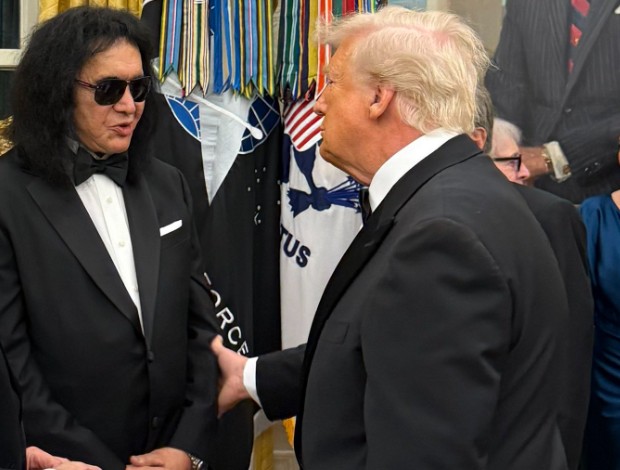
Rock legend Gene Simmons, best known as the co-founder of KISS, has sparked fresh debate after defending his support for US President Donald Trump while simultaneously campaigning for stronger protections for music artists’ royalties.
In a new televised interview in the United States, Simmons spoke openly about politics, free speech and money in music, a combination that has resonated well beyond America and caught attention across the UK entertainment industry.
What did Gene Simmons say about Donald Trump?
Speaking in a recent interview with CNN, Gene Simmons described his relationship with Donald Trump as “terrific, brushing aside criticism from those who question his political stance.
“I don’t really care what people say,” Simmons said, adding that political disagreement has always existed and should not dominate public life.
Simmons argued that Trump was democratically elected, pointing out that personal political views should not become a public test of character.
ROCK ON! KISS legend Gene Simmons just received a Kennedy Center Honor from President Trump.
In a post-event interview, the iconic rocker downplayed politics and dropped some real wisdom:
Americans need to stop obsessing over other people’s beliefs. pic.twitter.com/HiWneauYzB
— The American Times (@TheTimes_24) December 22, 2025
He criticised what he sees as growing intolerance in political debate, urging people to respect opposing views. “It’s their America too,” he said, calling for humour and tolerance rather than hostility.
While these remarks focus on US politics, they have relevance in the UK, where public figures increasingly face backlash over political opinions, particularly in music, sport, and broadcasting.
Why is Gene Simmons campaigning for artist royalties?
Alongside politics, Simmons used the interview to highlight what he calls a major injustice in the music industry, unpaid radio royalties for artists in the United States.
He is backing the American Music Fairness Act, a proposed law that would force radio stations to pay performers when their music is broadcast.
“Radio stations made about $14 billion last year, and artists got nothing. That’s inexcusable.”
Simmons recently appeared before the US Senate Judiciary Committee, alongside other music industry leaders, to argue that performers deserve fair payment for their work.
How does this compare to the UK music system?
Unlike the US, the UK already pays artists for radio airplay through organisations such as PPL (Phonographic Performance Limited).
UK vs US: Radio Royalties Explained
| Area | UK System | US System |
|---|---|---|
| Does radio pay performers? | Yes | No (currently) |
| Collection body | PPL | None for performers |
| Annual UK payouts | Over £900 million (2023) | £0 to artists |
| Proposed reform | Not required | American Music Fairness Act |
This is why Simmons’ campaign has drawn interest from UK musicians, many of whom see the US system as outdated and unfair by international standards.
Why are Simmons’ comments controversial?
Simmons’s outspoken defence of Trump has divided opinion, particularly among fans who expect musicians to avoid political alignment.
However, media analysts note that separating political views from industry reform is not uncommon, and Simmons’ royalty campaign has bipartisan support among US artists.
His blunt language, including dismissing critics with confrontational remarks, has also fuelled online debate.