


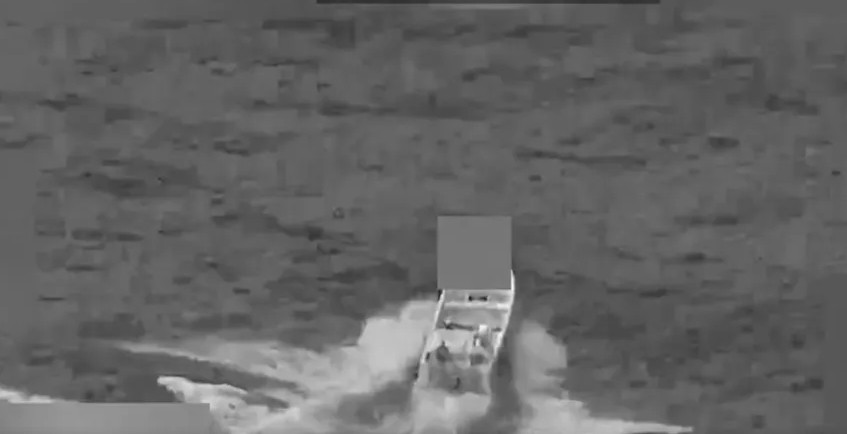
The US military has launched another deadly strike in the Eastern Pacific Ocean, killing two people on a boat it claims was involved in drug smuggling.
The incident happened on Thursday, according to the US Southern Command, the American military body overseeing operations across Latin America and the Caribbean.
The strike forms part of a wider campaign of US military strikes targeting suspected narco-trafficking routes since September, which has reportedly resulted in 128 deaths so far.
The growing number of fatalities is now drawing serious legal and political scrutiny, with critics warning the US could be using military force in situations that should fall under criminal law.
This latest strike matters because it highlights how Washington is expanding its drug enforcement strategy into a more aggressive military-style operation, with potential consequences for international law and regional stability.
What happened in the latest US military strike in the Pacific?
US Southern Command said its forces struck a vessel operating in the Eastern Pacific Ocean, alleging the boat was travelling along a known drug trafficking route.
The military also claimed the vessel was linked to organisations it describes as “designated terrorist organisations”.
In its official statement posted on X, the US command confirmed that two people died during the strike and stated that no American personnel were injured.
US Southern Command, statement on X: “No US military forces were harmed in the operation.”
While US officials described the target as a suspected drug vessel, they did not publicly provide names of the dead or release confirmed evidence showing what substances were found onboard.
Why are US military strikes being used against suspected drug boats?
The US government says drug traffickers use fast boats and semi-submersible vessels to transport narcotics from Latin America through the Caribbean and Pacific corridors.
Washington argues that traditional policing and coastguard interception have not been enough to stop the flow.
The U.S. struck a vessel in the Eastern Pacific, killing two alleged “narco-terrorists” under the guise of counter-narcotics. This is military murder, not law enforcement — projecting power, not justice. #USMilitaryAction #NarcoWar https://t.co/GPXFzhqi0K
— William Murphy (@420GHz) February 6, 2026
The Trump administration has justified the strikes as part of what it describes as a “non-international armed conflict”, a legal framing normally associated with warfare against militant groups rather than criminal gangs.
This approach has triggered debate because it suggests the US is treating drug trafficking operations as a military enemy, rather than a law enforcement problem.
The US Defence Secretary Pete Hegseth has defended the operation as a matter of national survival.
Pete Hegseth: The campaign aims at removing “narco-terrorists from our hemisphere” and stopping “the drugs that are killing our people”.
How many people have died in Operation Southern Spear so far?
The figures released by US officials suggest the campaign has already become one of the most lethal anti-drug enforcement efforts in modern American history.
According to the US Southern Command, since September, the operation has involved at least:
- 38 lethal strikes
- 128 reported deaths
- 36 strikes over four months late last year
Thursday’s strike was also reported as the second strike of the year, suggesting the pace of operations may have slowed compared to late 2024.
However, even with fewer attacks in early 2025, the continued use of lethal force indicates the strategy remains firmly in place.
Where exactly are these strikes taking place?
Most of the strikes have reportedly occurred in two key regions: the Caribbean Sea and the Eastern Pacific Ocean. These waters are commonly used by trafficking networks moving drugs northward.
Although the US has not provided detailed maps publicly, experts say traffickers often exploit international waters to avoid national patrols and jurisdiction.
This makes enforcement complex, but it also raises a key concern: international waters do not automatically give any state unlimited authority to kill suspected criminals.
Are these US military strikes legal under international law?
This is now one of the biggest questions surrounding the entire operation.
Some legal experts have argued that the strikes may breach international law if the US cannot prove the vessels were legitimate military targets.
Under international rules, states can only use lethal force if they face an immediate threat or if the situation clearly qualifies as armed conflict.
Critics warn the US could be violating international standards by targeting suspected smugglers without trial, arrest, or clear evidence released to the public.
The core issue is simple: even if drug trafficking is serious, international law does not automatically allow governments to carry out killings without due process.
In the UK, by comparison, authorities tackling organised crime rely on surveillance, interception, arrest, and prosecution. Even terror suspects are typically brought into the court system unless an immediate armed threat exists.
What is the “double-tap strike” controversy, and why does it matter?
US officials have faced growing political and legal pressure after a reported “double-tap” strike on 2 September, involving a suspected Venezuelan drug boat.
A “double-tap” strike usually refers to a second strike hitting the same target shortly after the first. Human rights organisations often criticise such tactics because they can increase the risk of killing survivors or individuals attempting rescue.
The controversy has gained traction partly because US lawmakers from both parties reportedly questioned whether the tactic was justified, especially if the people on board were not confirmed combatants.
For observers, this is a key point: the operation is not just about stopping drugs, but about how the US is choosing to use lethal power outside formal war zones.
Why did the pace of strikes reportedly slow down after Maduro’s capture?
The report suggests the frequency of US strikes declined after US forces captured Venezuelan President Nicolas Maduro in early January.
The Trump administration has accused Maduro of supporting drug trafficking networks and working alongside criminal groups.
His capture has reportedly shifted the regional situation and may have temporarily reduced the intensity of the maritime strike campaign.
Even so, Thursday’s strike shows the US remains willing to use lethal force against suspected trafficking vessels, regardless of political changes in Venezuela.
What legal action is being taken against the US over these strikes?
One of the strongest signs of rising international backlash is that families of victims have started turning to the courts.
The families of two Trinidadian men killed during a strike on 14 October have reportedly filed a lawsuit against the US government, accusing it of unlawful killings.
The lawsuit contains some of the most severe language directed against the operation to date. “Lawless killings in cold blood; killings for sport and killings for theatre.”
This case could become significant because it may test whether families can hold the US accountable for military actions in international waters.
How does this approach compare to traditional anti-drug enforcement?
Historically, anti-drug operations in international waters focused on seizures and arrests, not airstrikes.
The US has often worked with partner countries through coastguard patrols and intelligence sharing. But Operation Southern Spear appears to mark a shift toward treating narco-trafficking routes like battlefield corridors.
That change worries critics because it risks blurring the line between policing and warfare. If that boundary collapses, future governments may find it easier to justify lethal force against suspects without the standards required in criminal law.
What should UK readers pay attention to next?
For UK audiences, this story is not just about America. It reflects a broader international trend in which states expand their military powers in response to crime and border pressure.
The next likely developments include:
- More international legal challenges from Caribbean families
- pressure on Washington from human rights groups and foreign governments
- deeper scrutiny over whether the US can legally define narco-trafficking as “armed conflict.”