


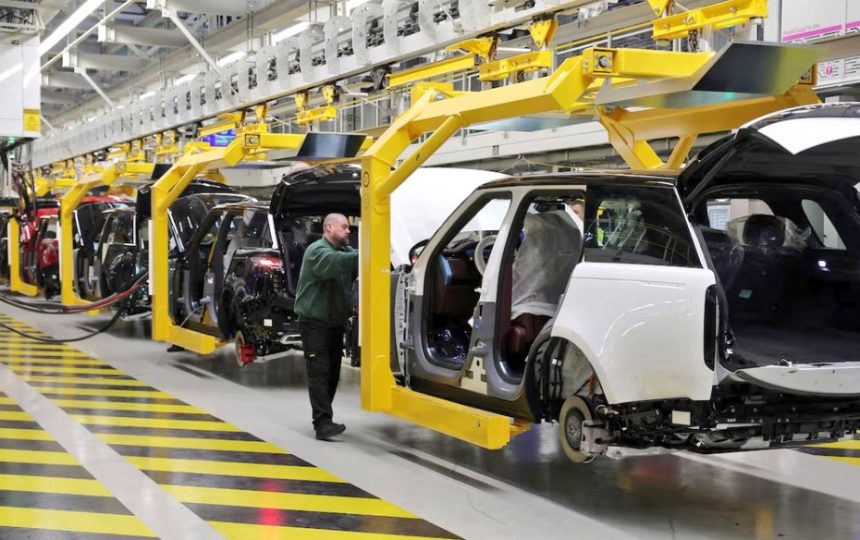
UK car production has fallen sharply at the start of 2026, raising fresh concerns about exports, factory jobs and Britain’s trade relationship with the European Union.
New industry figures show output dropped by 13.6% in January, as ministers hold talks in Brussels about joining a proposed EU “Made in Europe” scheme.
In January, UK factories built 67,415 vehicles, down compared with the same month last year. Of those, 65,249 were cars, and just 2,166 were commercial vehicles.
Industry leaders blame weak global demand and factory restructuring. The decline matters because the sector supports hundreds of thousands of UK jobs and remains one of Britain’s biggest export industries.
Why has UK car production fallen again?
The latest data from the Society of Motor Manufacturers and Traders (SMMT) shows a clear slowdown.
The sharpest fall came in commercial vehicle production, which dropped by 68.6% in January. Output in that category has now declined for 10 consecutive months, largely due to restructuring at a major plant transitioning to new production lines.
Exports also weakened. In January:
- Car exports fell by 10.1%
- Commercial vehicle exports plunged by 75%
The European Union remains the UK’s largest export market, taking 62.5% of car exports and 94% of commercial vehicle shipments. That reliance makes UK car production highly sensitive to European demand and regulatory change.
Mike Hawes, chief executive of the SMMT, said: “Weak exports to markets beyond Europe amid soft demand delivered a disappointing start to the year for UK vehicle manufacturing.”
He added that the figures reinforce the need to secure favourable trade access, particularly with Europe.
What is the EU ‘Made in Europe’ scheme and why does it matter?
The European Commission is drafting a “Made in Europe” preferential scheme designed to prioritize European-made products in certain sectors, particularly green and industrial supply chains.
Under draft proposals, the scheme would include:
- The 27 EU member states
- The European Economic Area
- Selected “trusted partners.”
UK Business and Trade Secretary Peter Kyle has met European Commission officials in a bid to ensure British manufacturers are not excluded.
Speaking after the talks, he said: “I’m excited about what the UK and the EU can achieve together.”
If the UK secures access, British-made vehicles, especially electric models, could benefit from smoother trade and eligibility for European incentives.
If not, UK manufacturers may face competitive disadvantages compared with EU-based rivals.
How do new EU emissions rules affect UK car production?
The EU has also adjusted its 2035 petrol and diesel phase-out rules. Carmakers must now achieve a 90% reduction in tailpipe emissions, with the remaining 10% offset through measures such as low-carbon steel, e-fuels or biofuels produced within the bloc.
This change places greater emphasis on:
- Localized supply chains
- Affordable electric vehicle production
- Access to low-carbon materials
For UK car production, alignment with these rules could prove essential. Without close cooperation, British-built vehicles risk becoming less attractive in Europe, the UK’s primary market.
Is there any positive outlook for the sector?
Despite January’s disappointing figures, industry forecasts suggest recovery remains possible. The SMMT estimates that around 790,000 vehicles could be produced in the UK this year, a potential increase of more than 10% compared with last year’s output.
Long-term, there are ambitions to reach one million vehicles annually by 2027 if investment and demand strengthen. Growth will depend on several factors:
- Stable trade relations with the EU
- Competitive UK energy costs
- Strong domestic demand for electric vehicles
- Continued investment in UK-based EV production
Electric vehicle manufacturing, particularly in Sunderland, remains a key pillar of that strategy.