


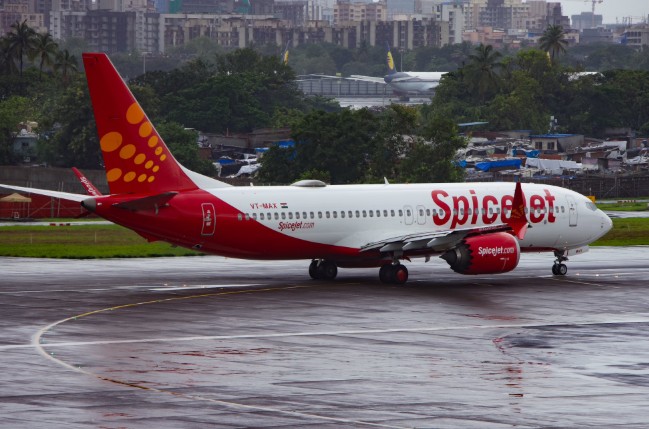
A SpiceJet Boeing 737 aircraft turned back to Delhi just minutes after take-off on Tuesday morning after a reported engine problem triggered a “full emergency” at the airport.
The flight, carrying around 150 passengers, was heading to Leh in Ladakh when the crew identified a technical issue shortly after departure from the Indian capital. The aircraft landed safely, and no injuries were reported.
The incident comes amid heightened scrutiny of airline safety in India following recent fatal crashes, including a London-bound Air India disaster last year.
What happened to the SpiceJet flight?
Flight SG121, operated by SpiceJet, took off from Delhi at 6.08am local time on 24 February. According to airline officials, the aircraft developed what the company described as a “technical issue” shortly after departure.
The Boeing 737 returned to Delhi and landed at 6.49am. Airport authorities declared a full emergency as a precaution, meaning fire and rescue services were placed on standby in case of a worst-case scenario.
In a statement, SpiceJet said: “A SpiceJet flight operating from Delhi to Leh on February 24 returned to Delhi after experiencing a technical issue.
The aircraft landed safely in Delhi, and all passengers disembarked normally. There was no fire warning in the cockpit.” All passengers exited the aircraft without incident.
Was the issue linked to engine failure?
Initial reports from the Indian news agency ANI suggested the aircraft may have suffered an engine failure, possibly linked to its second engine.
However, SpiceJet did not confirm engine failure in its official statement, instead referring broadly to a “technical issue”. Aviation investigations typically take several days or weeks to determine the precise cause of such faults.
The Boeing 737 aircraft is widely used for short and medium-haul routes worldwide, including in the UK by carriers such as Ryanair and Jet2.
Why was a ‘full emergency’ declared?
Airports declare a full emergency when a flight reports a potentially serious mechanical issue. This does not automatically mean a crash is imminent.
Instead, it allows:
- Fire crews to position near the runway
- Ambulances to remain on standby
- Air traffic control to prioritise the aircraft
- Ground teams to prepare for rapid evacuation
The precaution helps reduce response times should the situation escalate.
For UK readers, similar protocols operate at major airports such as Heathrow and Manchester under Civil Aviation Authority (CAA) safety rules.
How does this compare with recent aviation incidents?
The SpiceJet incident follows growing safety concerns in India’s aviation sector.
In June last year, a London-bound Air India Boeing 787-8 Dreamliner crashed less than a minute after take-off from Ahmedabad, killing 260 people. That disaster marked one of the deadliest aviation accidents involving an Indian carrier in decades.
Earlier this week, an air ambulance carrying seven people also crashed in Jharkhand during severe weather conditions, killing everyone on board.
India’s aviation regulator has since increased inspections and oversight of aircraft maintenance procedures.
Should UK passengers be concerned about Boeing 737 aircraft?
There is currently no evidence linking this specific incident to broader systemic problems with the Boeing 737 fleet.
The Boeing 737 remains one of the most operated aircraft globally. In the UK, the type continues to fly thousands of passengers daily without issue.
Aviation experts consistently point out that emergency returns after take-off, while dramatic, often demonstrate that safety systems work as designed.
As one former UK Civil Aviation Authority safety inspector previously explained to the BBC: “Modern aircraft are built with multiple redundancies. Turning back is often the safest and most controlled decision a crew can make.”