

Prime Minister Keir Starmer has come under renewed pressure from senior MPs, including members of his own party, after a tense session of the Commons Liaison Committee.
His wider policy agenda has already faced scrutiny in other sectors, adding context to the growing unease over Labour’s policy direction, government readiness, and Starmer’s leadership style only months into his time as Prime Minister.
The meeting exposed growing unease over Labour’s policy direction, government readiness, and Starmer’s leadership style only months into his time as Prime Minister.
The exchange, watched closely across Westminster, raised serious political and human concerns, particularly around inheritance tax changes, NHS strikes, and the pace of reform.
Why are Labour MPs questioning Keir Starmer’s leadership?
During the committee hearing, Labour MP Cat Smith, who represents the largely rural constituency of Lancaster and Fleetwood, delivered one of the strongest challenges.
Her criticism centred on the government’s inheritance tax policy, due to come into force in April, which affects family-owned farms.
Smith warned the policy risked devastating farming families and accused the government of breaking trust with its rural supporters. Smith said the policy was “pulling the rug from under family farms.”
She went further, claiming that some farmers with terminal illnesses felt pressured to hasten their deaths so assets could be transferred before the tax changes take effect, an allegation that visibly unsettled the room.
What is changing with inheritance tax on family farms?
Under the planned reforms starting in April, agricultural inheritance tax relief will be restricted, reducing long-standing protections for family-run farms.
Key points raised during the committee:
- Policy implementation begins in April
- Family farms may face higher inheritance tax liabilities
- Critics argue that there was insufficient warning or consultation
- Emotional and mental health impacts on farming families were highlighted
Liberal Democrat MP Alistair Carmichael, who represents Orkney and Shetland, backed Smith’s concerns, urging the Prime Minister to reconsider the approach.
Despite pressure from multiple MPs, Keir Starmer confirmed there are no plans to reverse or delay the policy.
How did Keir Starmer respond to the criticism?
Starmer defended the inheritance tax reforms as necessary for fairness and fiscal responsibility, but did not directly address the emotional claims raised by MPs.
Observers noted his discomfort during the exchange, suggesting rising tensions within Parliament and within Labour’s own ranks.
This moment has been widely interpreted as an early test of Starmer’s authority as Prime Minister.
What did MPs say about NHS strikes and doctor unrest?
Healthcare was another flashpoint. Conservative MP Simon Hoare questioned Starmer about the ongoing resident doctors’ strike, asking him to rate his level of concern. Starmer said his distress level was “10 out of 10.”
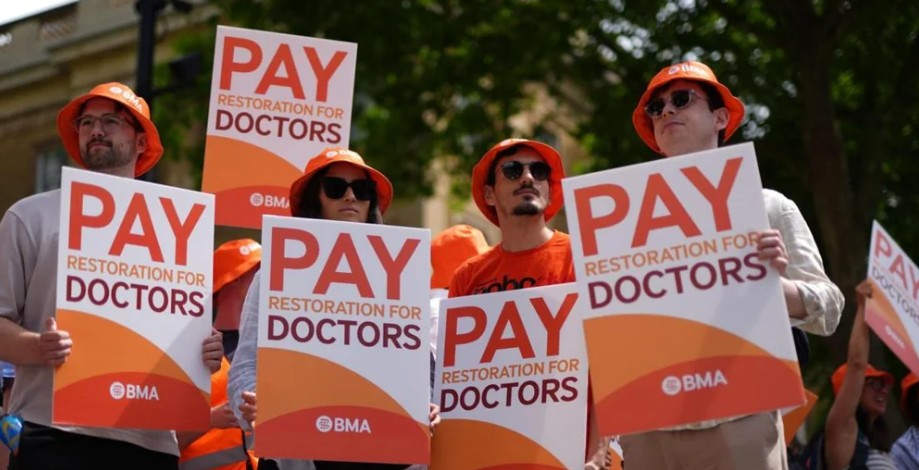
The admission highlighted the seriousness of the dispute, which has seen growing dissatisfaction among junior doctors and weakening confidence in talks with the British Medical Association (BMA).
Is the government prepared to deliver reform?
Committee chair Dame Meg Hillier pressed Starmer on whether the government was truly ready to tackle Britain’s biggest challenges.
In response, the Prime Minister voiced frustration at internal barriers slowing progress. Starmer blamed “a thicket of reasons” for delays, including excessive consultations and overlapping regulations.
He argued that bureaucracy is preventing swift action on key reforms, a complaint likely to resonate with voters frustrated by slow change.
Why does this matter for Keir Starmer’s future?
This committee session has amplified questions about Keir Starmer’s leadership record, particularly his ability to balance fiscal reform with public trust and party unity.
With criticism now coming from inside Labour as well as opposition benches, Starmer faces a critical period where policy delivery and communication will define his premiership.
What Comes Next for the UK?
For voters, this moment signals how the new government handles dissent, tough policy choices, and real-world consequences.
As cost pressures, healthcare disputes, and rural concerns grow, Keir Starmer’s response to internal criticism may shape public confidence in Labour’s ability to govern effectively.
Recap
- Keir Starmer faced sharp criticism from MPs during a Liaison Committee meeting
- Labour’s inheritance tax changes on family farms sparked emotional backlash
- Starmer ruled out policy changes despite pressure
- NHS doctor strikes remain a major concern
- The Prime Minister admitted frustration with government bureaucracy
- Leadership credibility is increasingly under scrutiny