
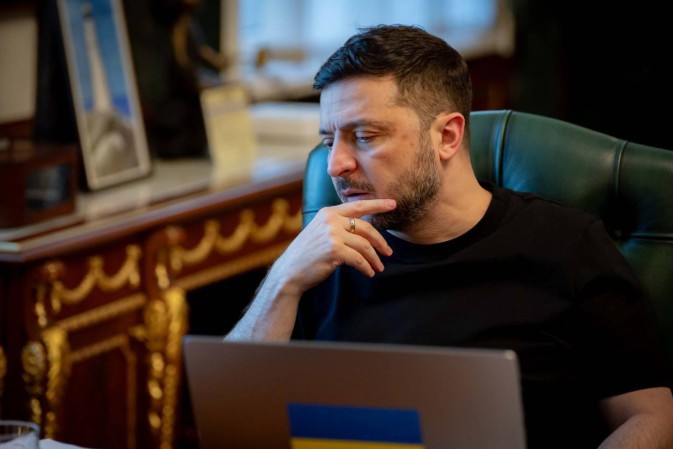
The United States has reportedly set a June deadline for Ukraine and Russia to reach an agreement to end the war, according to Ukrainian President Volodymyr Zelensky.
The proposed timeline comes as Washington continues to push both sides towards a ceasefire and long-term settlement, nearly four years after Russia’s full-scale invasion began.
Zelensky said the Trump administration wants a clear schedule for peace negotiations and expects major progress before the start of summer.
The announcement matters because it could shape the next stage of the war, influence Western military support, and affect energy prices and security across Europe, including the UK.
What did Zelensky say about the Russia-Ukraine ceasefire deadline?
Speaking to reporters, Zelensky said the United States has told both Kyiv and Moscow that it wants a deal reached by June.
He explained that if the June goal is not met, the US may apply pressure on both Ukraine and Russia to force progress.
Zelensky said the Americans want a strict timeline for events and negotiations, signalling that Washington wants to speed up talks rather than let the conflict drag on indefinitely.
Why is the US pushing a June peace agreement timeline?
The war has drained resources on both sides and continues to create global instability.
The US deadline appears designed to:
- Push both sides into faster negotiations
- Reduce the risk of a prolonged conflict into 2027
- strengthen US influence over the peace process
- bring a clear political outcome before the war becomes even more entrenched
For the UK and Europe, a ceasefire could reduce the risk of wider escalation and ease ongoing economic uncertainty linked to fuel and food supply disruption.
Where will the next Ukraine-Russia peace talks happen?
Zelensky said the next round of trilateral talks could happen in the United States, with Miami reportedly mentioned as a likely host location.
If confirmed, it would mark the first time these talks take place on American soil, showing the US is taking a more direct public role in negotiations. Ukraine has already confirmed it will take part.
Why have previous talks failed to produce a breakthrough?
Negotiations have struggled because both sides still hold sharply opposing demands.
Russia continues to push for Ukraine to withdraw from parts of the eastern Donbas region, an idea Kyiv says it will never accept.
Ukraine insists it cannot agree to any peace deal that rewards territorial occupation or forces the country to surrender land. Kyiv has also repeatedly demanded security guarantees to prevent future invasions.
Both sides remain entrenched, which explains why talks so far have not produced a lasting ceasefire.
What are the main disagreements blocking a ceasefire deal?
Several major issues continue to block progress:
Territory
Ukraine wants to keep internationally recognised borders. Russia wants Ukraine to give up the occupied land.
Security guarantees
Ukraine wants long-term protection, potentially involving NATO-style commitments. Russia rejects Western security arrangements.
Future governance and military limits
Russia has previously pushed demands that Ukraine sees as attempts to weaken the country politically and militarily.
These issues remain the central reason the Russia-Ukraine ceasefire deadline may be difficult to meet.
What happens if Ukraine and Russia miss the June deadline?
If no deal happens by June, Zelensky believes the US will likely increase pressure on both parties.
That could include:
- tougher diplomatic demands
- increased sanctions pressure on Russia
- Reduced patience with stalled negotiations
- stronger insistence on a formal ceasefire framework
However, experts warn that deadlines do not guarantee results, especially when neither side appears ready to compromise on core demands.
Could this deadline actually bring the war to an end?
The June deadline may create urgency, but many analysts view it as an ambitious target.
Even temporary ceasefires have repeatedly collapsed in the past due to mistrust, ongoing fighting, and political disagreements. A long-term peace agreement usually requires detailed conditions, monitoring systems, and security enforcement, all of which take time.
Still, the deadline could force both sides to either move forward or publicly take responsibility for delays.
How does this affect the UK and Europe?
The UK remains one of Ukraine’s strongest supporters in Europe, providing military assistance, training, and diplomatic backing.
If a ceasefire succeeds, the UK could see:
- Reduced security tensions across Europe
- lower risk of escalation involving NATO borders
- possible easing of energy and inflation pressure
- changes in defence spending priorities
If talks collapse, the UK may face continued pressure to maintain or increase long-term support.
Why do British households still feel this war?
Even though the fighting is far from Britain, the war has contributed to:
- Higher energy bills since 2022
- increased pressure on food prices due to grain disruption
- Higher defence spending expectations across Europe
Energy infrastructure remains a major pressure point, and recent developments show the conflict still causes disruption beyond Ukraine’s borders. Reports of strikes on energy sites and Poland halting flights highlight how the war continues to affect regional stability, travel, and supply networks across Europe.
Many UK businesses that rely on stable supply chains, particularly food importers and logistics firms, have faced knock-on costs linked to the wider conflict.
A ceasefire could reduce these pressures, though prices would not drop overnight.