


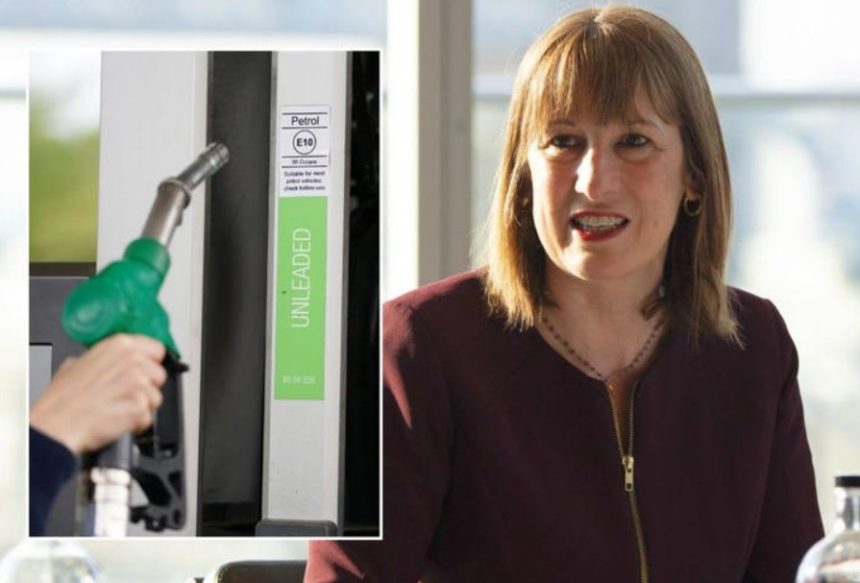
Oil prices have surged to their highest level in 10 months after US and Israeli strikes on Iran over the weekend, prompting urgent calls for a Rachel Reeves fuel duty freeze to protect UK drivers.
The conflict, which escalated in Tehran following the reported death of Ayatollah Ali Khamenei, has pushed Brent Crude above $80 (£60) a barrel.
Experts now warn British motorists could soon feel the impact at the pumps if tensions in the Middle East continue to rise.
The spike matters because the UK imports a significant portion of its fuel, meaning global instability quickly feeds into petrol and diesel prices. With the Chancellor due to deliver her Spring Statement this week, pressure is mounting for immediate action.
Why are oil prices rising after the Iran strikes?
Markets reacted sharply after retaliatory strikes targeted US and RAF bases in the region. Traders focused on the strategic Strait of Hormuz, a narrow shipping route that carries around 20% of global oil supply and large volumes of natural gas.
🛢️ Oil prices surged 10% after the Iran conflict, with Brent crude rising to around $80 per barrel in over-the-counter trade.
⚔️ U.S. and Israeli strikes on Iran escalated tensions in the Middle East, triggering fears of a broader regional war.
🚢 The biggest concern is… pic.twitter.com/Og5tvGrkMF
— durgeshkdubey (@ToolsTech4All) March 1, 2026
Although Iran has not formally closed the Strait, Reuters reported that more than 150 vessels dropped anchor to avoid potential missile attacks. Analysts warn that any sustained disruption could rapidly tighten supply.
Dmitry Zhdannikov, energy and commodities editor at Reuters, said analysts expect oil prices to rise by between $10 and $20 (£7.50 to £15) if tensions escalate further.
If Iran closes the Strait entirely, some market forecasters suggest prices could hit $100 (£75) per barrel within days.
How could this affect UK petrol and diesel prices?
The UK does not set global oil prices, but pump costs reflect movements in Brent Crude. When oil rises sharply, forecourts often adjust prices within weeks.
According to RAC Fuel Watch, drivers currently pay:
| Fuel Type | UK Average Price (June 2026) |
|---|---|
| Unleaded Petrol | 132.68p per litre |
| Diesel | 142.34p per litre |
The RAC has not yet forecast immediate increases. However, sustained higher oil prices would almost certainly push these averages up.
For context, when oil prices spiked after Russia invaded Ukraine in 2022, UK petrol briefly topped 190p per litre.
Why is Rachel Reeves fuel duty under scrutiny?
Rachel Reeves extended the temporary 5p fuel duty cut in last year’s Autumn Budget. That cut, first introduced during the Ukraine crisis, is now being phased out in stages:
- 1p increase in September
- 2p increase in December
- 2p increase in March
She also scrapped the planned inflation-linked increase for 2026–27, with duty indexation returning in April 2027.
Campaigners argue now is not the time to raise costs.
Howard Cox, founder of FairFuelUK, urged the Chancellor to freeze fuel duty for the rest of the Parliament.
He said: “This move would not only be economically prudent, stimulating GDP growth and alleviating inflationary pressure, but it would also provide some much-needed political relief to this Government.”
He added that greater domestic energy production would reduce long-term exposure to Middle East instability.
What are experts saying about the economic risk?
Energy analysts warn that higher oil prices could feed into UK inflation just as it begins to stabilise. Fuel affects transport costs, logistics, and food prices, meaning any sustained spike may hit households beyond the forecourt.
The Bank of England closely monitors energy-driven inflation. A £10 rise in oil prices typically adds measurable pressure to CPI within months.
If Brent climbs towards $100 per barrel, economists expect renewed inflationary strain heading into winter — precisely when household energy bills also rise.
What does this mean for UK drivers?
If tensions cool quickly, pump prices may remain stable. But if Iran disrupts oil flows through the Strait of Hormuz, British motorists could face rising costs within weeks.
The Rachel Reeves fuel duty decision in the Spring Statement now carries added weight. A freeze could shield drivers from immediate pain. A reversal of the 5p cut, however gradual, may compound global pressures.
For households already stretched by mortgage rates and living costs, fuel prices remain politically sensitive. The next few days could determine whether drivers get relief — or another rise at the pumps.