


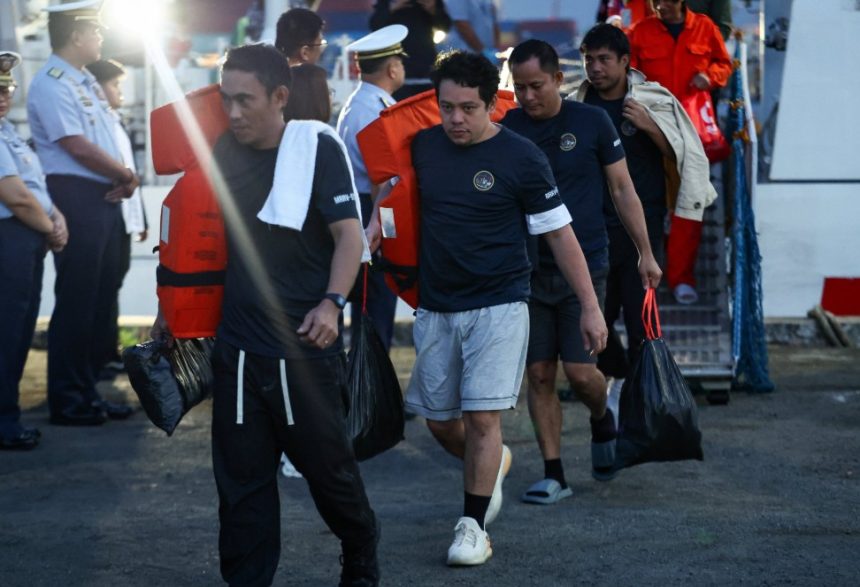
Rescue operations are continuing in the southern Philippines following a deadly Philippine ferry accident that has claimed at least 18 lives, with 10 people still missing, according to the Philippine Coast Guard.
The passenger vessel sank in the early hours of Monday, 27 January, while travelling from Zamboanga City to Jolo in Sulu province, prompting a large-scale sea and air search.
The incident matters because ferries remain a key form of transport in the region, and safety concerns continue to draw international attention, including from UK travel authorities.
What happened during the ferry journey?
The ferry, MV Trisha Kerstin 3, ran into trouble at around 1:50am local time shortly after leaving Zamboanga City.
It was heading towards Jolo, a remote island area that relies heavily on passenger boats for daily travel and supplies.
Authorities say the vessel capsized while at sea, though they have not yet confirmed whether weather, mechanical issues, or human error played a role.
A ferry with more than 350 people onboard sank in choppy seas off southern Philippines early Monday, killing at least 18 and leaving 24 still missing, authorities said
The 44-metre vessel went down about five kilometres east of Baluk-Baluk Island amid reportedly rough waters.… pic.twitter.com/NGNpbJJnt4
— BFM News (@NewsBFM) January 26, 2026
Captain Noemie Cayabyab, a spokesperson for the Philippine Coast Guard, told reporters that investigators are still gathering evidence and interviewing survivors.
“We are not yet prepared to conclude the cause of the accident as the investigation is ongoing,” she said.
How many people were on board the ferry?
Officials initially believed that 359 people were on board the vessel, but this number was later corrected to 344 after checks on the official passenger manifest.
The coast guard confirmed that 316 passengers were rescued, while 18 deaths have been verified so far. Ten people remain unaccounted for, and search teams continue to look for survivors.
The ferry was authorised to carry up to 352 passengers, meaning it was operating within its legal limit at the time of the accident.
Authorities also confirmed that 15 people listed on the manifest never boarded the vessel, which led to the revised figures.
Where are rescue efforts focused now?
Search operations are centred on waters near Mindanao and the Sulu Sea, where coast guard patrol boats, divers and aircraft are working together.
Challenging sea conditions and limited visibility have slowed progress, but officials say the operation will continue while there is still a reasonable chance of locating survivors.
Rescue footage released by the Philippine Coast Guard shows responders pulling survivors from the water and providing first aid on nearby vessels.
Why are ferry accidents common in the Philippines?
Maritime accidents occur frequently in the Philippines due to its geography. With more than 7,000 islands, ferries are essential for millions of people.
However, past incidents have highlighted weaknesses in safety enforcement, vessel maintenance and weather preparedness.
Although overcrowding has caused deadly disasters in the past, officials stressed that this Philippine ferry accident did not involve excess passengers.
UK maritime experts note that ferry regulations in Britain are far stricter, with mandatory headcounts, continuous weather monitoring and tighter inspection regimes.
Are UK citizens affected by the ferry sinking?
At present, there is no confirmation that any UK nationals were involved.
The Foreign, Commonwealth & Development Office (FCDO) has not issued a new travel alert but continues to advise British travellers to exercise caution when using sea transport in remote areas of the Philippines.
UK travellers are generally encouraged to check official travel advice, avoid overnight ferry crossings where possible and use established transport operators with clear safety records.
What happens next in the investigation?
The Philippine Coast Guard has opened a formal inquiry into the sinking. Investigators will assess weather data, inspect the ferry’s condition and examine crew decisions made before the vessel capsized.
Any findings could lead to penalties for the operator or tighter safety controls on regional ferry services.